Basalt cement process could cut emissions by 30 per cent, study finds
While current techniques demand more energy than traditional methods, the elimination of carbon-releasing chemical reactions and the potential for renewable power offer a pathway to significant decarbonisation.
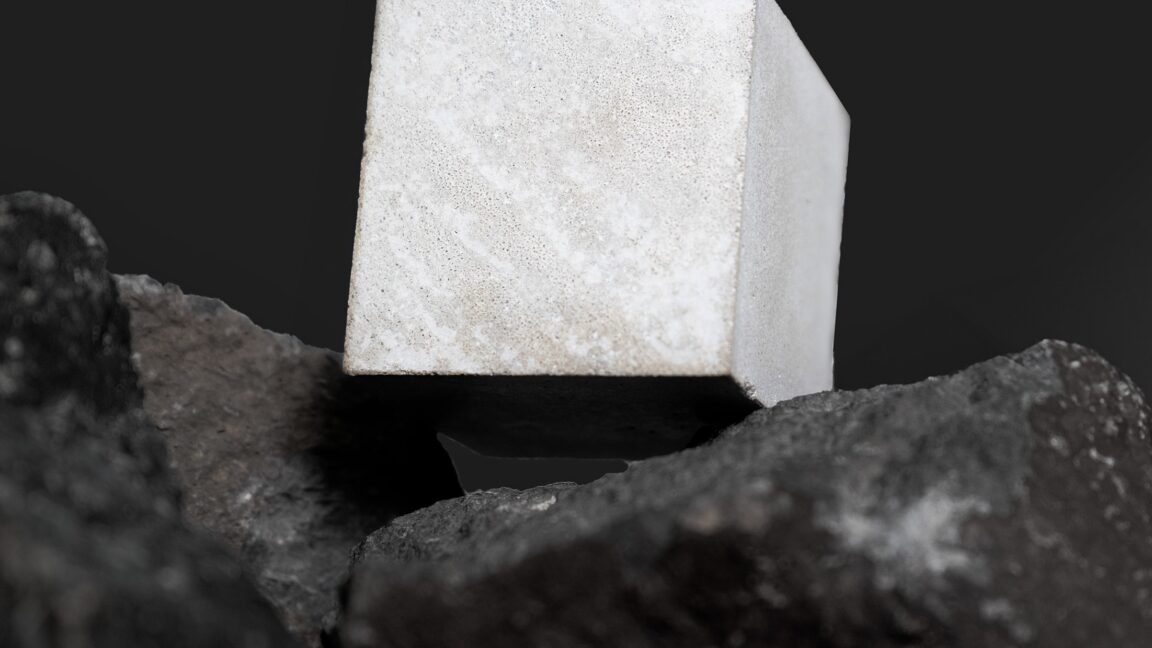
Cement production is responsible for approximately 8 per cent of global carbon dioxide emissions, with a significant portion stemming from the chemical conversion of limestone into lime. A study published in Communications Sustainability in 2026 outlines an alternative approach that utilises silicate rocks, such as basalt, to produce Portland cement. The research suggests that by removing the reliance on limestone, manufacturers can eliminate the direct process emissions that currently account for slightly more than half of the sector’s carbon footprint.
The authors of the paper include a company CEO and an engineer who have reportedly produced Portland cement from basalt at a laboratory scale. Unlike limestone, which releases CO2 when heated to extract calcium oxide, basalt contains calcium, aluminium, iron, magnesium, sodium, silicon, and oxygen, but no carbon. The proposed method involves using acid to leach calcium from the rock, precipitating it as calcium hydroxide, and then heating it with additives in a kiln. This process releases only water vapour rather than carbon dioxide.
Thermodynamic analysis indicates that the chemical conversion of basalt minerals to calcium oxide theoretically requires only half the energy of limestone conversion. However, the researchers note that current facilitation techniques are inefficient, requiring more than double the energy of conventional production methods. The study acknowledges that while known lab techniques could improve efficiency, scaling these processes remains a challenge.
Despite the higher energy input, the elimination of direct process emissions allows for substantial reductions in overall carbon output. On a grid dominated by fossil fuels, the basalt-based process could cut emissions by nearly 30 per cent. If powered by clean electricity, the method has the potential to eliminate most remaining emissions associated with cement manufacturing.
The process also offers economic incentives through the recovery of valuable minerals. Iron, magnesium, and aluminium can be separated and recovered from the basalt, while the leftover silicate material can serve as an additive for Portland cement, potentially replacing coal ash. These co-products could help offset the higher energy costs, making the technology more commercially viable as the industry seeks to decarbonise.
