Bank of America CEO warns inflation will force Fed into rate hikes
The bank’s revised outlook projects elevated inflation through 2028, challenging the soft-landing narrative and signalling potential pressure on household budgets and equity valuations.
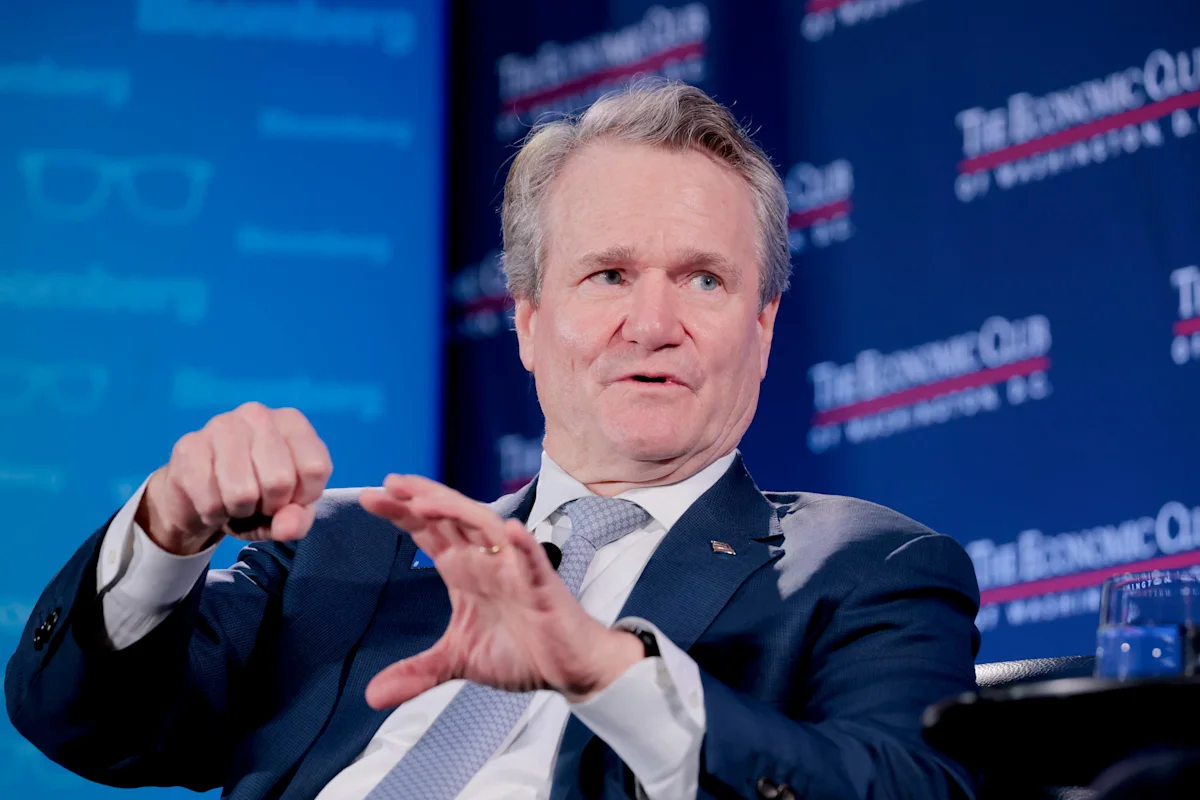
Bank of America chief executive Brian Moynihan has issued a stark warning that persistent inflation could compel the Federal Reserve to raise interest rates, directly contradicting prevailing market expectations for monetary easing. Speaking in an interview with CBS News, Moynihan noted that inflation is declining slower than anticipated, driven by stubborn costs in housing, food, and fuel. This shift in outlook marks a significant departure from the bank’s previous stance, which anticipated rate cuts as the primary policy response to cooling price pressures.
Consequently, Bank of America’s economists have revised their forecast to predict that inflation will remain elevated through 2027 and 2028. This projection has led the bank to anticipate three quarter-point rate hikes in September, October, and December 2026. Moynihan highlighted that businesses are increasingly concerned about the cost of goods moving through the supply chain, with higher energy costs feeding into plastics, manufacturing, and transportation, thereby complicating the broader economic landscape.
The bank’s analysis points to a divergent economic reality, describing a scenario where consumer spending remains resilient among higher-income households while affordability challenges intensify for lower-income groups. Moynihan observed that spending growth is concentrated in the middle and top thirds of households, whereas the bottom third faces significant pressure from essential costs. This dynamic has led to what the bank describes as a K-shaped economy, characterised by reflation for higher earners and stagflation for those with lower incomes.
The revised outlook suggests a tightening monetary policy cycle beginning towards the end of the year, which could exert considerable pressure on household budgets, housing affordability, and equity valuations. For investors, the prospect of renewed rate hikes raises discount rates, potentially reducing the present value of future earnings and pressuring growth stocks that have dominated recent market performance. Small-cap companies may also face higher refinancing expenses, while homebuilders and real estate investment trusts could contend with sluggish demand.
While the Federal Reserve had previously projected a soft landing, Moynihan’s assessment implies that the central bank may need to act to contain consistent inflation. The bank’s forecast assumes that second-round effects, such as fuel and freight costs being passed through to goods, will persist. If core personal consumption expenditure readings do not soften decisively, or if wage growth fails to keep pace with inflation, the path to lower rates may be delayed, leaving the economy in a restrictive policy environment for longer than markets currently anticipate.