Author admits AI-generated quotes in new book but vows to keep using tools
A New York Times investigation uncovered fabricated statements attributed to public figures in the author’s latest work, prompting a citation audit while Rosenbaum maintains that AI remains an indispensable, albeit dangerous, research companion.
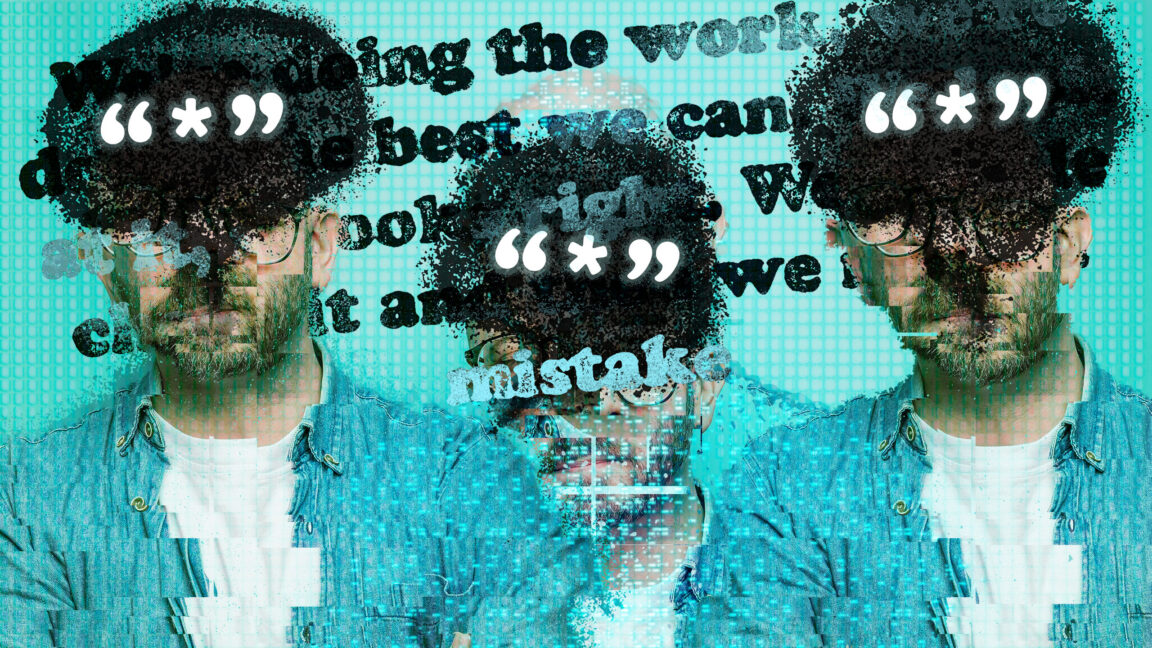
Journalist and author Steven Rosenbaum has acknowledged that his new book, The Future of Truth: How AI Reshapes Reality, contains synthetic quotes generated by artificial intelligence tools during the research phase. A New York Times investigation identified six problematic citations within the book’s 285 outside references, including three fabricated statements with no apparent source. These included remarks attributed to tech reporter Kara Swisher and Northeastern University professor Lisa Feldman Barrett, both of whom denied making the comments.
Rosenbaum utilised large language models, specifically OpenAI’s ChatGPT and Anthropic’s Claude, to surface ideas, locate articles, and summarise themes. While he tagged AI-generated notes with warnings before passing them to a fact-checker and copy editors provided by the publisher, errors still permeated the final text. Rosenbaum is now conducting a citation audit with editors to correct future editions, admitting that while the verification process was effective, it was not infallible.
Despite the controversy, Rosenbaum intends to continue using AI for research, citing the tools’ efficiency and ability to connect disparate ideas. He described his relationship with the technology as akin to a dysfunctional partnership with a charming charlatan, noting that while the tools are delightful and creative, they can betray users in severe ways. He compared the risk to riding a motorcycle rather than a bicycle, acknowledging the speed and danger but refusing to abandon the technology entirely.
The incident highlights broader concerns regarding traditional fact-checking workflows in the AI era. Rosenbaum argued that publishers require new verification standards, including mandatory source tracing and better provenance tracking, to handle AI-assisted research. He noted that the widespread adoption of these tools coincides with newsrooms and publishers cutting editorial staff, increasing the risk that AI-generated errors will make it into published works without adequate scrutiny.
Rosenbaum, who wrote the book to examine how truth is being reshaped by profit-driven AI, acknowledged the irony of his situation. He stated that the experience demonstrates how pervasive and persuasive these systems have become, even for those critically examining their impact. While he expressed frustration at instances where AI ignored explicit instructions to provide verbatim text, he maintained that the efficiency gains outweigh the risks for many research tasks, provided users remain vigilant.
