Asset managers urge Federal Reserve to hold rates amid Middle East tensions
Two major investment firms have advised the US central bank against reducing interest rates, citing fears that a potential conflict involving Iran could trigger significant volatility in global financial markets.
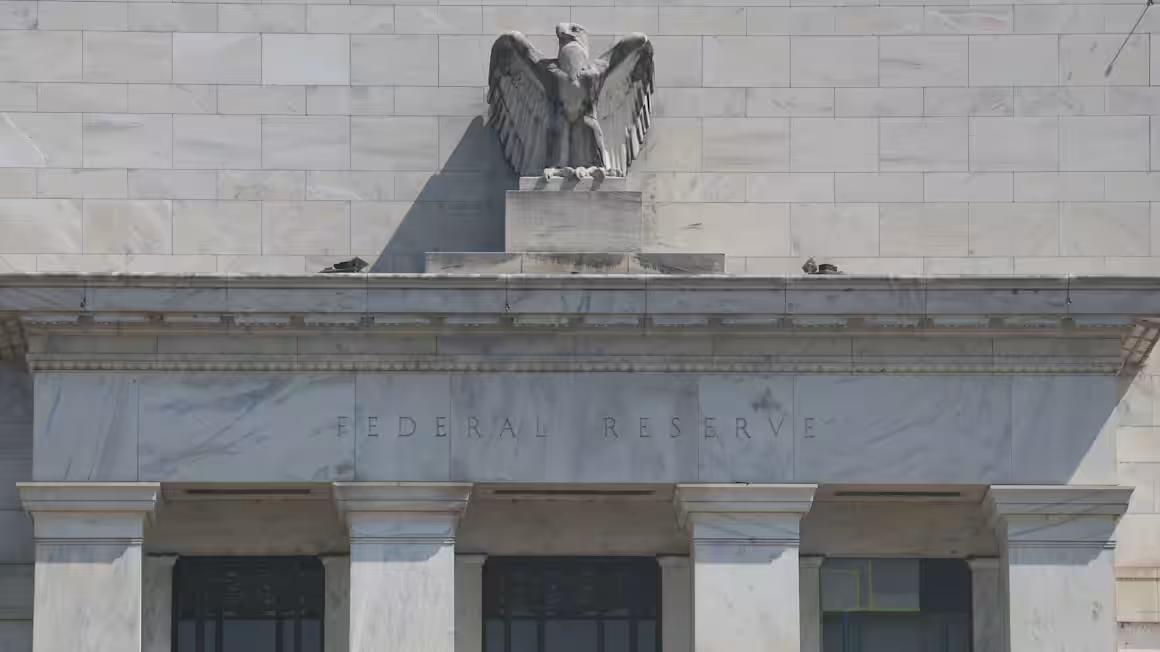
Bond giant Pimco and asset manager Franklin Templeton have explicitly advised the Federal Reserve to maintain current interest rate levels rather than proceed with cuts. The warnings were delivered through separate interviews conducted by the Financial Times, highlighting a shift in sentiment among major institutional investors regarding the timing of monetary policy adjustments.
The firms linked their caution directly to the potential impact of a war in Iran on financial stability. They argue that reducing borrowing costs at this juncture could be premature given the heightened geopolitical risks in the Middle East, which have historically caused volatility in global oil prices and equity markets.
While markets have often anticipated rate reductions to stimulate the economy, these asset managers suggest that the Federal Reserve should weigh the threat of conflict more heavily. Their stance implies that the central bank must remain vigilant against external shocks that could undermine the benefits of lower borrowing costs.
The advice comes as the Federal Reserve continues to face intense scrutiny regarding its monetary policy direction. Private sector warnings from firms of this magnitude carry significant weight, as their portfolios are deeply exposed to the very assets that could be disrupted by a regional conflict.
It remains unclear whether the Federal Reserve will alter its policy trajectory based on these specific warnings. The timing of the interviews and whether the comments represent a coordinated stance or individual opinions from the two firms is not detailed in the available reporting.
Ultimately, the message from Pimco and Franklin Templeton is clear: the spectre of an Iran war introduces a variable that could destabilise markets, suggesting that the Federal Reserve should exercise restraint in cutting rates until the geopolitical landscape stabilises.