Arsenal’s institutional resilience: How injury integration secured the Premier League title
Manager Mikel Arteta’s policy of maintaining connectivity for sidelined players has become a defining feature of Arsenal’s success, transforming a season of widespread absences into a structural advantage.
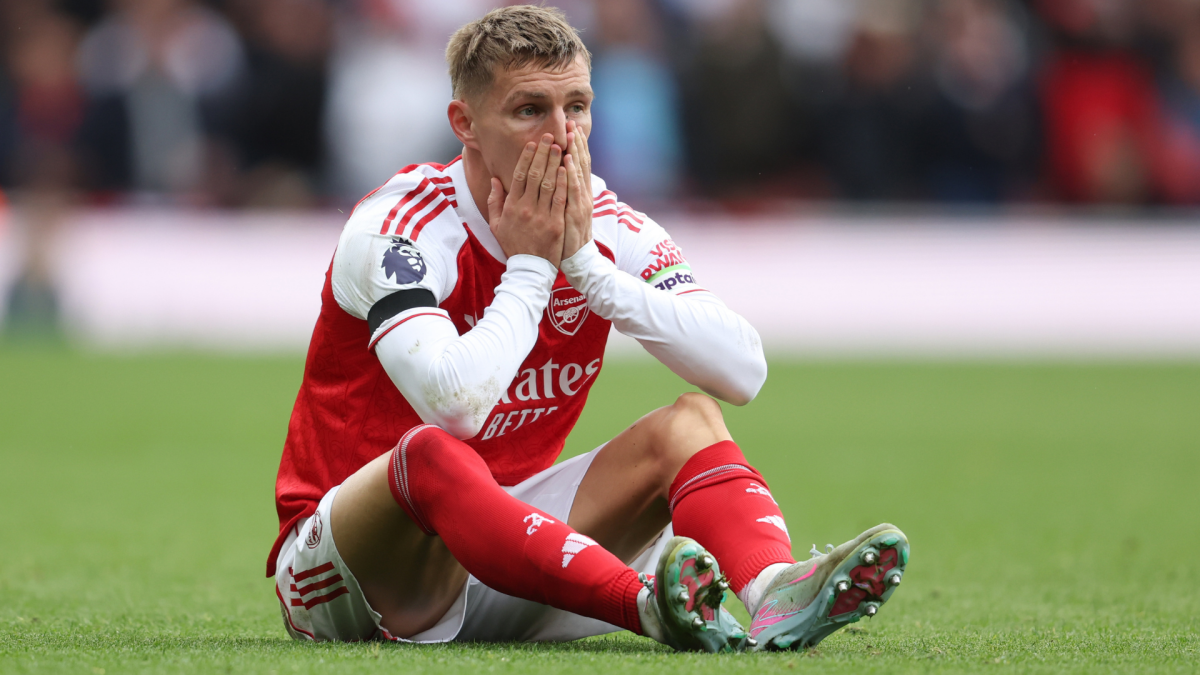
Arsenal’s acquisition of the 2025-26 Premier League title, alongside their ongoing contention for the Champions League, has been attributed to a deliberate managerial strategy that prioritises the integration of injured personnel into the club’s operational framework. Rather than isolating players undergoing rehabilitation, Manager Mikel Arteta has enforced a policy of sustained connection, ensuring that squad members remain embedded in the collective culture even when unavailable for selection. This approach has allowed the club to navigate a season characterised by significant physical attrition, with only Martin Zubimendi and Myles Lewis-Skelly emerging without any recorded injuries.
The structural shift in how the club manages absence is evident in the daily routines at London Colney and the Emirates Stadium. Jurrien Timber, managing a groin injury, was present at the London Stadium prior to a critical away fixture, while Ben White, wearing a knee brace, sat alongside Dr Zafar Iqbal during open training sessions before the Champions League final. These visible interventions signal a departure from traditional models where injured athletes are often removed from the first-team environment until fitness is restored. By maintaining proximity to teammates and staff, the club has mitigated the isolation typically associated with rehabilitation.
Captain Martin Odegaard, who suffered an ankle injury early in the 2024-25 season, has been instrumental in enforcing this cultural continuity. Odegaard has emphasised the necessity of injured players attending team meetings and matches, even when dressed in street clothes, to maintain their role within the leadership group. This directive extends to Mikel Merino, who rehabilitated a foot issue partly in Spain but remained an active voice in the dressing room. Teammates predicted Merino would contribute to the Champions League final, a sentiment he acknowledged by noting the supportive environment that prevented him from becoming isolated during his recovery.
The efficacy of this strategy is reflected in the performance metrics of key players. Kai Havertz, who sustained a knee injury on the opening day of the 2025-26 season, credited the team’s support for his momentum shift and subsequent return. Similarly, Odegaard, Bukayo Saka, Timber, Havertz, and Viktor Gyokeres all recorded fewer than 30 starts, yet the squad maintained its competitive edge. The recruitment strategy implemented the previous summer explicitly accounted for this high volume of absences, planning for injury resilience rather than assuming consistent fitness, a pragmatic response to Arteta’s demanding tactical requirements.
The institutional support system, led by long-serving sports therapist Takahiro Yamamoto, has been described by Odegaard as fostering a "family" atmosphere that benefits both players and staff. This cohesion has proven vital as Arsenal faces the final stages of the season, with Ben White ruled out of the Champions League final and the World Cup due to a knee injury, while Timber and Merino return to contention. The club’s ability to sustain performance despite having only Tottenham and Chelsea recording higher volumes of absences in the Premier League underscores the success of this governance-focused approach to squad management.