Ars Technica revisits SpaceCamp’s legacy on 40th anniversary
Despite significant inaccuracies and poor timing following the Challenger disaster, the movie remains a well-intentioned piece of cinema that sparked interest in spaceflight.
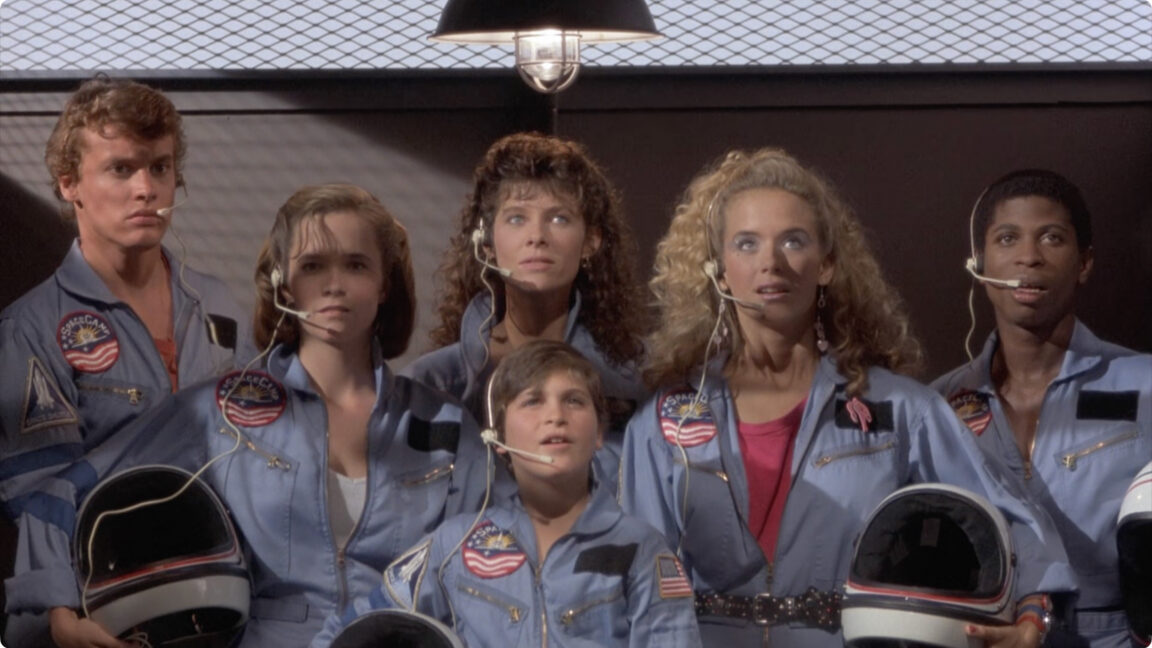
On 31 May 2026, Ars Technica published a reassessment of the 1986 film SpaceCamp to mark its 40th anniversary. Senior Space Editor Eric Berger and Senior Technology Editor Lee Hutchinson reviewed the DVD, concluding that while the movie contains significant technical inaccuracies and suffered from poor timing following the Challenger disaster, it remains an entertaining and well-intentioned piece of cinema that successfully sparked interest in spaceflight among younger audiences.
The film, produced by 20th Century Fox, was completed before the Challenger disaster but released in June 1986, grossing approximately $9.6 million against a $25 million budget. It features a score by John Williams and was shot on location at Space Camp in Huntsville and the Kennedy Space Center, starring Kate Capshaw, Tom Skerritt, and a young Joaquin Phoenix (credited as Leaf Phoenix).
Specific technical critiques include the film's depiction of a "thermal curtain failure," the ignition of solid rocket boosters during a main engine test, and the presence of campers on board during a Flight Readiness Firing. The authors speculate on the real-world consequences of the film's plot, suggesting that such an event would likely result in the resignation of the NASA administrator and launch director.
The article highlights the film's production context, noting that it was released barely four months after the destruction of the Space Shuttle Challenger. This timing proved to be box office poison, as audiences were not interested in watching a space near-disaster so soon after a real-life tragedy. Despite this, the film retains a cult following among those who encountered it during their youth.
The article notes the film's accurate depiction of certain minor details, such as cockpit switch positions and uniform patches, despite major plot holes. The cast includes Kate Capshaw, Tom Skerritt, and a young Joaquin Phoenix (credited as Leaf Phoenix). The film features a score by John Williams and was shot on location at Space Camp in Huntsville and the Kennedy Space Center.
In their assessment, Berger and Hutchinson argue that the movie was not made for adult experts but for children and teenagers. They note that while the film is full of "epic levels of cheese," it successfully condensed complex space flight concepts into understandable forms for a general audience. The review concludes that the film’s inaccuracies ultimately serve the narrative, providing a fun, if unrealistic, experience for its target demographic.
The reassessment was conducted by Eric Berger and Lee Hutchinson, who watched the film to evaluate its legacy. They observed that the movie helped fuel interest in the space program during the late 1980s and 1990s, a period when there was not much exciting happening in human spaceflight. The film correctly anticipates NASA having a large space station in orbit, called Daedalus, nearly a decade and a half before one exists.
