Aptera Assembles First Validation Models in Push for Customer Deliveries
Co-CEOs Chris Anthony and Steve Fambro say the five-unit build provides critical data on precision and repeatability as the company targets the market with nearly 50,000 reservations.
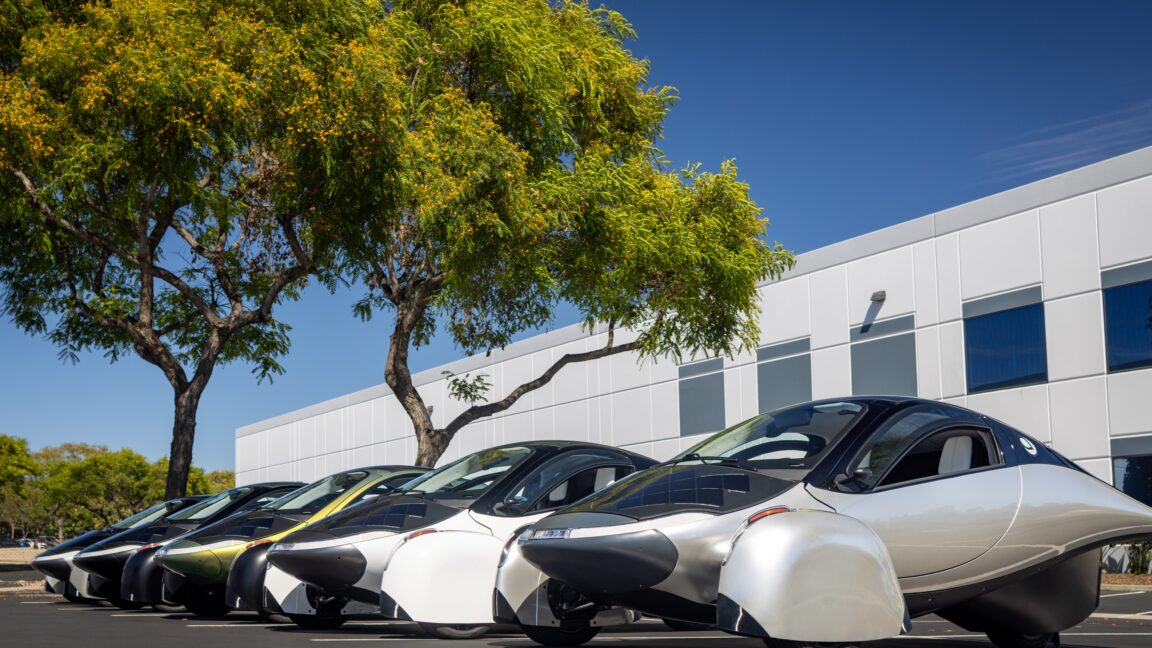
Aptera Motors has assembled its first five validation models of its three-wheeled, two-seat electric vehicle at its low-volume assembly line in Carlsbad, California. The builds moved through 14 different assembly stations, a process the company states is essential for generating data to refine manufacturing precision, efficiency, and repeatability ahead of planned customer deliveries.
Co-CEOs Chris Anthony and Steve Fambro emphasised that the current phase is about building the system to produce the vehicles reliably. Anthony noted that every vehicle run through the line provides new insights, while Fambro stated that each cycle improves the team’s sharpness and the process’s consistency. This operational foundation is intended to support the company’s goal of meeting customer expectations when deliveries eventually commence.
The launch edition of the Aptera is priced at $40,000 and offers a range of 400 miles from a 44 kWh battery pack. The vehicle features a drag coefficient of 0.13 and is clad in photovoltaic panels, which the company claims provide up to 40 miles of range per day. Aptera also claims to have nearly 50,000 reservations on record for the vehicle, which seats two occupants and their luggage within an aerodynamic cabin.
A cheaper version with a reduced range of 250 miles is planned for future release. Despite its compact interior, the vehicle is 1.5 inches wider than the Hummer EV, a design choice driven by its open-wheel configuration mounted out wide from the streamlined cabin. The company has been developing the ultra-efficient EV since 2006, navigating a complex history that includes the original company ceasing operations in late 2011 before founders relaunched the venture in 2019.
While the timeline for actual customer deliveries remains unspecified, the assembly of these validation models marks a significant step in the company’s long-running effort to bring the vehicle to market. The builds represent a transition from prototype development to a structured manufacturing process, aiming to overcome the stumbles that have characterised the project’s two-decade history.