Apple’s iOS 27 beta introduces functional Siri AI built on Google’s Gemini
The new system integrates on-device data with Private Cloud Compute to handle context-aware tasks, though early testing reveals capabilities that lag behind existing competitor offerings.
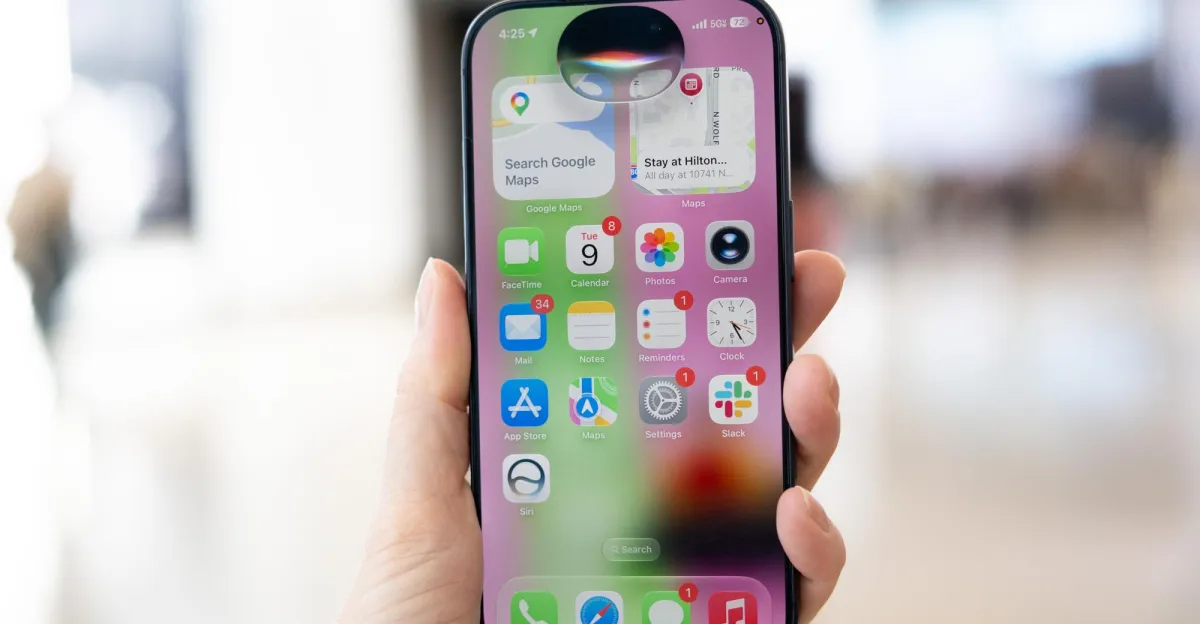
Apple has released a developer beta of iOS 27 featuring a significantly upgraded Siri AI assistant, marking the company’s second major attempt to deliver on artificial intelligence promises made two years prior. The updated system, built on Google’s Gemini models, integrates with on-device data and Apple’s Private Cloud Compute to perform context-aware tasks such as adding calendar events from emails, diagnosing plant issues, and setting reminders. Early testing indicates the assistant functions reliably for basic queries, although it currently lacks the advanced capabilities of competitors like Google’s Gemini.
The release aims to restore user trust following a previous iteration that failed to materialise as promised. The new Siri can extract event lists from emails or poorly formatted flyers and add them to the calendar in one action, a feature that addresses specific user demands for practical utility. It can also reference information from email and calendar data to provide recommendations, such as suggesting garden centres or answering travel timing questions, demonstrating a functional understanding of personal context.
Under the hood, the assistant indexes on-device data, including emails and messages, for retrieval. Complex prompts are sent to Apple’s Private Cloud Compute with only relevant personal data attached, a departure from how Gemini handles personal context by opting users into sharing Gmail or calendar data directly. This architecture allows Siri to tap into relevant information while maintaining a degree of separation for more intensive processing tasks.
The interface has also been revised to ensure the assistant is always accessible. Swiping down on the home screen now features a “search or ask” prompt, and long-pressing the wake button summons Siri from the Dynamic Island. These changes create a seamless experience where the assistant is integrated into the user’s workflow, moving away from the glowing border presentation seen in previous versions.
Despite its functional improvements, the new Siri is described as feeling like “Gemini, circa 2025,” indicating it is playing catch-up with existing market standards. The assistant adopts a more dispassionate tone compared to competitors, offering direct diagnoses rather than empathetic openings. Strong guardrails have also been implemented, with the system returning a curt refusal when presented with inappropriate prompts, ensuring it remains within safe operational boundaries.
While the current beta demonstrates that Siri can perform advertised tasks reliably, the extent of its capabilities in real-world, uncontrolled environments remains untested. The final performance and feature set may change before the public release, but for Apple, the immediate goal is to prove that the assistant works and will ship to customers, a critical step in rebuilding credibility after past disappointments.
