Apple turns to AI to close Safari’s extension gap with ‘vibe-coding’
The latest Safari update introduces user-generated extensions, automatic tab categorisation, and compromised password updates, marking a strategic shift to compete with Chrome and Firefox.
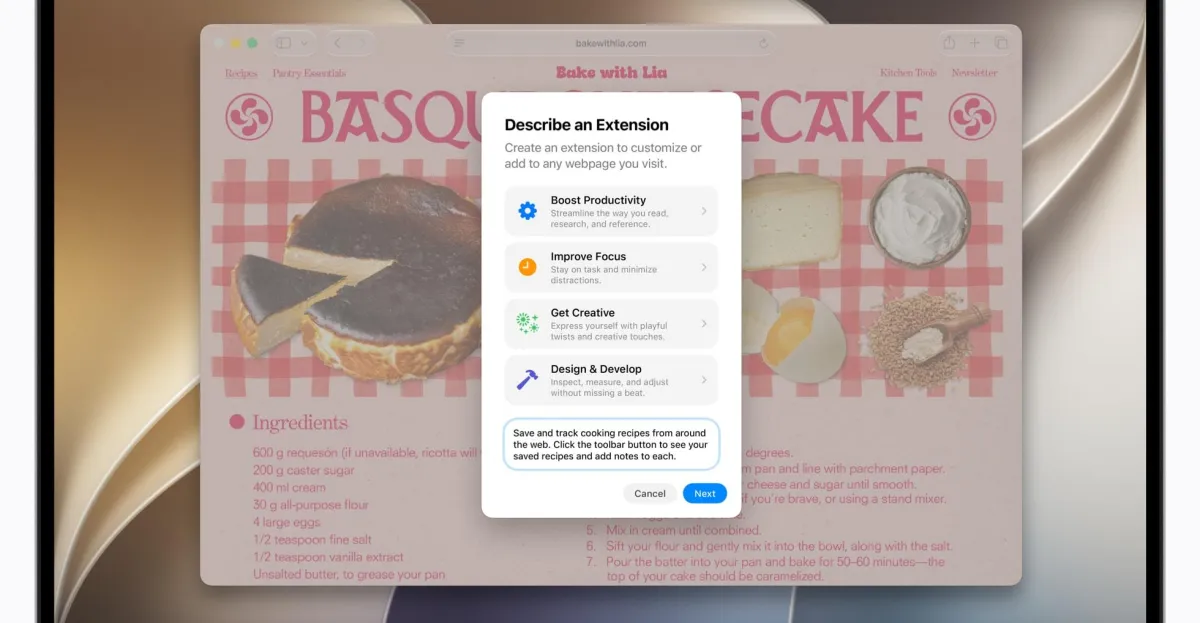
Apple is integrating artificial intelligence into Safari to address the browser’s historically limited extension library, a move designed to level the playing field against rivals such as Google Chrome, Microsoft Edge, and Mozilla Firefox. The update introduces a capability described as “vibe-coding,” which allows users to create custom browser extensions using natural language prompts via Apple Intelligence. In a demonstration shared by the company, a user prompt requesting a tool to save and track cooking recipes resulted in the generation of a “Recipe Keeper” extension, highlighting the potential for non-technical users to build personal software tools.
This shift aims to rectify one of Safari’s most significant weaknesses, which has stemmed from stringent development requirements that have long restricted the availability of robust third-party add-ons. By enabling users to describe desired functionalities in plain English, Apple is attempting to fill the void left by popular Chrome and Firefox extensions that are not available on its platform. The approach also caters to users looking to curate personalised digital toolkits without requiring coding expertise.
Beyond extensions, Safari is adopting several AI-driven features to enhance browsing efficiency. The browser will now automatically sort tabs into categories based on their content, such as grouping tabs related to “sneakers” shopping. While Google Chrome introduced a similar tab organisation feature in 2024, reports suggest the functionality may have been discontinued, leaving a gap in the market that Safari and Edge are now targeting. Firefox has also incorporated AI to generate tab group names, indicating a broader industry trend towards automated content management.
Security and monitoring capabilities are also being expanded through the update. The Passwords app will utilise Apple Intelligence to navigate to websites, sign in, and automatically update compromised passwords, a feature previously announced for Chrome. This automation is currently restricted to “supported websites,” though the specific list of compatible sites has not been detailed. Additionally, a new “Notify Me” tool allows users to track specific website changes, such as price drops or product restocks, by describing the desired outcome to avoid notifications for minor updates.
Despite the rapid integration of these features, Apple is reportedly adopting a selective approach to AI deployment. With competitors rushing to embed AI into their browsers, Apple appears to be prioritising proven tools over rapid expansion, acknowledging that many AI-powered features are still maturing. This measured strategy contrasts with the faster rollout seen by rivals, as the company seeks to ensure reliability before fully committing to the new capabilities.