Apple rebrands Siri as ‘Siri AI’ with Google Gemini engine and two-tier rollout
The Silicon Valley giant introduces a two-tiered system for on-device intelligence, reserving advanced capabilities for newer hardware while expanding visual and writing tools across its ecosystem.
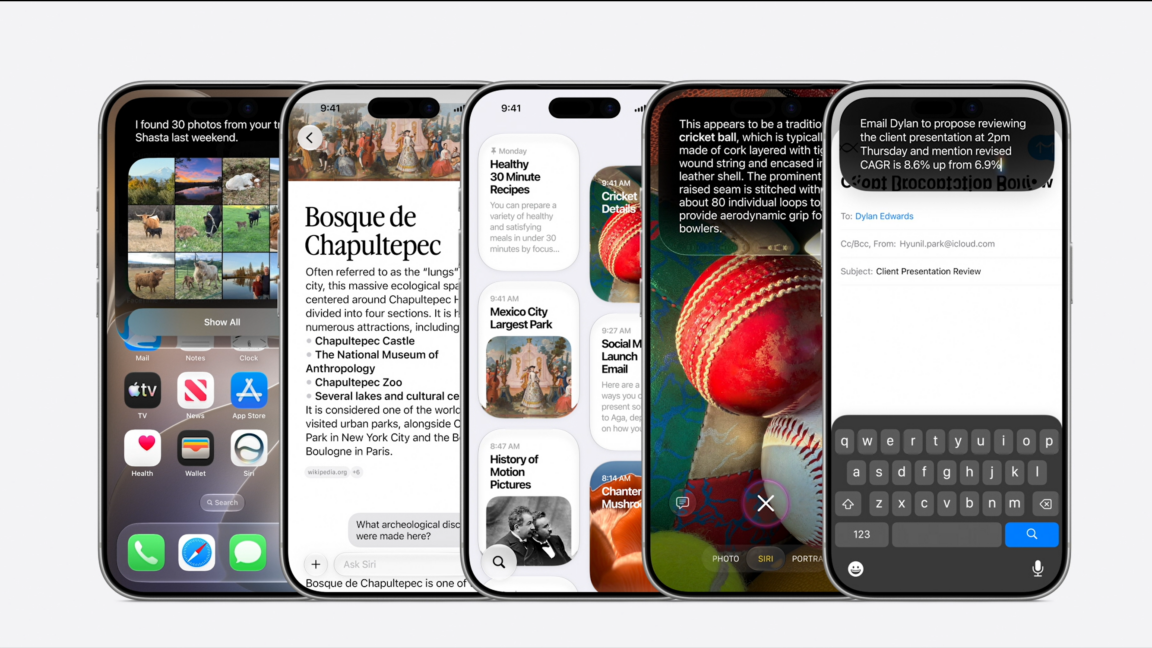
Apple has unveiled a significant overhaul of its Siri voice assistant, rebranding the update as "Siri AI" during its pre-filmed Worldwide Developers Conference keynote. The new system is powered by Google’s Gemini model, marking a strategic integration of external artificial intelligence into Apple’s proprietary Apple Foundation Models. The update promises a more conversational experience with tighter integration across iOS, macOS, and VisionOS, moving beyond simple command execution to handle complex, multi-step tasks.
Craig Federighi, Apple’s senior vice president of software engineering, positioned the release as a counter-narrative to competitors rushing AI development. He stated that the company believes truly helpful AI must be centred around user needs, contrasting Apple’s approach with rivals that appear to pursue technology for its own sake. The announcement included scripted demonstrations showing Siri managing schedules, finding recipes, and coordinating social events by drawing on personal context from messages and emails.
A central feature of the announcement is a new two-tiered structure for on-device Apple Intelligence. The most capable model, which offers improved dictation accuracy and a more expressive voice, will be restricted to devices meeting specific chip and memory requirements. Less capable devices that currently support Apple Intelligence will receive a reduced feature set, lacking the new voice options and some advanced processing capabilities.
Key capabilities include visual intelligence, allowing Siri to extract calendar updates from complex images via the camera app, and "Write with Siri," which generates text virtually anywhere a user types. On macOS, these features integrate with Spotlight search, enabling users to ctrl-click to ask questions about files or photos. Conversations will be stored locally and via iCloud in a new dedicated Siri app, ensuring cross-device continuity while maintaining privacy through private cloud compute for web-based "world knowledge" searches.
The features are scheduled for release this autumn and will initially be available only in English. Image generation features will be subject to daily usage limits due to reliance on off-device servers, with expanded access provided to iCloud+ subscribers. Apple emphasised that privacy protections remain non-negotiable, ensuring that conversation data is not accessible to the company or third parties.
