Anthropic unveils autonomous coding ambitions at London developer event
Representatives from Spotify, Monday.com and others report reshaping teams around Claude Code, though concerns persist over security and skill erosion.
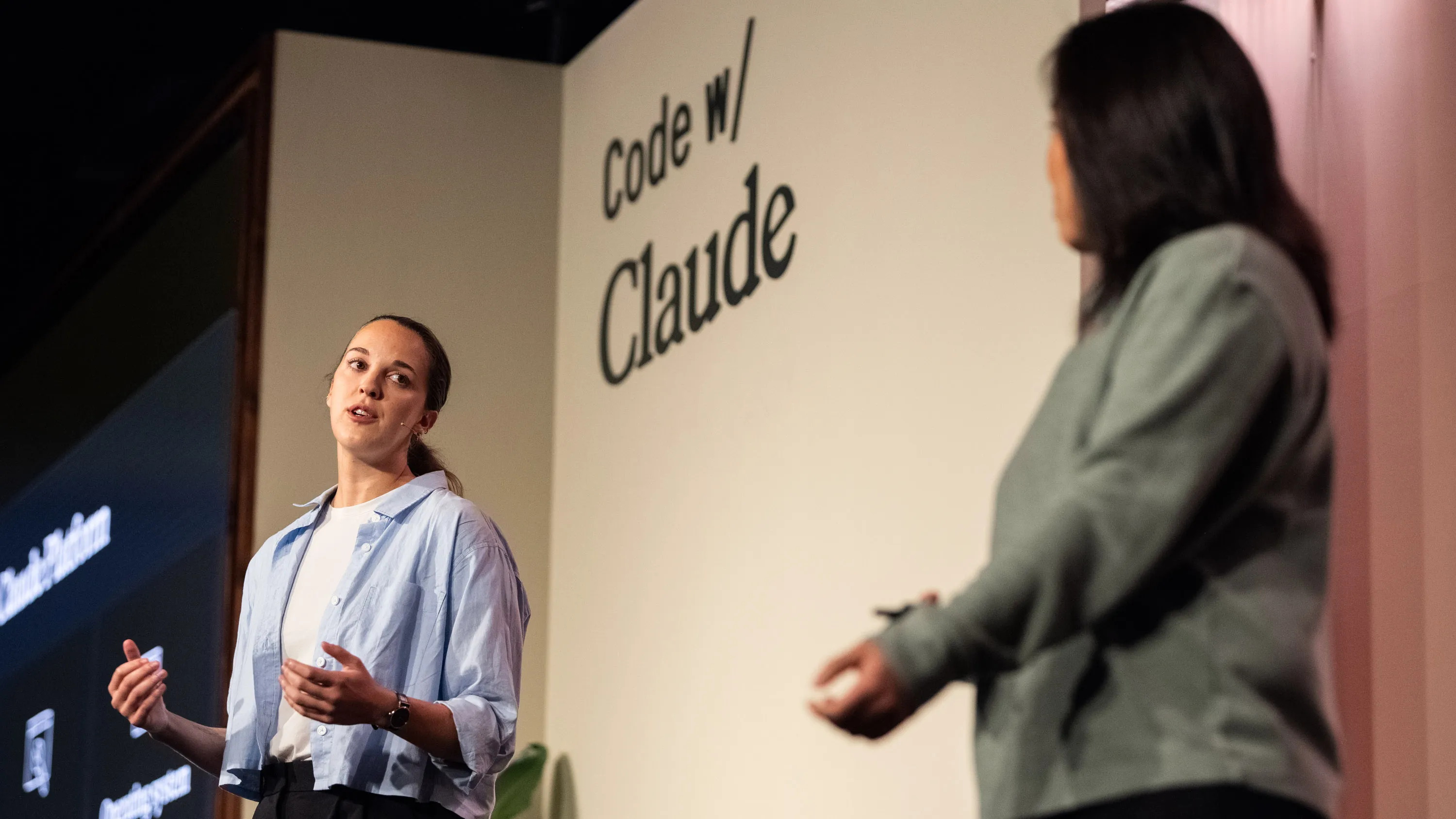
Anthropic held its 'Code with Claude' developer event in London on May 19, highlighting the increasing reliance on AI tools for software development. The company demonstrated its 'dreaming' feature, which allows Claude Code agents to record and consolidate task-specific information to improve future performance. While Anthropic aims for full automation where AI self-corrects without human intervention, some developers have expressed concerns regarding code quality, security vulnerabilities, and the erosion of manual coding skills.
The event showcased the increasing adoption of AI coding tools, with Anthropic engineers reporting that nearly half of attendees had shipped pull requests entirely written by Claude, and many had done so without reading the code. Anthropic demonstrated its 'dreaming' feature, which allows Claude Code agents to record and consolidate task-specific information to improve future performance and learn from previous errors. The company outlined its goal to push automation further, aiming for a paradigm where Claude prompts and corrects itself, potentially eliminating the need for human developers to see error messages.
Anthropic’s latest updates, specifically Claude 4.6 (released in February) and Claude 4.7 (released in April), have significantly improved Claude Code’s capabilities compared to the previous year’s release. Boris Cherny, head of Claude Code, stated that the default workflow is shifting from human prompting to Claude prompting itself. Ravi Trivedi, an Anthropic engineer, introduced the 'dreaming' feature, which involves agents writing notes to themselves to speed up onboarding for subsequent agents and consolidate patterns across tasks.
Katelyn Lesse, Claude engineering lead, described Claude as currently comparable to a mid-level engineer in writing code, though expert engineers remain necessary for system design and troubleshooting complex issues. Angela Jiang, Claude product lead, stated the long-term goal is for Claude to be able to build itself. The event featured 'vibe-coding' workshops from startups Lovable, Base44, and Monday.com.
Attendees included representatives from companies such as Spotify, Delivery Hero, Lovable, Base44, and Monday.com, who shared how they have reshaped their development teams around Claude Code. While the atmosphere at the conference was enthusiastic, external reports indicate that some coders are questioning the shift. Concerns raised in online forums include the difficulty of reviewing AI-generated code, the potential decline in manual coding abilities, and warnings from researchers about unsafe code that could make software more vulnerable to attacks.
Anthropic maintains that traditional software development best practices still apply, with Lesse noting that technical managers are often exhausted by the volume of code produced. Despite these operational challenges, the company continues to push for greater automation. As tools like Claude Code improve, the industry faces a significant shift in how software is built, balancing the efficiency of autonomous agents against the need for human oversight and security.
