Anthropic launches Claude Tag in Slack to capture enterprise institutional knowledge
The new 'always-on' feature allows Claude to learn from channel activity, maintain cross-channel context, and proactively flag issues, marking a strategic shift toward capturing tacit corporate knowledge.
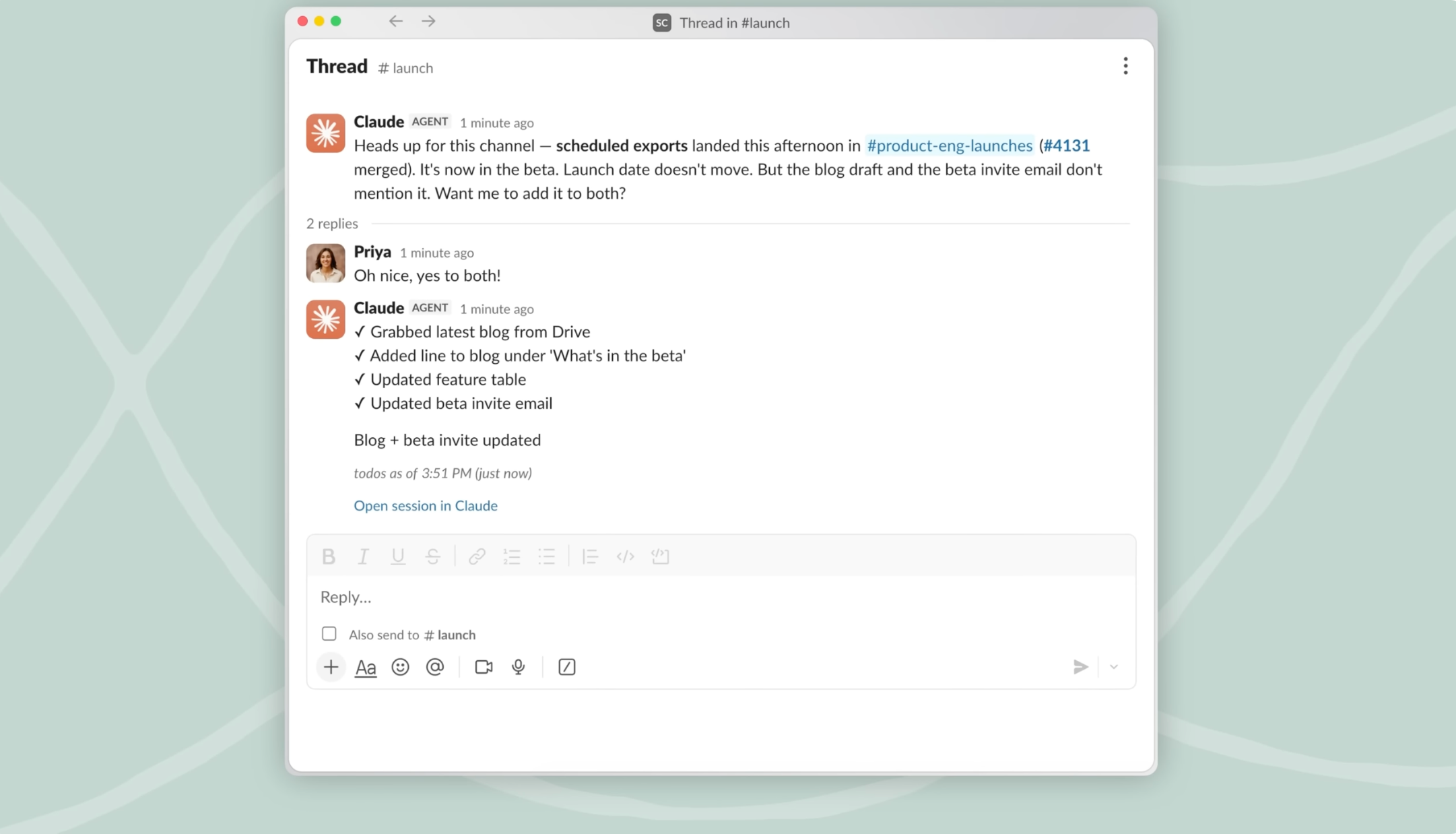
Anthropic has introduced Claude Tag, an 'always-on' artificial intelligence feature for Slack, currently available in a research preview for Enterprise and Team customers. The tool functions as a persistent AI teammate that operates within Slack channels, learning organisational context from ongoing conversations. Users can tag @Claude to request insights or assign tasks, with the system breaking down requests and executing them using accessible tools. This launch marks a significant evolution from previous on-demand integrations, adding a layer of persistent memory and context that was previously difficult to maintain in enterprise environments.
The core differentiator of Claude Tag is its ability to retain context across channels, allowing colleagues to pick up where previous interactions left off. When assigned a task, the AI breaks it down into stages and works through them using available tools, posting updates directly into the relevant Slack thread. Furthermore, if granted permission, Claude can automatically gather facts from other authorised channels within the organisation. This capability positions the tool not merely as a productivity assistant, but as a strategic mechanism for Anthropic to capture and utilise institutional knowledge.
To address enterprise governance concerns, system administrators retain full control over access. Each Claude identity is scoped to specific channels defined by admins, ensuring strict data separation between departments. For instance, a Claude instance configured for legal work cannot seed memories or information into an engineering channel, preventing cross-contamination of sensitive data. This scoped access model is designed to mitigate privacy risks while enabling the AI to operate effectively within complex organisational structures.
A notable addition is the 'ambient mode', which allows Claude to proactively join chats to provide updates, flag issues, or follow up on forgotten threads. Anthropic states this feature is intended to create the impression of working with a real colleague who can produce work in public view with greater context than before. However, the specific scope of this behaviour, its potential for intrusion, and the exact mechanisms for how long this memory persists remain unspecified in the current release.
The introduction of Claude Tag places Anthropic in direct competition with major technology firms vying for dominance in the enterprise AI space. Microsoft is pursuing a similar strategy with its Graph technology, expressed through Copilot and Work IQ. Meanwhile, Snowflake and Databricks are positioning their platforms as backend repositories for tacit organisational knowledge, and Glean is developing an intelligence layer that sits between the model and enterprise data to understand company context.
As the market for enterprise AI tools intensifies, the long-term impact of persistent AI memory on employee privacy and data governance remains unclear. While the research preview offers a glimpse into the future of integrated workplace intelligence, the precise boundaries of ambient monitoring and data retention will likely be scrutinised by corporate IT departments before widespread adoption.
