AMD extends FSR 4 hardware upscaling to older Radeon GPUs from July 2026
The company’s Computing and Graphics SVP confirms that FSR 4.1 will utilise INT8 processing on legacy silicon, a move that may incur a 10 to 20 per cent performance penalty compared to RDNA4.
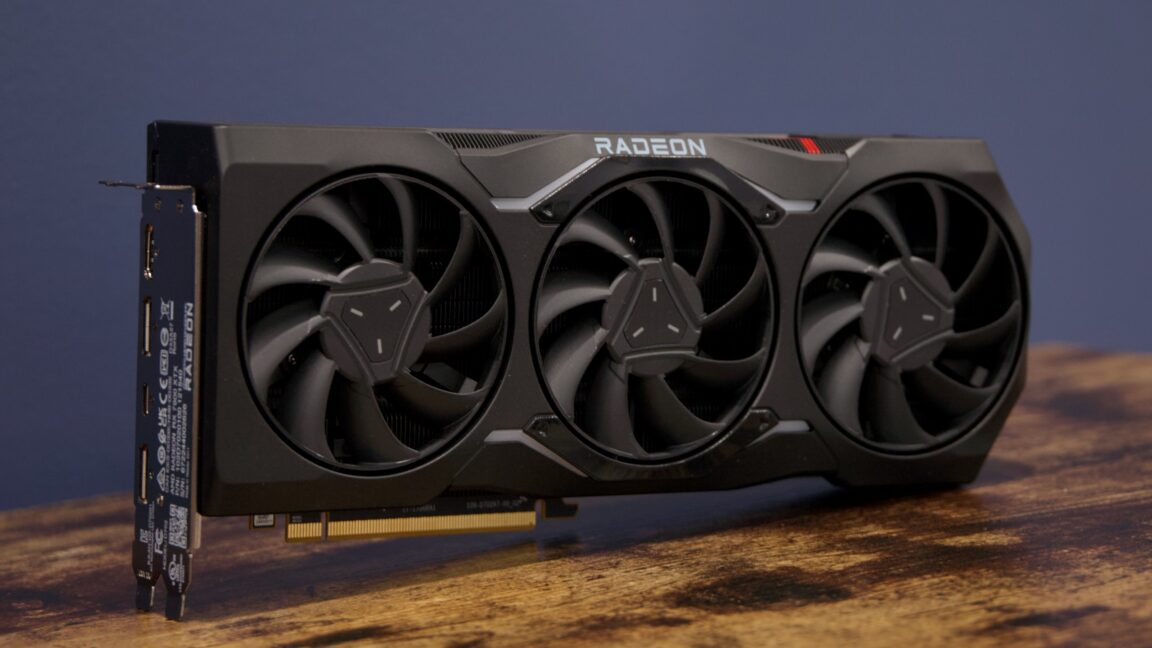
AMD has confirmed that its FSR 4 hardware-backed upscaling technology will be extended to older graphics architectures, beginning with RDNA3 and RDNA3.5 GPUs in July 2026. The expansion, announced by AMD Computing and Graphics SVP Jack Huynh, will also cover RDNA2 GPUs in early 2027. This decision addresses growing concerns among owners of legacy hardware regarding reduced driver support for older silicon.
The initial release of FSR 4 was restricted to the new RDNA4 architecture, available only on a limited range of Radeon RX 9000-series cards such as the RX 9070 XT and RX 9060 XT. The new rollout broadens eligibility to include Radeon RX 7000 and 6000 series cards, as well as integrated graphics units like the Radeon 890M, 8060S and 680M. Console support is also included, with the PlayStation 5 and Xbox Series X and S set to receive the technology via their shared RDNA2-based GPUs.
Implementation on older hardware presents technical challenges. While RDNA4 features AI accelerators supporting the FP8 data format, RDNA3 and RDNA2 rely on integer-based INT8 hardware. Huynh noted that adapting the technology required significant engineering effort to function on these older architectures. Consequently, performance on RDNA3 or RDNA2 silicon may suffer a 10 to 20 per cent hit relative to FSR 3.1 on the same hardware, or exhibit slight image quality differences compared to newer RDNA4 cards.
Modders have previously achieved FSR 4 functionality on INT8-supporting GPUs, reportedly experiencing the aforementioned performance penalties. It remains unclear whether AMD’s official implementation will improve upon these figures. Users will likely be able to enable the feature via a driver update in July 2026, with games supporting FSR 3.1 also able to be forced to use FSR 4 through the Radeon graphics driver.
The move positions FSR 4 as a direct competitor to Nvidia’s Deep Learning Super Sampling, which has long benefited from hardware acceleration. While previous versions of FSR were praised for their broad compatibility across various manufacturers, FSR 4.1 still lacks the universal reach of its predecessors. Nevertheless, the announcement signals a commitment to supporting customers who continue to utilise AMD’s older product lines, countering recent driver releases that hinted at a shift away from legacy support.
