AMD challenges Nvidia dominance with Helios AI rack system
Chair and CEO Dr Lisa Su positions Helios as the industry’s highest-performance AI rack, securing commitments from Microsoft, OpenAI, and Anthropic as the company prepares for shipments later this year.
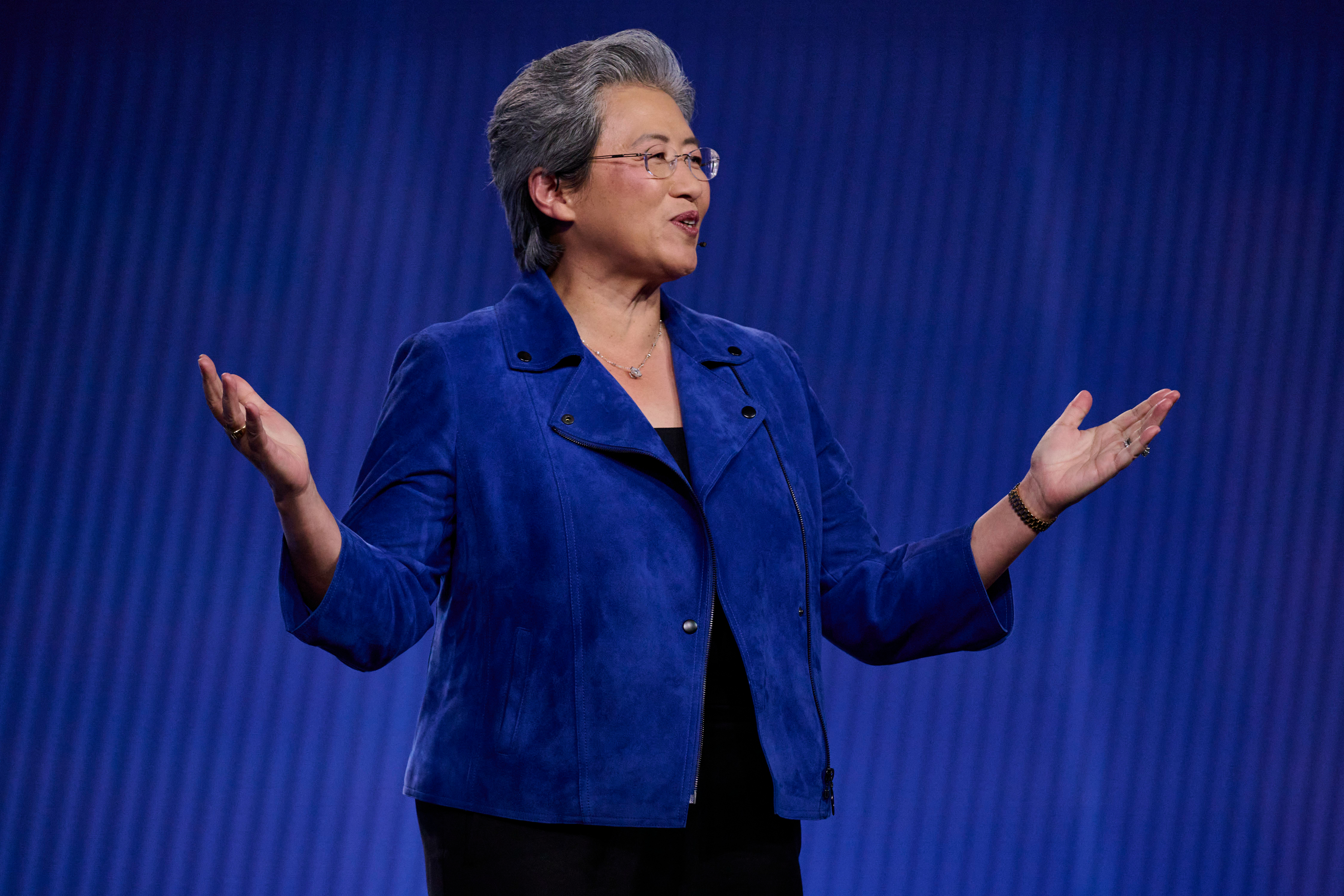
At its Advancing AI conference in San Francisco, AMD has unveiled Helios, a new rack-scale system designed to compete directly with Nvidia’s dominant offerings in the data centre market. Chair and CEO Dr Lisa Su described the system as the industry’s highest-performance AI rack, engineered to train and run large frontier models at gigawatt-scale deployment. The launch marks a significant escalation in the competition for high-performance computing infrastructure, with AMD positioning Helios as a direct alternative to Nvidia’s Vera Rubin and Grace Blackwell systems.
The system is scheduled to begin shipping to customers later this year and has already secured commitments from major technology firms including Microsoft, OpenAI, Meta, Oracle, and Anthropic. Rack-scale systems combine many processors into a single high-powered unit built specifically for data centres to handle compute-intensive workloads. AMD claims Helios offers superior performance metrics in certain areas compared to Nvidia’s current hardware, citing reports from The Register regarding its capabilities against the Vera Rubin system.
Microsoft CEO Satya Nadella announced on Monday that the company will expand its Azure infrastructure with Helios. Meanwhile, Anthropic and AMD announced a strategic partnership on Wednesday to deploy up to two gigawatts of GPUs via the new rack system. These commitments underscore the growing demand for scalable AI infrastructure as leading labs seek to manage increasingly complex model training and inference tasks.
During her remarks, Dr Su also introduced the Venice-X CPU, a data centre processor designed to handle high-computing workloads, which is expected to launch in 2027. She highlighted a step change in compute demand driven by the rise of agentic AI, noting that these agents require extensive reasoning and tool usage that necessitates significant GPU resources.
Looking ahead, Dr Su projected that the AI accelerator market could reach approximately $1.4 trillion by 2030. She stated that this figure would approach the size of the entire semiconductor market today, driven by the need for programmability as algorithms remain in their infancy. The company expects GPUs to make up the vast majority of this market due to the evolving nature of AI workloads.
Helios was first revealed in 2025 and was shown onstage at CES 2026 in January. The system’s development reflects the broader semiconductor industry’s response to the massive scale of AI computing requirements. As the sector matures, the ability to deploy efficient, high-performance racks at the gigawatt level will likely become a critical differentiator for cloud providers and AI laboratories.
