Amazon unveils AI-enabled Proteus warehouse robot
The e-commerce giant is piloting a new iteration of its Proteus robot that responds to verbal commands, with a scheduled rollout in Europe for the first half of 2027.
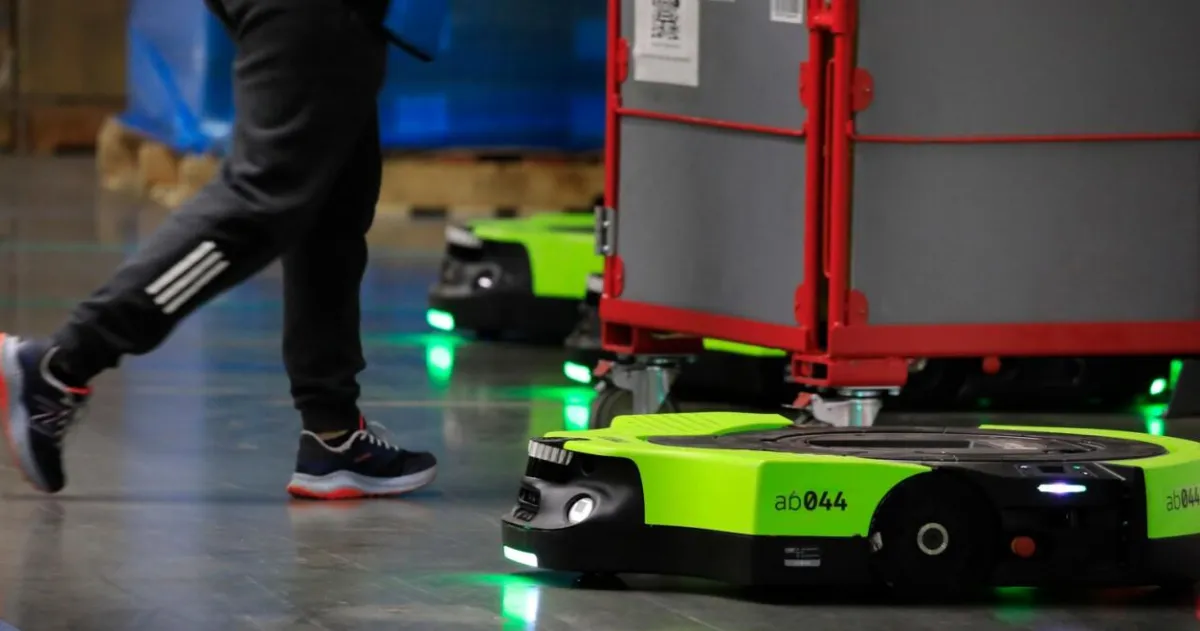
Amazon has announced an upgraded version of its autonomous warehouse robot, Proteus, which can now interact with workers using natural language rather than code. The AI-powered system allows employees to assign tasks verbally, with the robot determining priorities, routes, and timing. Unlike previous models restricted to dock areas, the new Proteus can operate across entire fulfilment centres and delivery sites. The technology is currently being piloted in Amazon’s labs, with plans for deployment in Europe during the first half of 2027. Amazon maintains that its robotics investments are designed to support, not replace, human workers.
The expanded capabilities mark a shift from previous iterations of the floor-level, tortoise-like systems, which required workers to use specialised software to direct operations. Scott Dresser, vice president of Amazon Robotics, confirmed the functionality, stating the robot figures out priority, route, and timing based on verbal instructions. This upgrade eliminates the need for the specialised coding interfaces that were previously necessary to manage the heavy lifting and large cart movements within warehouse environments.
Operational scope has also broadened significantly. While earlier models were confined to dock areas, the new Proteus is designed to transport containers upon arrival, move them between workstations, and assist employees across fulfilment centres and delivery sites. The company describes the system as capable of working anywhere items need to be moved, allowing for more fluid integration into daily logistics operations without the rigid constraints of previous iterations.
The technology is currently in the pilot phase within Amazon’s labs. Deployment is scheduled for Europe in the first half of 2027. Amazon is also planning to expand its Vulcan robot and a collaborative tote-handling system, first piloted in Barcelona, to more European sites in the coming year. These moves form part of the company’s broader robotics roadmap as it continues to execute a growing pivot toward automation across its global supply chain.
Amazon insists that its robotics investments are designed to support, not replace, human workers. The company claims to have hired hundreds of thousands of employees globally since introducing robotics into its operations and asserts it is creating new jobs alongside these technologies. Despite the increased automation, the firm maintains that the goal is to streamline operations and assist staff rather than displace the workforce.
