Alienware 15 review: A budget entry timed for rising component costs
Engadget finds the $1,000 Alienware 15 to be a welcome reprieve in a market defined by inflation, despite significant limitations in its screen and audio output.
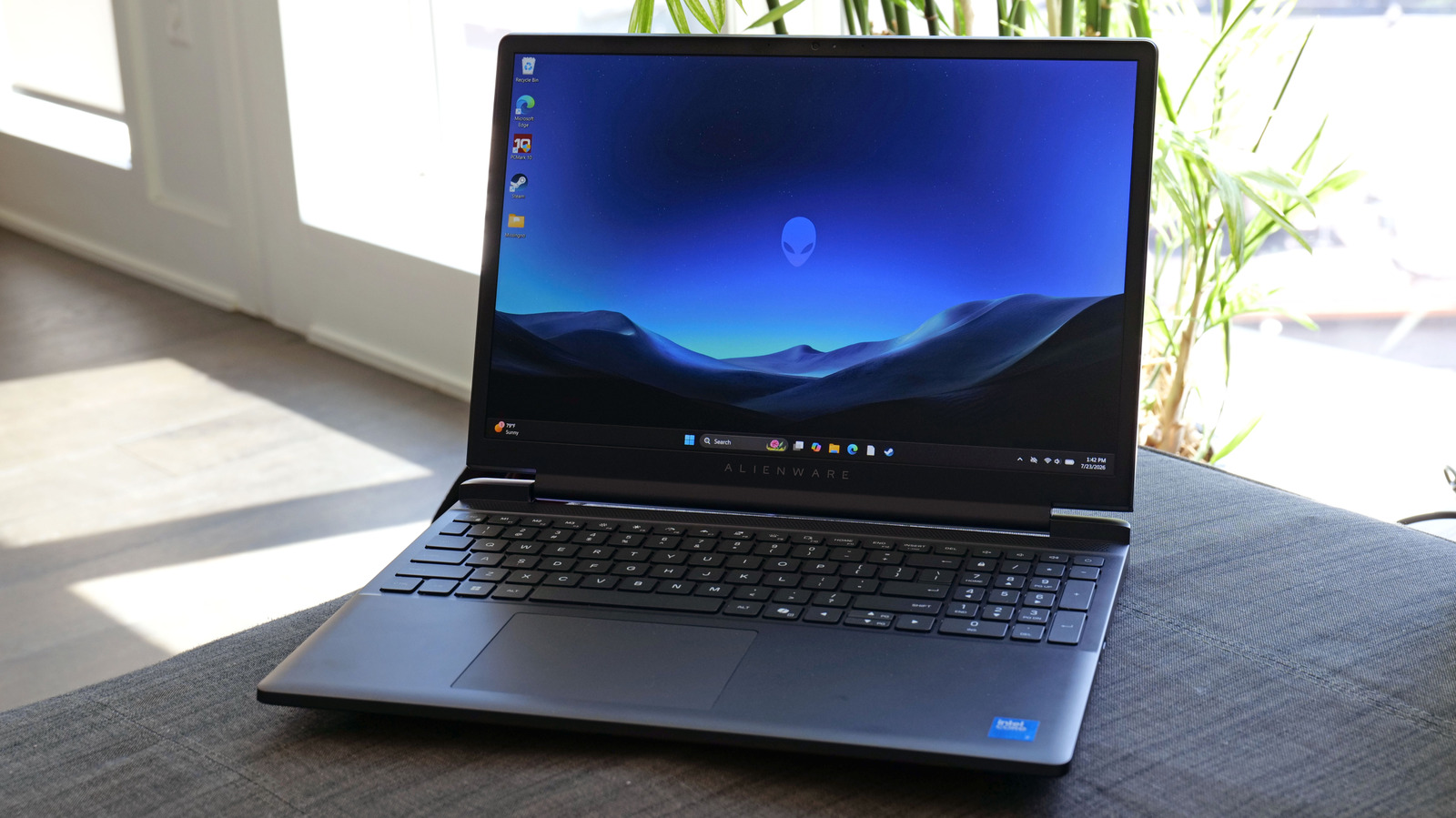
Alienware has officially entered the budget gaming laptop segment with the release of the Alienware 15, a move that marks the company’s first foray into the lower-priced market. Starting at $1,000, the device arrives at a critical juncture for consumers, as global manufacturers struggle to mitigate the impact of rising component costs for RAM and other hardware. The release is positioned as a timely option for buyers seeking value in an environment where prices for gaming gear, including consoles and handhelds, have seen consistent upward pressure.
The hardware departs from the premium metal chassis and extensive RGB lighting typical of the brand’s higher-end models. Instead, the Alienware 15 features a black plastic build with an opalescent badge and white keyboard backlighting. Despite the cost-saving materials, Engadget notes the chassis remains solid with minimal deck flex. The system retains a comprehensive port selection, including two USB-A 3.2 slots, two USB-C connections with power delivery and DisplayPort 1.4, HDMI 2.1, a 3.5mm audio jack, and 1Gb Ethernet.
Performance benchmarks for the reviewed configuration, equipped with an Intel Core 7 240H processor, 16GB of RAM, and an RTX 5050 GPU, demonstrate capable 1080p gaming capabilities. In Cyberpunk 2077, the laptop achieved 45 frames per second at 1080p Ultra Ray Tracing settings, jumping to 78 fps when ray tracing was disabled. Control ran at 96 fps on Epic settings. The base model, featuring an Intel Core 5 chip and RTX 4050 GPU, offers a lower entry point, while higher specifications can include up to an RTX 5060 graphics card.
The primary compromise in the design is the 15.3-inch 1,920 x 1,200 LCD display. While it supports a 165Hz refresh rate, the panel is limited to 300-nit brightness and covers only 62.5 per cent of the sRGB spectrum, resulting in washed-out colours. Engadget highlights that there are no upgrade options for the screen, making it the weakest component for users intending to perform photo or video editing. The webcam is similarly modest, utilising a 720p sensor capped at 30 fps, which is adequate for video calls but lacks sharpness for streaming.
Thermal management and battery life present mixed results. The fans can become loud under load, and bottom-mounted vents make lap usage impractical. However, the upgraded model’s 70WHr battery offers improved endurance over the base model’s 54WHr cell, lasting eight hours and four minutes on PCMark 10’s Modern Office test. For gaming, the laptop requires a power adapter, though it can sustain lighter tasks like Teamfight Tactics for approximately two hours on a single charge.
