AI memory crunch drives India’s steepest smartphone decline in six years
Samsung posts rare growth while Chinese brands lose share; analysts warn of price pressures until 2027
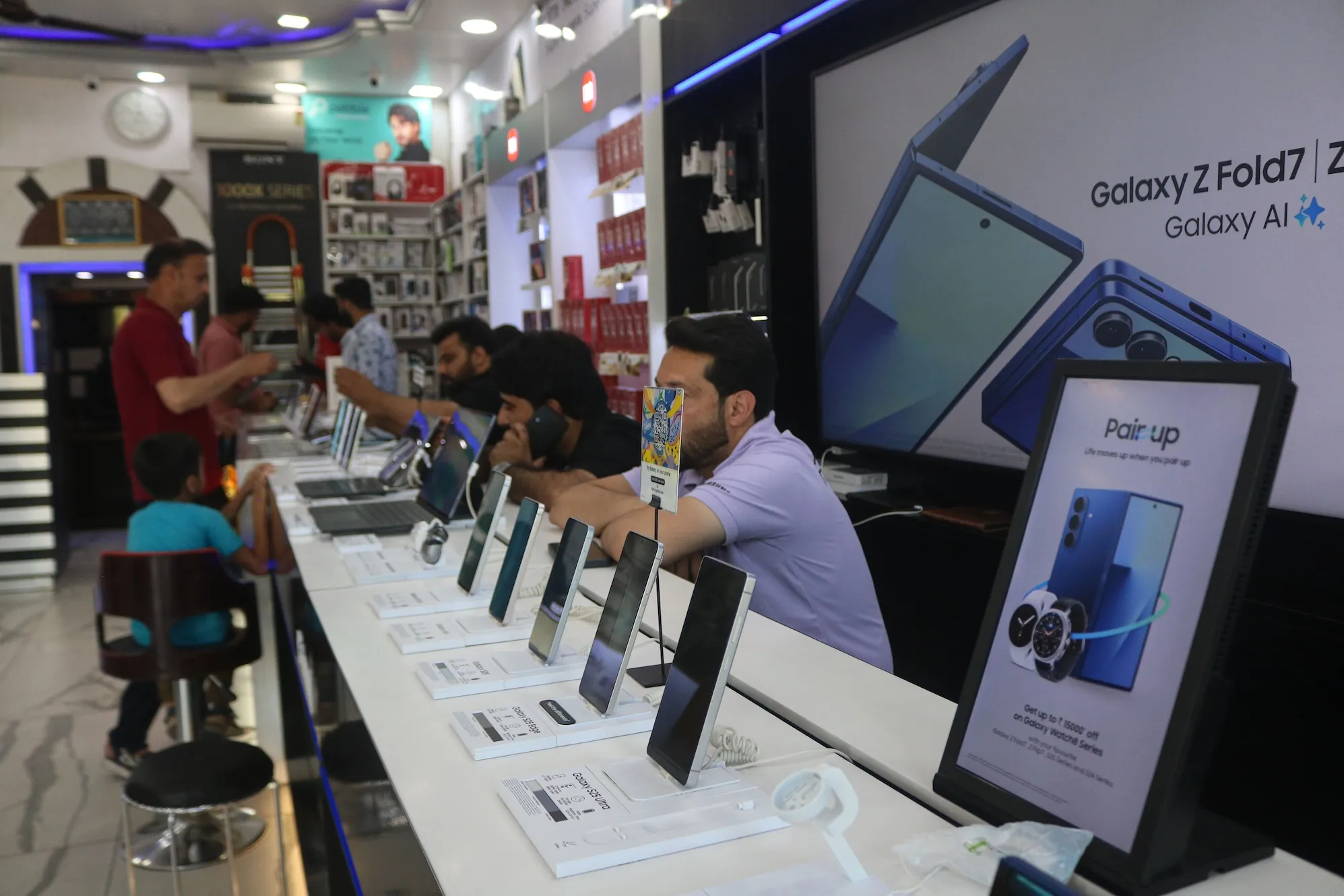
India’s smartphone market recorded a 10 per cent year-on-year decline in shipments during the April-June quarter, marking the steepest drop in six years. According to market research firm Counterpoint Research, the contraction is driven by a global shortage of memory chips, as manufacturers such as Samsung, SK Hynix, and Micron shift production capacity toward high-bandwidth memory for artificial intelligence data centres. This reallocation has reduced supply for standard consumer components, pushing up handset prices and disproportionately affecting the price-sensitive Indian market.
The impact has been most severe in the sub-₹20,000 segment, which accounts for approximately 60 per cent of India’s smartphone market. Shipments in the sub-₹15,000 tier fell 45 per cent year-on-year, leading to a decline in combined market share for Chinese brands to their lowest level for two calendar quarters since 2020. In contrast, Samsung was the only major brand to report shipment growth, rising 2 per cent year-on-year, while Apple saw a 3 per cent decline attributed to supply constraints rather than weak demand.
Consumer behaviour is shifting in response to rising costs, with prices across models increasing by between 4 per cent and 68 per cent. Tarun Pathak, Counterpoint Research’s vice president of research, noted that replacement cycles are expected to stretch from approximately 3.5 years to around four years as buyers delay upgrades. Financing has become central to affordability, allowing some consumers to access higher-priced devices, while others are turning to the secondhand market.
The economic pressure is prompting strategic retrenchment among manufacturers. Chinese brand OnePlus announced it would cease launching new products in Europe and North America to focus on profitable markets, including India. Counterpoint data indicates that China accounted for 74 per cent of OnePlus’ global shipments in the first quarter, up from 59 per cent a year earlier, while its share of the Indian market fell to 19 per cent from 30 per cent.
Looking ahead, analysts project that memory shortages and elevated prices will persist until at least the end of 2027. Kiranjeet Kaur of IDC highlighted that the weaker Indian rupee is exacerbating margin pressures by making imports costlier, with companies passing these costs on to consumers. IDC expects India’s smartphone shipments to decline by double digits in the second quarter, following a 4.1 per cent drop in the first quarter.
