AI in weather science proves to be a tool, not a replacement for physics
While machine learning offers significant computational savings, its inability to handle extreme events and counterfactuals necessitates a hybrid approach that retains physical guardrails.
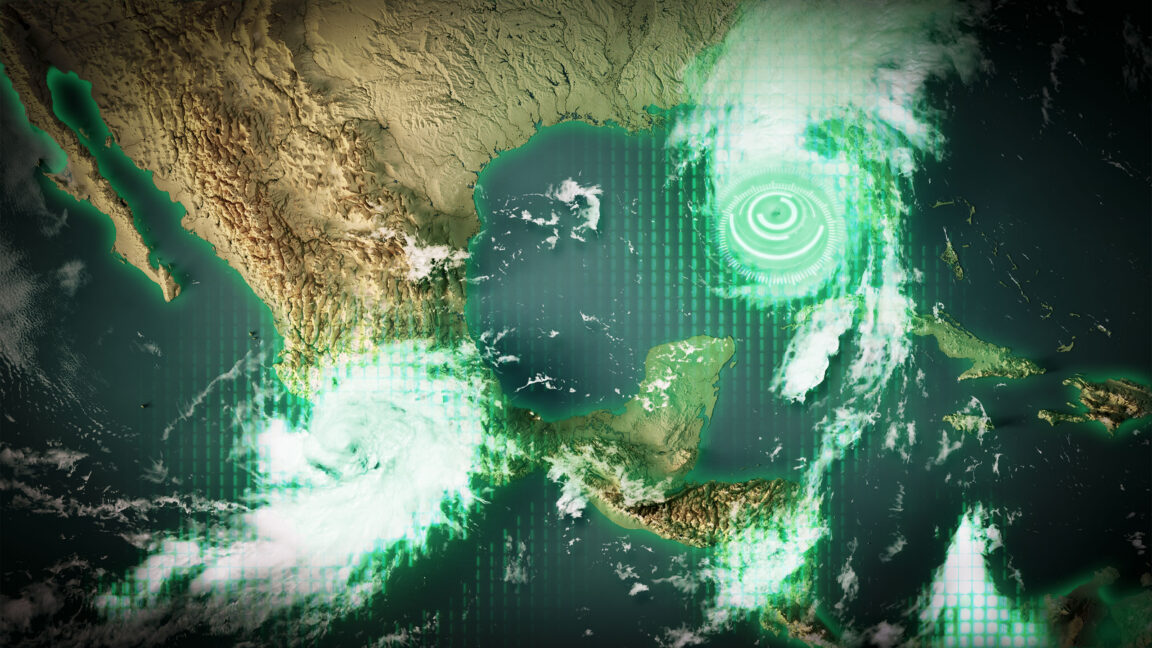
Artificial intelligence is being integrated into weather and climate science as a supplementary instrument rather than a revolutionary replacement for traditional physics-based models. Recent analysis indicates that while machine learning offers substantial computational efficiency, it lacks the physical consistency required for long-term climate projections and struggles with extreme weather events. Consequently, major institutions are adopting hybrid approaches that retain physical guardrails while leveraging AI for specific parameterisations and model calibration.
The European Centre for Medium-Range Weather Forecasts (ECMWF) deployed its machine-learning-based AIFS model in February 2025, running it alongside its long-standing Integrated Forecasting System (IFS). The AIFS model, trained on reanalysis data to predict global weather snapshots six hours ahead, runs significantly faster and more efficiently than the IFS model. ECMWF reports that AIFS requires approximately 1,000 times less energy and three minutes per forecast run, compared to thirty minutes for the traditional system.
Despite these efficiency gains, machine learning models face distinct limitations regarding accuracy in critical scenarios. Because these models rely on historical patterns, they often underestimate the frequency and intensity of record-breaking extreme weather events that were not present in their training data. This smoothing effect makes them unsuitable as standalone solutions for extreme weather forecasting, where life-or-death accuracy is paramount.
To address these gaps, researchers are implementing hybrid frameworks such as the Climate Modeling Alliance (CliMA) project at Caltech. This initiative builds a new climate model using Julia and cloud-native architectures, retaining physical laws while using machine learning for specific tasks. For instance, the project replaces snow cover parameterisation modules with algorithms constrained by physical rules, such as ensuring water in equals water out, to maintain scientific reliability.
Other institutions are utilising machine learning to optimise model calibration and develop emulators. The NASA Goddard Institute for Space Studies (GISS) used machine learning to test 450 combinations of parameter values to identify the best fit for atmospheric simulations. Additionally, emulators are being trained to mimic computationally expensive physics-based models, allowing scientists to rapidly explore emissions scenarios without requiring supercomputer time.
Explainable AI techniques, including backpropagation, are also being employed to increase transparency in these "black box" models. By identifying which data points most influence a prediction, scientists can verify if model outputs align with known physical phenomena, such as El Niño/La Niña patterns. This approach ensures that machine learning contributes to scientific understanding without compromising the rigorous verification standards of atmospheric science.
The consensus among meteorologists and climate scientists is that machine learning is a powerful addition to the analytical toolkit, provided its limitations are understood. While it has opened new avenues for rapid forecasting and scenario exploration, it does not eliminate the need for physics-based calculations. The integration of AI is therefore characterised by cautious adoption, focusing on efficiency and calibration rather than a wholesale replacement of established scientific methods.
