AI-driven 'conservation chemistry' targets wildlife with precision drugs
Using Google DeepMind’s AlphaFold and automated robotics, Cernak designs species-specific treatments for animals such as Gila monsters and loggerhead sea turtles, arguing that high-tech pharmaceutical methods are essential to address the mass extinction crisis.
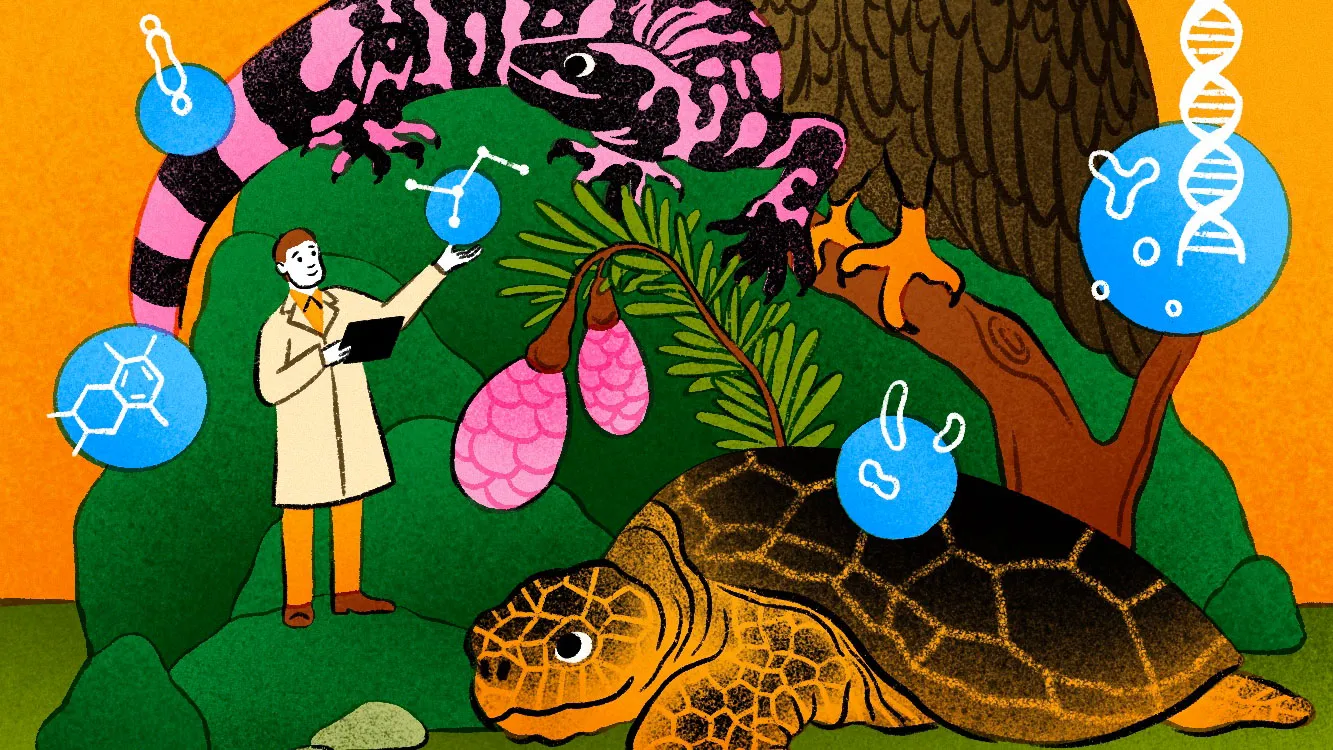
Tim Cernak, an associate professor at the University of Michigan, is pioneering a discipline he terms 'conservation chemistry' by applying artificial intelligence to wildlife medicine. A former chemist for Merck with nearly two decades of experience in the pharmaceutical industry, Cernak transitioned to conservation in 2018 after observing that animals are frequently treated with human-formulated drugs that cause indiscriminate harm. He argues that the high-tech tools used to develop human medicines should be deployed to address the global mass extinction crisis.
Cernak utilises Google DeepMind’s AlphaFold model to visualise the three-dimensional structures of mutant proteins, bypassing traditional plate-growth methodologies. This AI-driven approach allows him to generate potential drugs that can latch onto specific biological targets. By integrating automated laboratory robots, he can process up to 1,500 potential drug reactions per day, significantly accelerating the design workflow that is typically expensive, slow, and prone to failure.
The scope of his work covers a diverse range of species, including Gila monsters, loggerhead sea turtles, and bald eagles. Cernak has developed precision therapies for conditions such as parasites in Gila monsters, contagious tumours in loggerhead sea turtles, and avian flu in bald eagles. He also notes that his work extends to flora, including the development of a precision insecticide for hemlock trees under attack from invasive species.
Cernak is particularly motivated by the desire to reciprocate benefits to species that have aided human health. He highlights the Gila monster, whose hormones have informed popular human weight-loss drugs such as Ozempic. He contrasts this with the current standard of care for frogs infected with deadly skin infections, which often involves itraconazole, an antifungal that can be lethal to the amphibians.
The term 'conservation chemistry' carries historical baggage, referencing the decimation of US bald eagle populations by DDT in the 1960s and the death of millions of Indian vultures due to cow painkillers in the 1990s. Cernak acknowledges these risks but contends that excluding chemists from conservation efforts is a missed opportunity. He emphasises that current chemical tools used in the field are not cutting-edge and that the integration of advanced pharmaceutical methods is critical for modern conservation.
