Adobe expands experimental Project Indigo app with generative AI tools
Adobe’s experimental Project Indigo camera application is shifting focus from natural aesthetics to generative assistance, introducing a new suite of AI-driven editing and critique features currently available to a limited testing group.
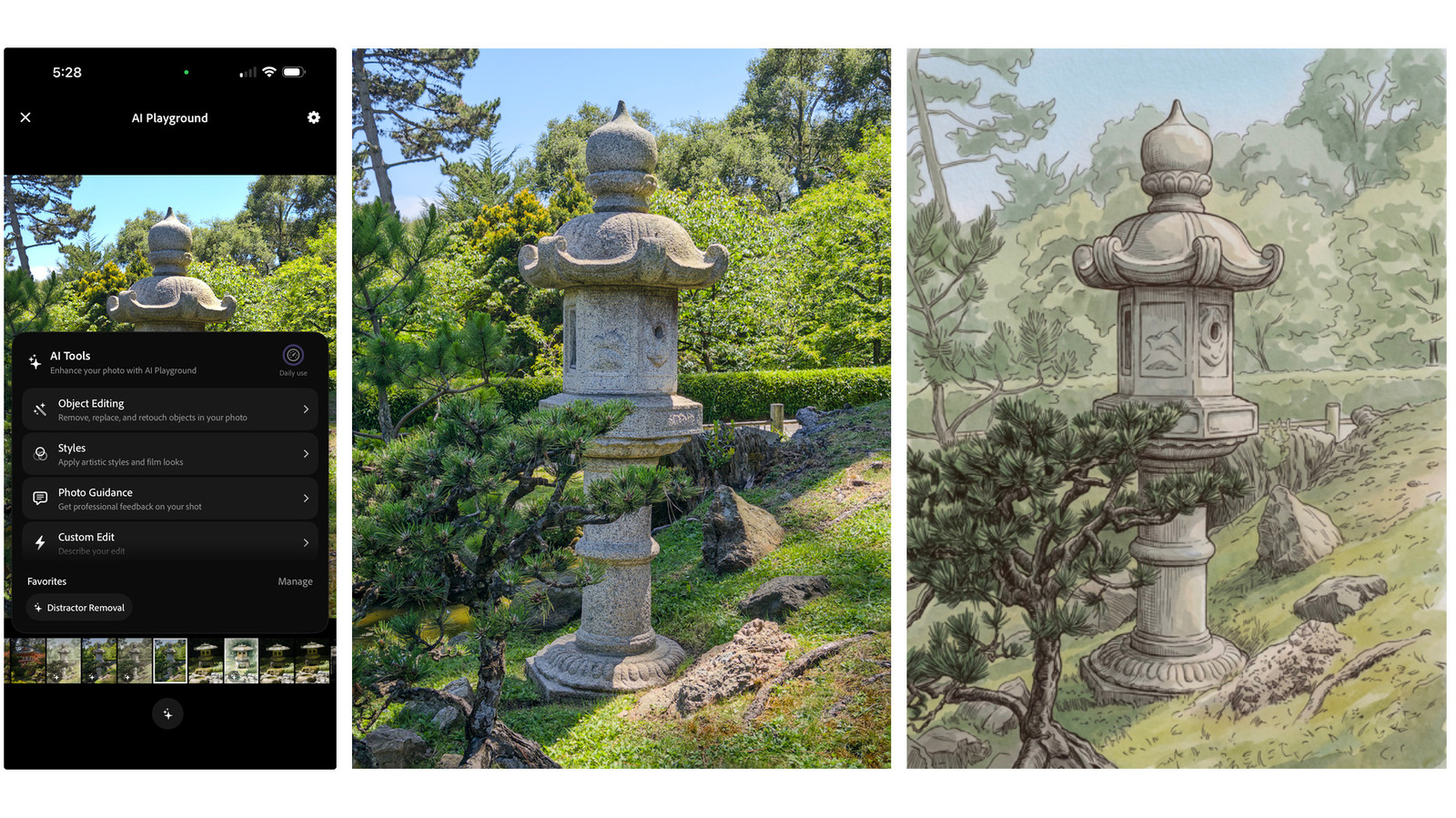
Adobe has significantly updated its experimental Project Indigo camera application, introducing a new feature set dubbed 'AI Playground' developed by the company's Nextcam Team. The update marks a strategic pivot for the app, which was originally launched last year to appeal to smartphone photographers seeking a natural SLR-like aesthetic. The latest iteration integrates generative artificial intelligence tools powered by Google’s Nano Banana model, aiming to assist mobile photographers at the point of capture.
The AI Playground suite comprises four distinct sections designed to leverage generative capabilities. Object Editing allows users to remove distractions such as people or signage and blur backgrounds to simulate shallow depth of field. The Styles section enables the conversion of photographs into artistic renditions, including pen and ink or ink line with colour wash effects. Photo Guidance provides real-time critique and suggestions on framing and lighting, while Custom Edit offers prompt-based alterations, such as repositioning objects within a frame to match specific lighting conditions.
Marc Levoy, who heads the Project Indigo project and previously developed camera capabilities for Google Pixel, has positioned these tools as a solution to the complexities users often face with generative AI prompts. By providing descriptive and actionable feedback, the update seeks to offer practical utility for photographers who may struggle with crafting precise instructions for AI models. The team noted that while style transfer effects are not novel in photography software, the integration of the Nano Banana model aims to enhance the quality and flexibility of these transformations.
Currently, Adobe is limiting access to the AI Playground features to a small percentage of users for a period of a few weeks. The company has indicated that the availability of the free version is temporary, stating it cannot offer the tools indefinitely. If the features prove popular, Adobe may extend the trial period, expand access to more users, or potentially introduce a paid version. The Nextcam Team also acknowledged that it could switch from Google’s Nano Banana model to other AI models in the future depending on performance and strategic needs.
This development underscores Adobe’s broader exploration of how generative AI can be embedded into creative workflows. While the app retains its core identity as an experimental tool, the addition of these AI-driven capabilities represents a significant expansion of its functionality. As Adobe tests these features, the industry will be watching to see how such integrations influence user behaviour and whether they establish new standards for mobile photography assistance.
