49ers draft regret: Analysts say Emeka Egbuka would have been superior to Mykell Williams
With Mykell Williams sidelined by an ACL tear and Brandon Aiyuk departed, analysts argue the team should have targeted Ohio State’s Emeka Egbuka to address a critical gap in the receiving corps.
The San Francisco 49ers selected defensive player Mykell Williams with the No. 11 overall pick in the 2025 NFL draft, a move intended to upgrade the defensive unit. However, the selection has drawn scrutiny following Williams’ injury. After appearing in nine games and recording just one sack, Williams suffered an anterior cruciate ligament tear, significantly limiting his impact on the field.
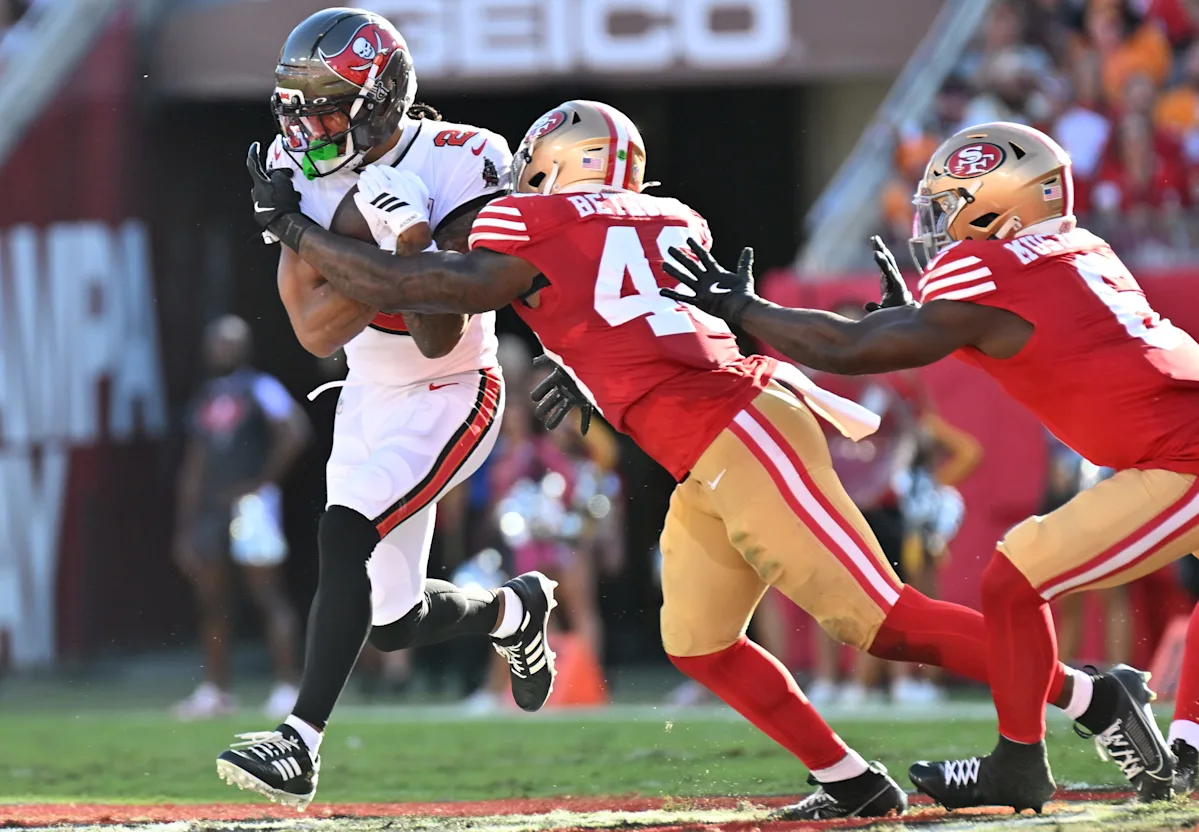
Sports analyst Gary Davenport of Bleacher Report has suggested that, with the benefit of hindsight, the 49ers would have been better served selecting Ohio State wide receiver Emeka Egbuka. Egbuka was taken No. 19 overall by the Tampa Bay Buccaneers in the actual draft. Davenport’s assessment highlights a potential strategic error by San Francisco, noting that Egbuka’s production would have addressed a more pressing organisational need.
Egbuka’s rookie season began strongly, recording three 100-yard receiving games and an equal number of contests with double-digit catches. Although his production declined in the second half of the season due to a reduction in targets, he demonstrated the capability to function as a primary receiver. This profile aligns with the 49ers’ requirements following the departure of Brandon Aiyuk, who will not suit up for the team again.
The absence of a star wide receiver has left the 49ers with a receiving group described as a mix of young developmental players and aging stars. Current personnel includes Jauan Jennings, Kendrick Bourne, and Ricky Pearsall. Quarterback Brock Purdy’s top targets are listed as Mike Evans and Christian Kirk, with Pearsall and 2025 second-round pick De’Zhaun Stribling identified as other potential starters.
Analysts argue that adding Egbuka to the existing roster would have provided a more stable foundation for the offence. The current configuration, reliant on a combination of veteran presence and emerging talent, lacks the established No. 1 receiver that the team required. The retrospective analysis suggests that securing a high-output receiver like Egbuka would have been a more effective use of the team’s draft capital than the defensive selection that ultimately yielded limited results due to injury.