WIRED Guide Demonstrates Basic Radio Wave Detection Using Household Items
A new feature from WIRED outlines how to construct a functional radio transmitter and receiver using common objects, including a grill lighter and aluminium foil, to illustrate the principles of early wireless communication.
WIRED has published a detailed guide on constructing a functional radio transmitter and receiver using common household items, offering a practical demonstration of electromagnetic radiation principles. The transmitter is built from a standard grill lighter, which generates electromagnetic waves through a piezoelectric spark, while the receiver is a simple circuit comprising a non-metal container, a button cell battery, an LED, and balls of aluminium foil. The article explains the underlying physics of these waves and references historical wireless telegraphy, including the technology used during the Titanic disaster.
The transmitter relies on the piezoelectric crystal in the lighter’s trigger, which produces a high voltage when struck, causing an electron avalanche in the air. This accelerating charge creates a changing electric field, which in turn generates a changing magnetic field, allowing the disturbance to radiate outward as an electromagnetic wave. The guide notes that radio waves are a form of electromagnetic radiation similar to visible light but with lower frequency and energy, making them harmless to humans and ideal for wireless communication as they can travel vast distances and pass through obstacles.
The receiver is identified as a coherer, a device historically used by Guglielmo Marconi in the 1890s, who used nickel and silver shavings rather than aluminium foil. The aluminium foil balls function as a coherer; the electric field of the radio waves breaks down the oxidation layer between the balls, allowing current to flow and illuminate the LED. This mechanism mirrors the early wireless telegraph systems that transmitted Morse code and were capable of crossing oceans, a capability demonstrated during the Titanic disaster in 1912.
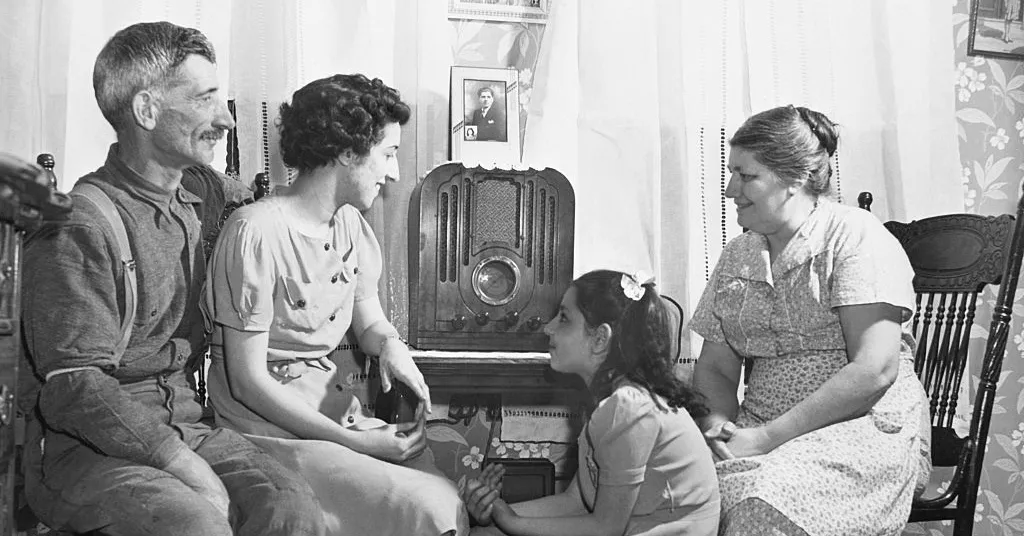
While effective for basic detection, the system operates on a single channel and is not suitable for modern multi-user communication environments like the cell phone era. The guide explains that unlike mechanical waves such as sound or ocean waves, electromagnetic waves do not require a physical medium and can propagate through empty space. The article also notes that vacuum tubes were later developed to enable the transmission of continuous signals for voice and music, leading to the popularity of radio in living rooms during the 1920s.
The publication highlights that while the "Golden Age of Radio" is often cited as ending in the 1950s with the rise of television, radio signals remain integral to modern technologies such as Wi-Fi, GPS, and mobile communications. The DIY project serves as an educational tool to explore these concepts, though the guide cautions that the device is for demonstration only and is not capable of transmitting or receiving standard broadcast radio signals.
The experiment underscores the fundamental physics of how electric charges create oscillating fields that self-propagate through space. By using simple materials, the guide illustrates how early inventors like Marconi achieved long-distance communication before the development of more complex systems. The article provides a clear link between the basic physics of electromagnetic radiation and the historical evolution of wireless technology, from early telegraphy to the digital age.
Readers are advised that the guide involves creating electrical circuits and sparks, and should exercise caution to avoid minor burns or electrical shocks. The project is designed to demonstrate the detection of radio waves rather than to establish a functional communication network. The guide concludes by noting that while the system is effective for educational purposes, it lacks the channel capacity required for contemporary communication needs.

