Verge experiment reveals cost and complexity of MacBook Neo aesthetic mods
A recent teardown by The Verge highlights that while the MacBook Neo is the most repairable Mac in years, swapping components for mixed colours is financially inefficient and risks hardware damage without proper tools.
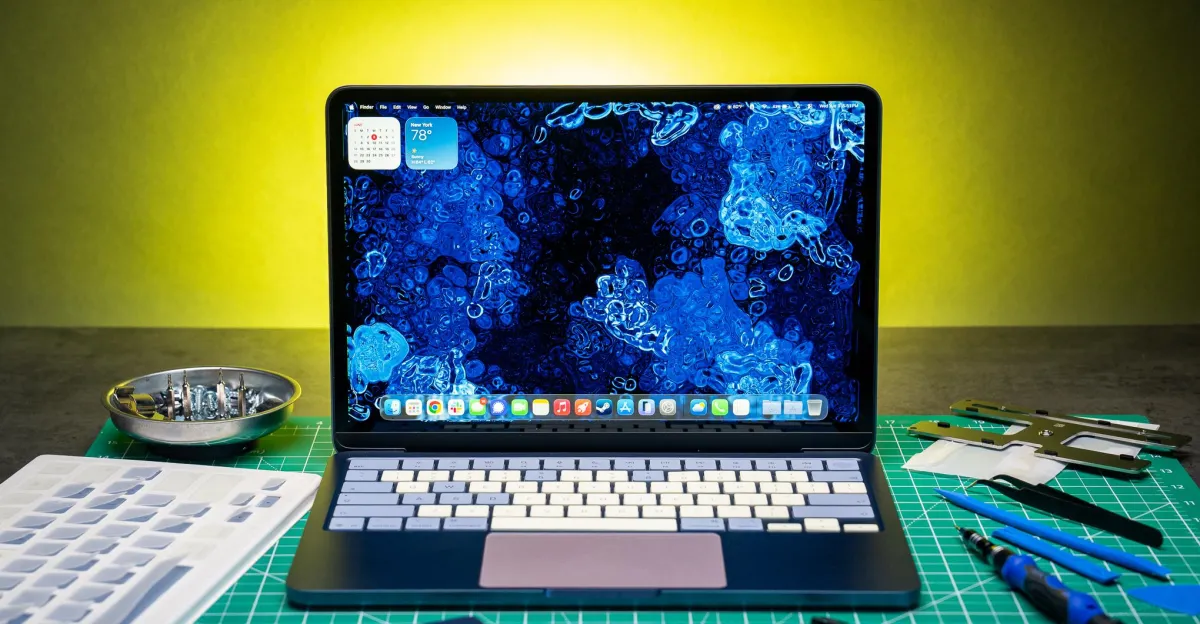
Apple’s entry-level MacBook Neo, priced at $599, has been identified as the most user-repairable Mac model in recent years, allowing owners to purchase and install official replacement parts directly. However, a recent experiment by The Verge demonstrates that leveraging this self-service capability for aesthetic customisation is neither cost-effective nor straightforward. The publication’s editor purchased an indigo unit and four official spare parts in blush and citrus colours, including a trackpad, bottom case, USB-C ports, and keycaps, for a total of $165.64 plus tax.
The financial outlay represents nearly 30 percent of the laptop’s base price, underscoring the economic inefficiency of modifying the device purely for visual appeal. While the initial replacement of the bottom case, trackpad, and USB-C ports took approximately 40 minutes and required only basic tools such as a pentalobe screwdriver and Torx drivers, the cost for just these three components stands at $126.64. The editor noted that spending $80 to replace a functional trackpad feels excessive, suggesting that such modifications are better suited for enthusiasts rather than general consumers.
The process became significantly more complex and risky when the editor attempted to swap the keycaps. Aiming for a two-tone aesthetic similar to mechanical keyboards, the editor planned to replace the alpha, number, space bar, and arrow keys with citrus-coloured units while retaining indigo modifiers. However, the editor overlooked the necessity of specific adhesive and plastic removal lever tools sold by Apple, opting instead to use a spudger. This decision, compounded by the lack of immediate access to proper instructions, led to the damage of several key hinges and the shearing of a metal fin on an arrow key’s scissor switch.
Further complicating the repair, the instructions for reassembling the keys were buried in a secondary page linked at the bottom of Apple’s written guides, rather than being prominently displayed. Apple’s self-service repair store, managed by a third-party logistics provider, features a spartan website design that may obscure vital information for inexperienced users. The editor was forced to rely on external video tutorials to correct the damage, ultimately retaining original indigo keys for certain positions to complete the build.
Despite the avoidable errors and the high cost of parts, the experiment concluded that the MacBook Neo’s repairability remains a positive development for the industry. The editor estimated that swapping only the keycaps would cost $39 plus $13 for the necessary toolkit, a more viable entry point for customisation. The findings suggest that while Apple’s trend toward greater repairability is commendable, the self-service infrastructure requires clearer guidance and better tool integration to prevent user error and hardware damage.
