US Supreme Court Upholds FCC Authority in $104 Million Location Data Fine Case
The High Court determined that Federal Communications Commission forfeiture orders are nonbinding until enforced, preserving the agency’s ability to levy penalties for privacy violations without infringing on constitutional rights.
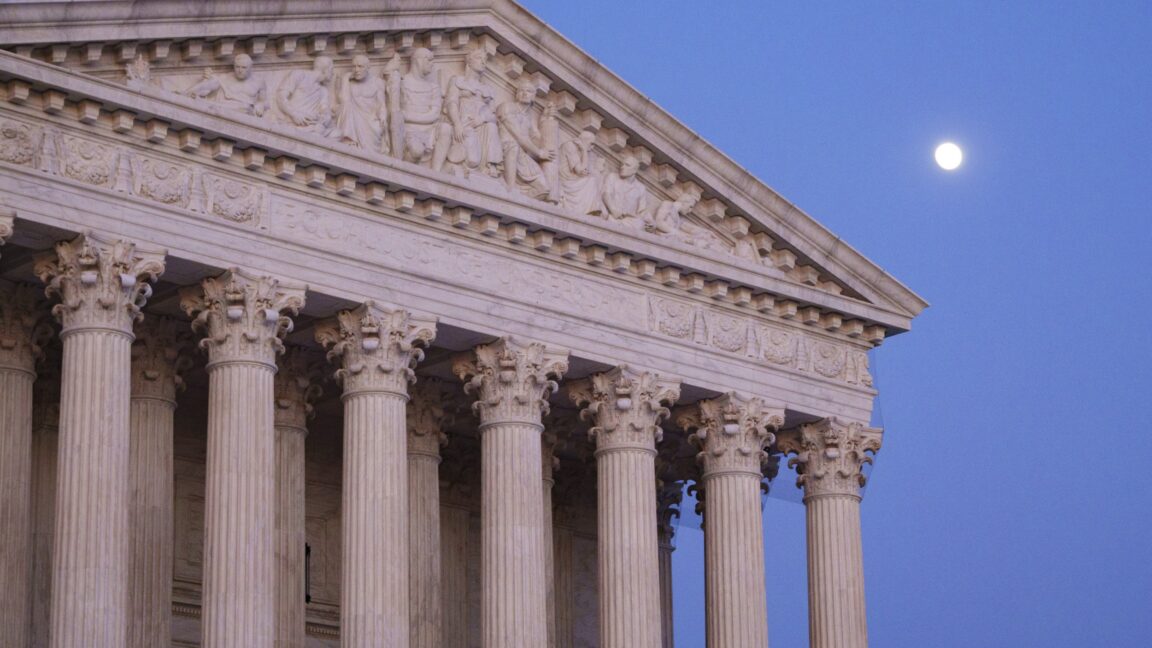
The US Supreme Court has ruled 8-1 that the Federal Communications Commission (FCC) did not violate the Seventh Amendment right to a jury trial when issuing fines to AT&T and Verizon for the unauthorised sale of users’ real-time location data. The decision resolves a circuit split and reinforces the regulatory body’s power to impose civil penalties for privacy breaches identified in 2018, with fines totalling $104 million levied in 2024.
Chief Justice John Roberts, writing for the majority, determined that the FCC’s forfeiture proceedings align with established Seventh Amendment precedents. The Court found that the penalty orders were nonbinding until enforced by a court, meaning the carriers retained the option to refuse payment and force the government to pursue collection through judicial means, where a de novo jury trial would be required.
The ruling distinguished the case from the Supreme Court’s June 2024 decision in Securities and Exchange Commission v Jarkesy. In that instance, the Court found that SEC penalties were immediately enforceable, thereby triggering jury trial rights. By contrast, the Court noted that government lawyers seeking to collect an FCC fine must prove the violation to a jury, effectively rendering the Commission’s initial findings irrelevant to the final determination of liability.
During oral arguments, Justice Brett Kavanaugh observed that the carriers had effectively secured their legal standing regarding future proceedings, noting that the government acknowledged its orders are nonbinding without a jury trial. The Court also dismissed arguments that reputational harm alone justified a jury trial, stating that such risks do not alter the textual requirements of the Seventh Amendment, which applies to suits where the value in controversy exceeds twenty dollars.
Justice Clarence Thomas dissented, arguing that the FCC’s process was inconsistent with constitutional requirements. He contended that the majority’s interpretation, which treats the orders as mere nonbinding notices, should govern future proceedings to ensure harmony with the Constitution, but maintained that the specific procedure used against AT&T and Verizon did not comply with these limits.
The decision was welcomed by advocates for consumer privacy. John Bergmayer, legal director at Public Knowledge, described the ruling as a victory for the FCC’s ability to investigate and propose penalties. He emphasised that the agency’s process allows for robust enforcement while still providing carriers the opportunity to challenge findings in court, a mechanism the carriers attempted to bypass by claiming the existing process denied them a jury trial.
AT&T and Verizon had previously paid the fines before challenging them in the US Court of Appeals for the 5th and 2nd Circuits, respectively. The 5th Circuit had overturned AT&T’s fine, while the 2nd Circuit affirmed Verizon’s. The Supreme Court reversed the 5th Circuit’s decision and affirmed the 2nd Circuit’s, closing the litigation on the constitutional question while upholding the financial penalties.
