US quantum computing investment faces legality challenges
The establishment of Anderon, a new quantum foundry backed by IBM and the US government, has drawn sharp criticism from lawmakers who argue the funding misappropriates resources designated for microelectronics research.
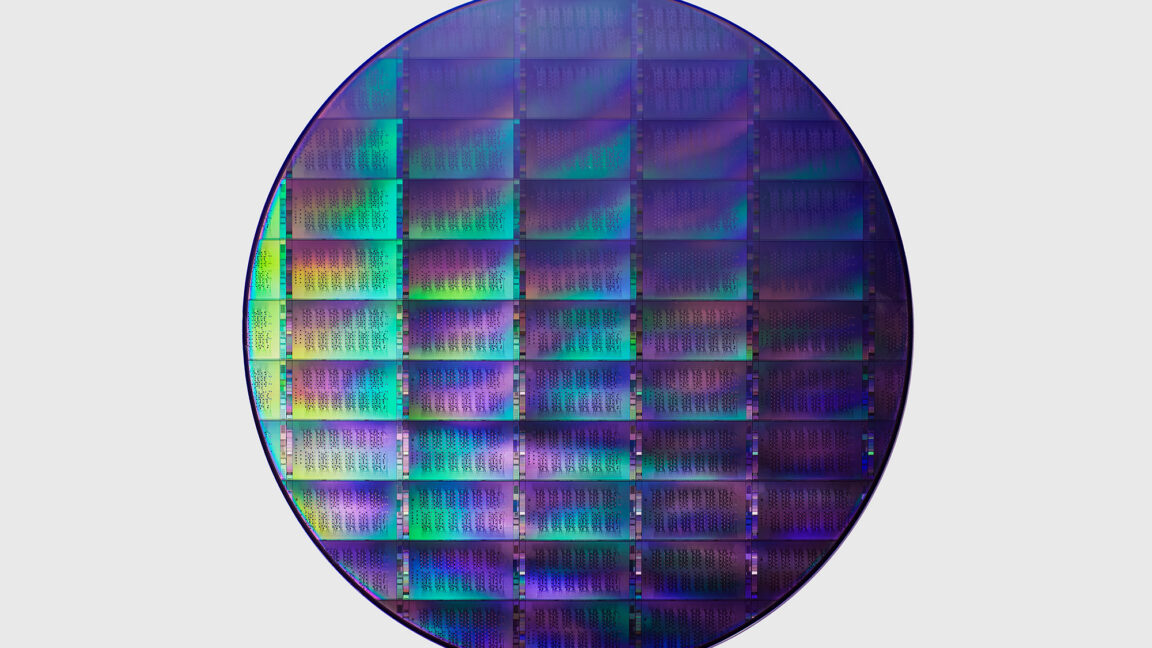
The US government has announced a $2 billion investment package for the quantum computing sector, comprising $100 million equity stakes in various startups and a $1 billion joint venture with IBM to establish Anderon, a new quantum foundry. This initiative has sparked legal and political controversy, led by Zoe Lofgren, ranking member of the House Science, Space, and Technology Committee. Lofgren contends the funding violates the CHIPS and Science Act, which is legislated for microelectronics research and development rather than quantum technology. Additional concerns include the absence of public-private research partnerships and potential conflicts of interest involving Dario Gil, a former IBM executive now serving as Under Secretary for Science at the Department of Energy. Anderon is designed to provide fabrication services for quantum processing units, aiming to support industry-wide hardware testing and iteration, although critics note potential favouritism towards IBM’s transmon technology over other qubit methods used by funded startups.
Lofgren described the announcement as illegal and troubling, noting that the CHIPS and Science Act was passed during the Biden administration specifically to support semiconductor technology and microelectronics research. She argued that the technology overlaps only partially with quantum processors and that the deals fail to foster the public-private research partnerships intended by the legislation. Furthermore, she highlighted a potential conflict of interest, pointing out that Dario Gil, a former IBM executive, was involved in the negotiations leading to the deal. Lofgren clarified that her objection is not to quantum technology itself, but to the method of funding, arguing that Congress must explicitly allocate money for such purposes.
The core of the controversy centres on Anderon, a new company established with $1 billion each from the US government and IBM. The entity will inherit personnel, intellectual property, and assets from IBM and will serve as a foundry for fabricating quantum processing units. It will contract its services out to IBM and other companies seeking access to cutting-edge hardware. The move is seen as an attempt to replicate the success of companies like TSMC in the classical semiconductor space, allowing firms to submit designs and pay for fabrication without needing their own facilities.
While IBM has historically used in-house materials scientists and fabrication capabilities to rapidly iterate on chip designs, the spin-off into Anderon raises questions about market dynamics. IBM specialises in transmons, a specific type of hardware that hosts qubits, but other funded startups are using different technologies. Critics argue that using government money to favour a specific category of technology creates an uneven playing field. However, the establishment of Anderon could benefit the broader industry by allowing startups to access high-quality hardware for testing and iteration, reducing their dependence on academic users or fabs that may not specialise in quantum hardware.
Despite the controversy, the timeline for commercial viability remains distant. Useful error-corrected quantum computing is likely several years away, with large-scale problem solving a decade off. IBM’s quantum leader, Jay Gambetta, stated that current hardware error rates are sufficient for near-term development, reducing the immediate need for lower error rates. The long-term market for Anderon’s services may be limited by the fact that transmons require operation at milliKelvin temperatures, meaning large-scale quantum computers will likely be housed in few data centres and accessed online. This could lead to a boom-and-bust pattern in the market for these chips, with the potential for political point-scoring if investments in failing companies become a recurring issue.