US crude draws erase year-to-date build as SPR releases mask supply crunch
Analysts warn global storage systems could hit minimum operating levels by August as shale production remains flat and demand destruction fails to materialise.
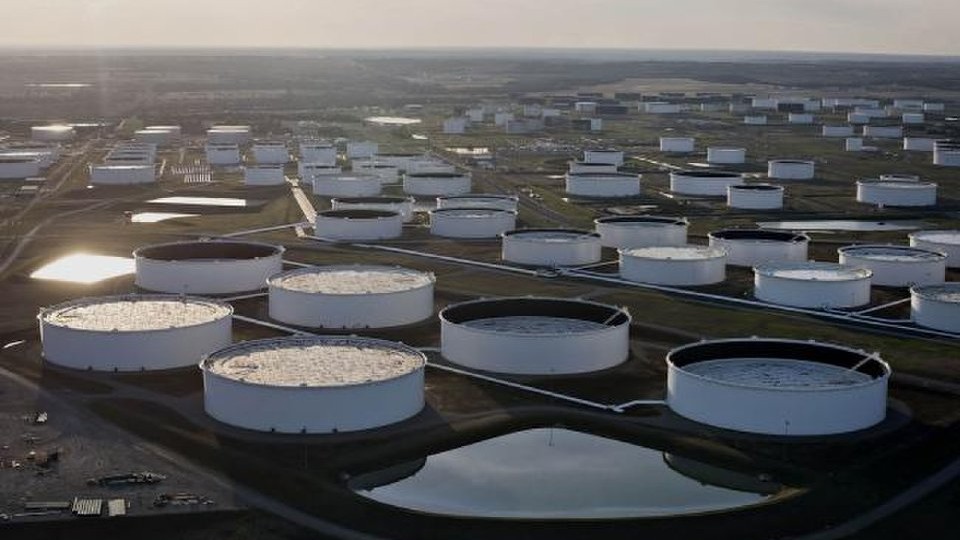
U.S. commercial crude inventories have declined by approximately 25 million barrels over the past five weeks, effectively erasing the entire year-to-date build. This rapid drawdown was partially offset by massive withdrawals from the Strategic Petroleum Reserve, which recorded its two largest weekly releases ever, totalling roughly 30 million barrels. Without these emergency releases, commercial inventories would have fallen by an estimated 55 million barrels, according to analysis of weekly API data cited by Oilprice.com.
The Strategic Petroleum Reserve now sits at 374.2 million barrels following significant outflows. The week ending May 15 saw a draw of roughly 9.92 million barrels, while the prior week lost another 8.61 million barrels. These back-to-back releases represent the largest weekly SPR withdrawals on record, serving to keep the 25 million barrel commercial loss from reading like a far steeper supply deficit.
Global inventory drawdowns have accelerated sharply, with EIA data cited by Reuters showing global crude and fuel inventories falling at a pace of 5.27 million barrels per day in March. This rate accelerated to 8.62 million barrels per day in April. Veteran analyst Paul Horsnell estimates cumulative inventory losses could approach 1.2 billion barrels, raising concerns that commercial storage systems could approach minimum operating levels by August.
Distillate inventories have crashed while four-week average supplied data remains relatively firm, indicating resilient diesel demand despite price spikes. Reuters columnist Ron Bousso noted the system has absorbed roughly 13 million barrels per day of lost supply through inventory drawdowns and emergency releases. However, demand destruction has not yet materialised, with economic activity and freight movement continuing despite the scale of lost supply.
U.S. shale production growth has been largely flat, with the Baker Hughes rig count report described as mostly uneventful. Public operators have prioritised discipline over volume growth following investor punishment for chasing expansion. Even if supply disruptions were to ease, physical systems such as tanker repositioning and cargo scheduling move slowly, meaning the market cannot simply snap back to normal conditions immediately.