Trump allies seek Xi’s help as Strait of Hormuz crisis threatens US energy markets
Allies of Donald Trump are urging Chinese President Xi Jinping to intervene in the Strait of Hormuz dispute, as an ongoing energy crisis looms over the Republican Party’s electoral prospects.
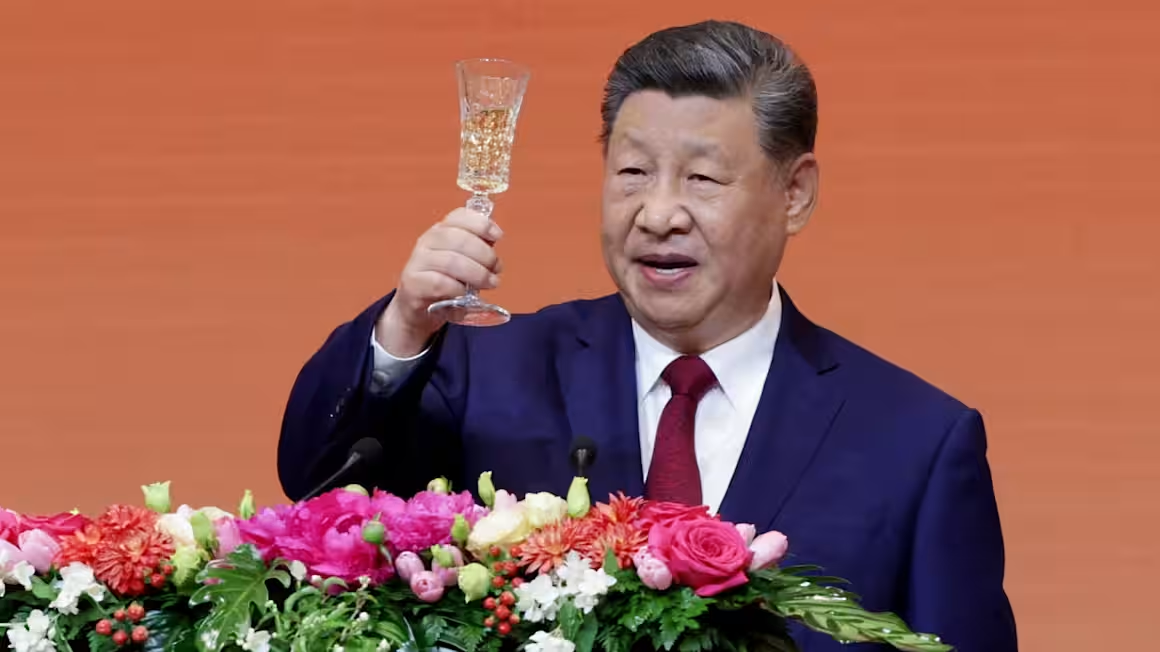
Allies of former US President Donald Trump are placing diplomatic hopes on Chinese President Xi Jinping to help defuse the escalating crisis in the Strait of Hormuz. This strategic push comes at a critical juncture, as an oil supply shock has triggered a worsening energy crisis that analysts suggest could threaten the Republican Party’s prospects in the upcoming midterm elections.
The diplomatic efforts are unfolding against the backdrop of a two-day summit between President Trump and President Xi in Beijing, which commenced on 14 May 2026. President Trump arrived in the Chinese capital accompanied by a delegation of major technology executives, signalling a focus on high-level economic and strategic engagement.
The summit agenda is broad, covering trade relations, artificial intelligence cooperation, and tensions related to Iran. The geopolitical friction in the Strait of Hormuz is closely tied to these broader regional tensions, with allies of the former president seeking Beijing’s influence to stabilise the vital shipping lane.
Financial markets reacted positively to the commencement of the summit. US stock indices rose on Thursday, with the Dow Jones Industrial Average gaining 0.8 per cent, the S&P 500 rising 0.3 per cent, and the Nasdaq Composite climbing 0.2 per cent.
Investor sentiment was further buoyed by regulatory developments in the technology sector. Nvidia shares surged more than 2 per cent after the US approved the sale of H200 chips to Chinese firms, providing a boost to tech-heavy indices during the diplomatic talks.
While the summit has provided a stabilising effect on equity markets, the underlying energy crisis remains a significant concern. The oil supply shock has created immediate headwinds for the energy sector, adding a layer of economic uncertainty that could impact voter sentiment ahead of the midterms.
The extent to which President Xi is willing or able to influence the situation in the Strait of Hormuz remains unclear. Similarly, the direct causal link between the current energy crisis and specific electoral outcomes is a projection rather than a confirmed result, though the political stakes for the Republican Party are high.
The crisis in the Strait of Hormuz has not been detailed in terms of specific incidents, but the resulting oil supply shock has been sufficient to trigger a worsening energy situation. This development underscores the interconnected nature of global energy markets and US domestic political fortunes.