Trinity test debris yields novel clathrate material never seen in nature
The discovery of a spontaneous clathrate within trinitite glass highlights the potential of extreme events as natural laboratories for materials science, with implications for energy conversion and semiconductors.
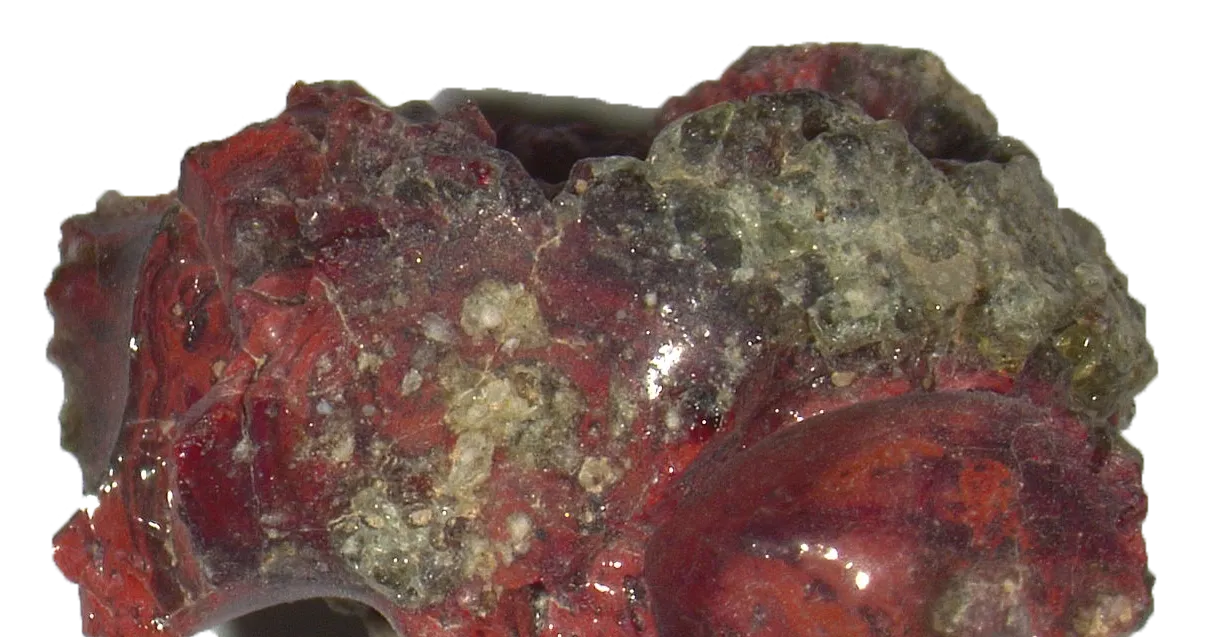
An international research team led by geologist Luca Bindi from the University of Florence has identified a previously unknown clathrate material within debris from the 1945 Trinity nuclear test in New Mexico. The compound, composed of calcium, copper, and silicon, features a cage-like structure that formed spontaneously under the extreme heat and pressure of the atomic explosion. This marks the first time this specific type I clathrate has been observed in nature or created artificially in a laboratory setting.
The discovery was made by analysing trinitite, a silicate glass formed when desert sand was melted by the blast. Using x-ray diffraction techniques on samples of red trinitite, the team located the novel material within a tiny copper-rich metal droplet. The findings, originally published in WIRED Italia and subsequently translated for WIRED, demonstrate that the conditions of the detonation generated a substance impossible to obtain through traditional manufacturing methods.
Clathrates are of significant interest to the scientific and industrial communities due to their unique structural properties. These materials are currently being studied for applications in energy conversion, particularly as thermoelectric materials capable of transforming heat into electricity. They also hold potential for the development of new semiconductors and for gas storage technologies, including hydrogen storage for future energy systems.
This finding adds to a growing body of evidence regarding the complex materials formed during the Trinity test. The same research team previously identified a silicon-rich quasicrystal from the same site. Quasicrystals possess near-periodic atomic arrangements that create complex symmetries and physical properties distinct from standard crystals. The coexistence of these rare materials suggests that multiple unique structures can form simultaneously under such extreme conditions.
Researchers describe events like nuclear explosions, lightning strikes, and meteoritic impacts as natural laboratories. These phenomena allow scientists to observe forms of matter that are difficult to reproduce in controlled environments. By establishing links between these atomic structures, scientists aim to better understand how matter organises under stress, potentially expanding the possibilities for designing new materials with innovative technological applications.
