Tohoku University study overturns 80-year aeronautical engineering dogma
A new study led by Associate Professor Aiko Yakino reveals that distributed micro-roughness delays the transition to turbulent flow, offering a passive, omni-directional method for drag reduction that differs fundamentally from existing technologies.
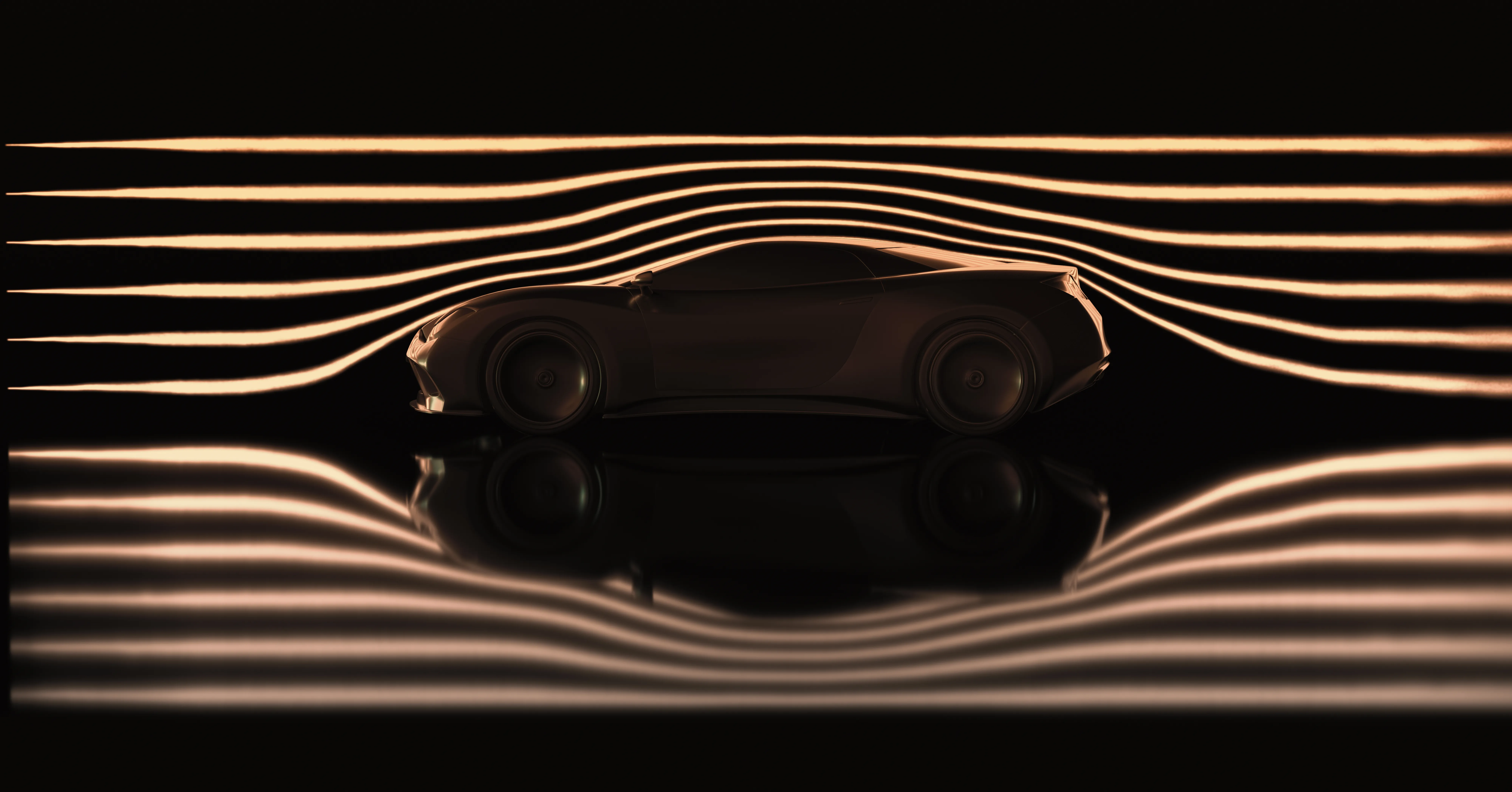
A research team at Tohoku University has overturned a foundational principle of aeronautical engineering that has guided design for more than eight decades. Led by Associate Professor Aiko Yakino from the Institute of Fluid Science, the team demonstrated that applying distributed micro-roughness (DMR) to surfaces can reduce aerodynamic drag by up to 43.6 per cent. This finding directly challenges the premise established in 1940 by Japanese aerodynamicist Ichiro Tani, which held that smoother surfaces invariably result in lower drag and that surface roughness inevitably promotes turbulent transition.
The study utilised Tohoku University’s 1-metre magnetic support balance system (1m-MSBS) to conduct experiments without physical interference. Conventional wind tunnel tests rely on support rods that disrupt airflow, often obscuring minute drag reductions caused by micro-scale textures. By levitating a streamlined model approximately 1.07 metres in length using electromagnetic force, the team eliminated this interference, allowing for precise measurement of drag coefficients across a wide range of Reynolds numbers.
The researchers applied two types of DMR to the models: a convex pattern using glass beads between 38 and 53 micrometres in diameter, and a concave pattern created via sandblasting. Despite these textures, the coating height remained at just 1 per cent of the boundary layer thickness, classifying the surface as hydrodynamically smooth. Experimental results showed that the critical Reynolds number for turbulent transition increased from approximately 1.9 × 10⁶ to 2.2 × 10⁶, with drag reduction peaking at 43.6 per cent in the transition zone.
Large eddy simulation and oil flow visualisation confirmed that the drag reduction mechanism is distinct from existing technologies. Unlike golf ball dimples, which reduce pressure resistance by inducing turbulence to suppress flow separation, DMR delays the transition from laminar to turbulent flow, thereby reducing frictional drag. The analysis indicated that the observed drag reduction was approximately five times the upper limit of pressure resistance changes, quantitatively confirming that the primary benefit is the suppression of wall friction rather than the management of flow separation.
This approach offers significant advantages over shark-skin-inspired rivulet processes, which require precise alignment of grooves with the direction of airflow. DMR is random and omni-directional, requiring no moving parts or electricity. The research team notes that if applied to aircraft, this passive technology could significantly improve fuel efficiency and reduce carbon dioxide emissions, with future work planned to optimise the shape and distribution density of the roughness.
