The Verge review: Philips Hue Bridge Pro’s SpatialAware justifies upgrade for established users
Jennifer Pattison Tuohy finds the $140 Bridge Pro’s augmented reality lighting distribution transforms the user experience, though the device’s price and sensor limitations may deter newcomers.
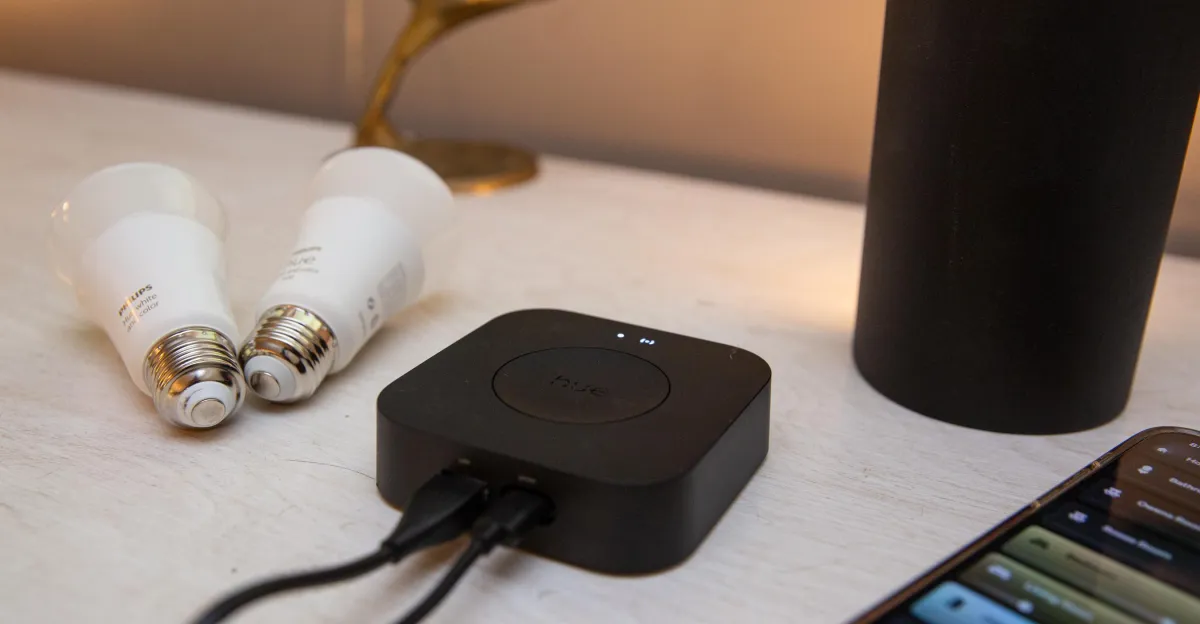
The Verge has published a review of the Philips Hue Bridge Pro, identifying the new SpatialAware feature as the primary justification for upgrading from the standard hub. While the device launched in September with a focus on MotionAware, the April release of SpatialAware significantly altered the reviewer’s perspective on the hardware’s value. The review concludes that the augmented reality mapping capability, which intelligently distributes lighting scenes across bulbs, is the compelling reason for existing ecosystem users to invest in the Pro.
The Bridge Pro is equipped with a quad-core processor and 1GB of RAM, offering response times up to five times faster than the standard bridge and supporting up to 150 lights and 50 accessories. However, the reviewer notes that the $140 US price point, which is 40 percent higher than in the UK and EU, presents a significant barrier for new users. For those just starting with the brand, the standard bridge remains the recommended option, delivering core features for under $70.
MotionAware, which detects movement by sensing disruptions in Zigbee radio signals rather than using traditional optical sensors, performed inconsistently across different home settings. The feature requires specific hardware configurations, including three to four powered lights that are not in a straight line. The reviewer found the system unreliable in bedrooms due to the lack of weekend settings and in offices where motion-sensing caused lights to turn off while working, suggesting that dedicated presence sensors are more suitable for those environments.
SpatialAware utilises the Bridge Pro’s processing power and a smartphone’s AR capabilities to map light locations and distribute colour gradients more naturally. This feature addressed previous criticisms of multi-colour scenes appearing disjointed, creating a more cohesive aesthetic. The reviewer noted that the improved lighting configuration positively impacted the living room’s appearance, with a family member commenting on the enhanced ambiance despite no physical changes to the space.
Despite the upgrade’s benefits, SpatialAware currently supports only specific scenes and does not function with zones, requiring users to set scenes individually for lights in different rooms. The reviewer strongly advises existing Hue users with extensive setups to upgrade for the SpatialAware functionality, while cautioning that the high cost and sensor limitations make the Bridge Pro less appealing for beginners or those with smaller installations.
