TDK Ventures pivots to 'boring' AI infrastructure and specialised robotics
The corporate venture arm is deploying its $500 million portfolio toward inference chips, grid transformers, and robots designed for single, reliable tasks
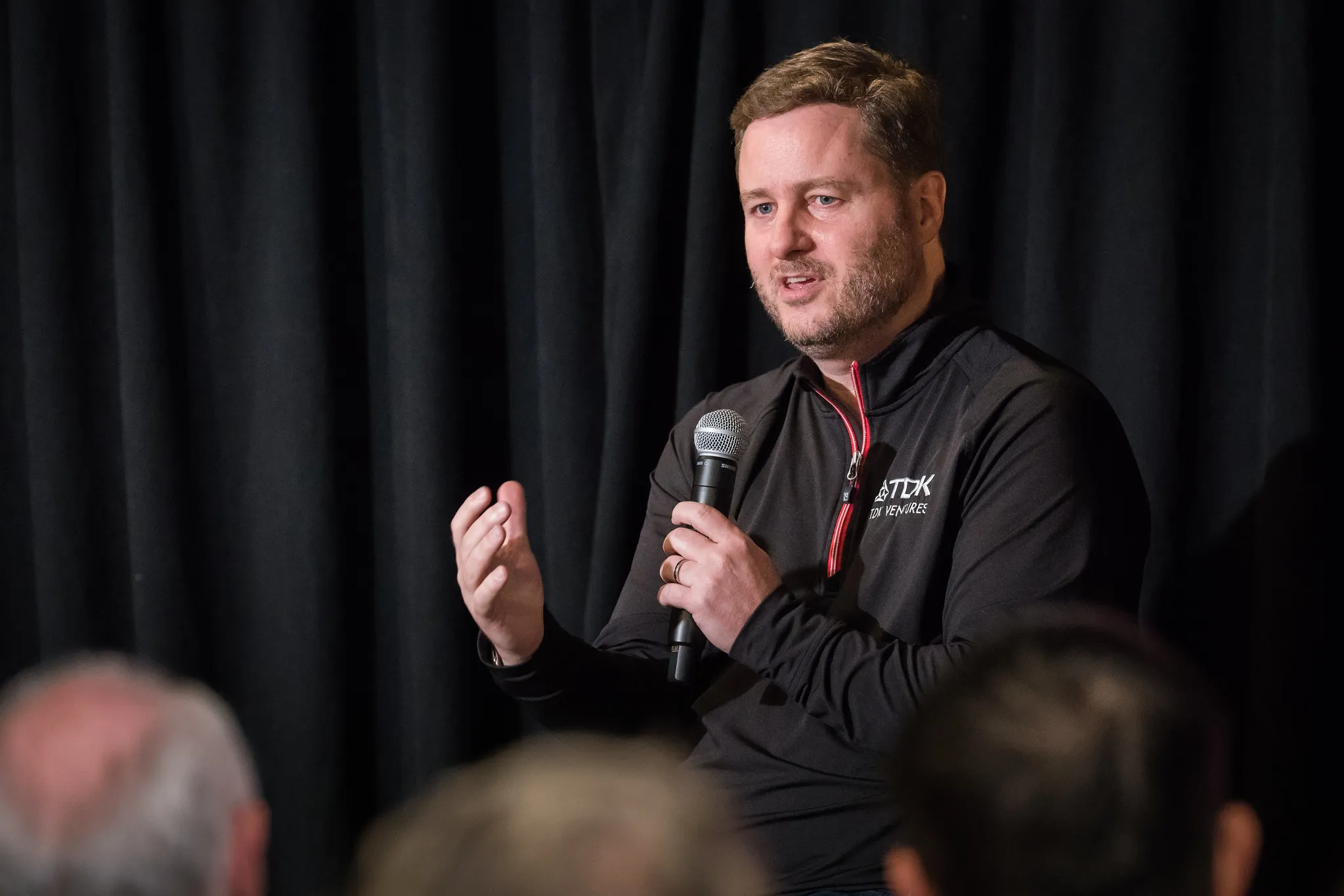
Nicolas Sauvage, founder of TDK Ventures, has outlined a strategic investment thesis that prioritises what he describes as the "boring" underpinnings of artificial intelligence and specific physical robotics applications. Managing a $500 million portfolio across four funds, the firm is focusing on infrastructure and hardware that addresses tangible bottlenecks rather than chasing the latest generative hype. Sauvage argues that the most significant investment opportunities often require a four-year horizon to become obvious to the market, a theory he has been testing since establishing the corporate venture arm in 2019.
The firm's investment strategy targets critical components of the AI stack, exemplified by its early backing of Groq. Founded by Jonathan Ross, the company specialises in inference chips that handle the computational heavy lifting required when models respond to queries. Sauvage notes that while such infrastructure may have appeared niche in 2020, the demand for efficient inference is compounding with every new application and model, creating a clear asymmetry for investors who identified the need early.
Beyond chips, TDK Ventures is deploying capital into solid-state grid transformers and sodium-ion batteries designed for data centres. This approach seeks to sidestep the geopolitical fragility associated with traditional lithium and cobalt supply chains while ensuring the physical infrastructure required to power the next wave of AI remains robust and reliable.
In the realm of robotics, the firm is backing machines with a highly specific purpose rather than general-purpose autonomy. Portfolio companies such as Agility Robotics and ANYbotics are building robots designed for single, reliable tasks in hazardous environments or to mitigate workforce shortages in warehouses. Sauvage emphasises that these machines do not attempt to do everything; instead, they excel at one hard thing, providing the clarity of purpose necessary for deployment in labour-shortage scenarios.
Sauvage also identifies a shift in the compute stack where central processing units (CPUs) are poised for a renaissance. While graphics processing units dominated the era of model training, he argues that CPUs are now best suited for the branching, decision-making logic required for AI agent orchestration. As AI agents delegate tasks and loop across dozens of steps, the flexibility of CPUs makes them increasingly central to managing the choreography of autonomous agents.
A key competitive concern for Sauvage is the rapid evolution of manufacturing capabilities in China. He cites a recent report from Eclipse documenting "vibe manufacturing," where AI-assisted rapid iteration of physical hardware prototyping is compressing design-build-test cycles faster than Western supply chains can match. For TDK Ventures, this represents a critical bottleneck that their investments in infrastructure and hardware must navigate to maintain a competitive edge.
Despite the rapid improvement of AI models, Sauvage highlights dexterity as the remaining unsolved problem in physical AI. While the software side advances quickly, physical fluency to match the speed of code iteration is still missing. The firm is positioning itself to support the countries and companies that can figure out how to iterate on atoms as fast as others iterate on code, securing a manufacturing advantage in the process.