Superhuman deploys frontier AI models to refine email auto-draft capabilities
Co-founder Rahul Vohra reports high adoption rates during beta testing as the firm moves beyond legacy models to reduce manual editing requirements.
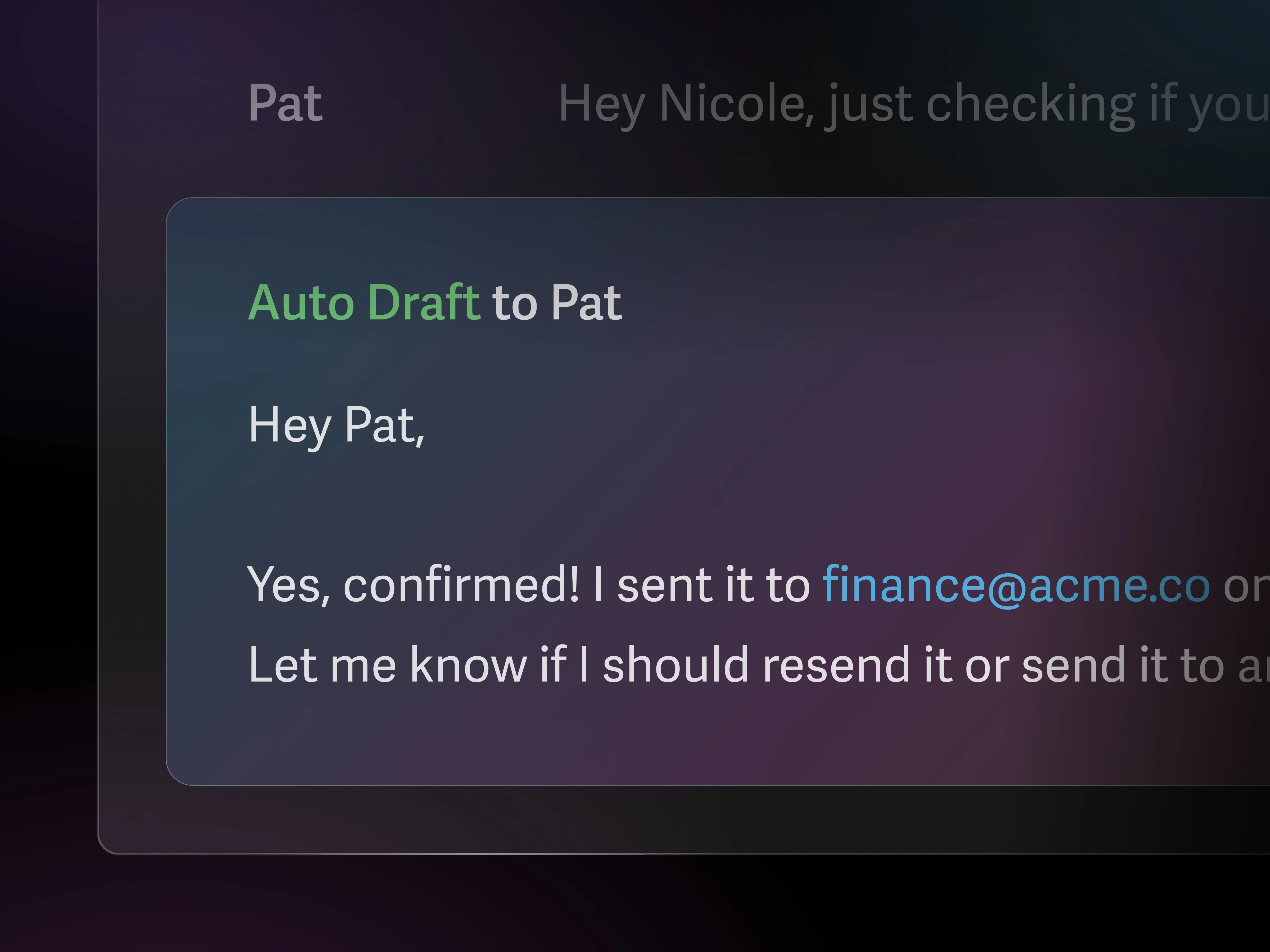
Superhuman has released an updated iteration of its AI auto-draft feature, designed to generate email replies that more closely mimic user tone while minimising the need for manual intervention. The update addresses previous criticisms of the platform’s earlier tools, which often produced robotic or overly enthusiastic responses that users found difficult to deploy without significant editing.
The revised feature utilises a mixture of frontier models from both Anthropic and OpenAI. This shift represents a departure from previous iterations, such as "instant replies" and "follow-up auto-drafts," which relied on older architectures like GPT-3.5. According to co-founder Rahul Vohra, the earlier models were constrained by smaller context windows and lower intelligence, resulting in outputs that frequently sounded like "overly enthusiastic AI salespeople."
During the beta testing phase, Superhuman reported that 40% of auto-generated drafts were sent within one day. Of those sent drafts, 60% required no manual edits. The system identifies high-priority emails and generates two alternative variations for the user to select from, allowing for quick adjustments if the primary suggestion is unsuitable.
Users can personalise the AI’s output by navigating to the Settings menu, where they can input details regarding their role, specific files, and relevant links. This personalisation layer helps the model better understand context, improving the accuracy of responses for tasks such as confirming meeting times or declining authored post requests.
The development sits within Superhuman’s broader strategy under its parent company, Grammarly, which acquired the email client last year and subsequently rebranded it. The company is currently developing an assistant called Superhuman Go, which aims to span across multiple platforms while carrying context between applications.