Sony Bravia 7 II launches as first RGB LED TV, challenging OLED dominance
The 65-inch model is priced at $2,600, positioning Sony’s latest display against rivals like the Hisense UR9 and Samsung R85H in the evolving consumer electronics market.
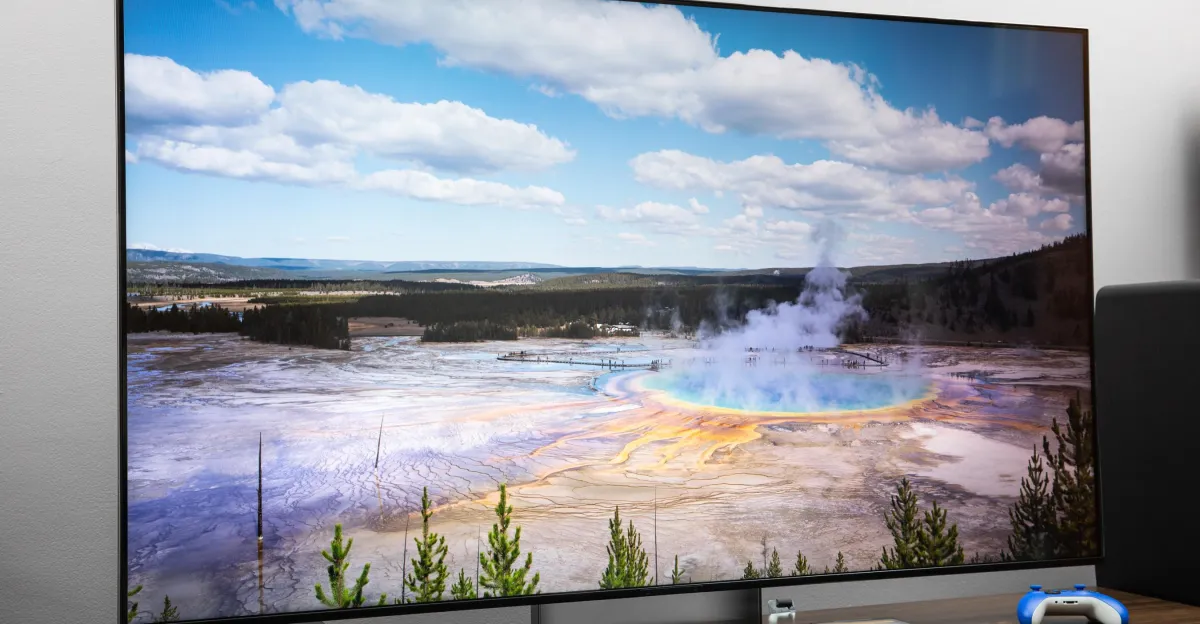
Sony has officially released the Bravia 7 II, marking its entry into the nascent RGB LED television category. Priced at $2,600 for the 65-inch model, the device utilises red, green, and blue LEDs for its backlighting system, a departure from the standard white or blue LED arrays found in most conventional sets. This architecture allows for finer control over the colour mix and higher brightness levels, with the unit capable of reaching 2,200 nits. The launch coincides with the release of the flagship Bravia 9 II, as Sony seeks to establish its processing capabilities as a key differentiator in a market where new LCD technologies must compete directly with OLED contrast and traditional LED pricing.
The core technical advantage of the Bravia 7 II lies in its ability to display more vibrant colours without heavy reliance on colour filters. By driving each LED individually, Sony aims to reduce the need for the colour filters that typically diminish brightness in standard LCDs. However, this approach introduces the potential for colour crosstalk, where light from one colour zone bleeds into adjacent pixels. Testing indicates that while crosstalk is visible in specific test patterns and on user interfaces such as Apple TV app tiles, it remains negligible during standard movie and television playback. In professional picture mode, the set measures 88 percent of the BT.2020 colour gamut, though industry analysts note that most current content is mastered in the P3 space, limiting the practical benefit of the wider gamut for the average consumer.
Performance metrics suggest the Bravia 7 II offers significant headroom for high dynamic range content, given that the majority of media is still mastered at 1,000 nits. The television demonstrates accurate colour reproduction and grayscale performance in standard dynamic range, with only minor oversaturation in red tones. For users concerned about colour bleed, a menu option allows the backlight to switch from colour to white light, which eliminates crosstalk but reduces BT.2020 coverage to 73 percent. This feature appears primarily as a demonstration of the technology’s flexibility rather than a necessary correction for typical viewing scenarios.
Design and connectivity features present a mixed proposition for investors and consumers evaluating the product’s market fit. The television features a distinctive pedestal stand with a lenticular screen designed to obscure cables, a unique aesthetic choice that contrasts with the functional demands of high-end home entertainment systems. Connectivity is more constrained, with only two of the four HDMI ports supporting 4K at 120 Hz, one of which is reserved for eARC. This limitation places the Bravia 7 II at a disadvantage compared to competitors offering full HDMI 2.1 support, potentially impacting its appeal to serious gamers and home theatre enthusiasts. Additionally, the screen exhibits a reflective quality, unlike the non-glare panel on the more expensive Bravia 9 II, which may affect performance in brightly lit environments.
At $2,600, the Bravia 7 II carries a premium over competitors such as the Hisense UR9 and Samsung R85H. Despite the higher price point, the device’s processing accuracy and picture quality justify the cost differential for users prioritising visual fidelity over raw specifications. As RGB LED technology matures, the Bravia 7 II serves as a benchmark for how traditional manufacturers can leverage advanced backlighting to challenge OLED dominance. The success of this segment will likely depend on whether consumers value the brightness and colour volume advantages of RGB LEDs enough to overlook the contrast limitations inherent in LCD technology and the current lack of widespread BT.2020 content.
