Slate EV truck pivots to LFP batteries, targeting $24,950 price point
The move eliminates an optional long-range pack, increases standard range to 205 miles, and relies on cells sourced from Chinese manufacturer Gotion for assembly in Illinois.
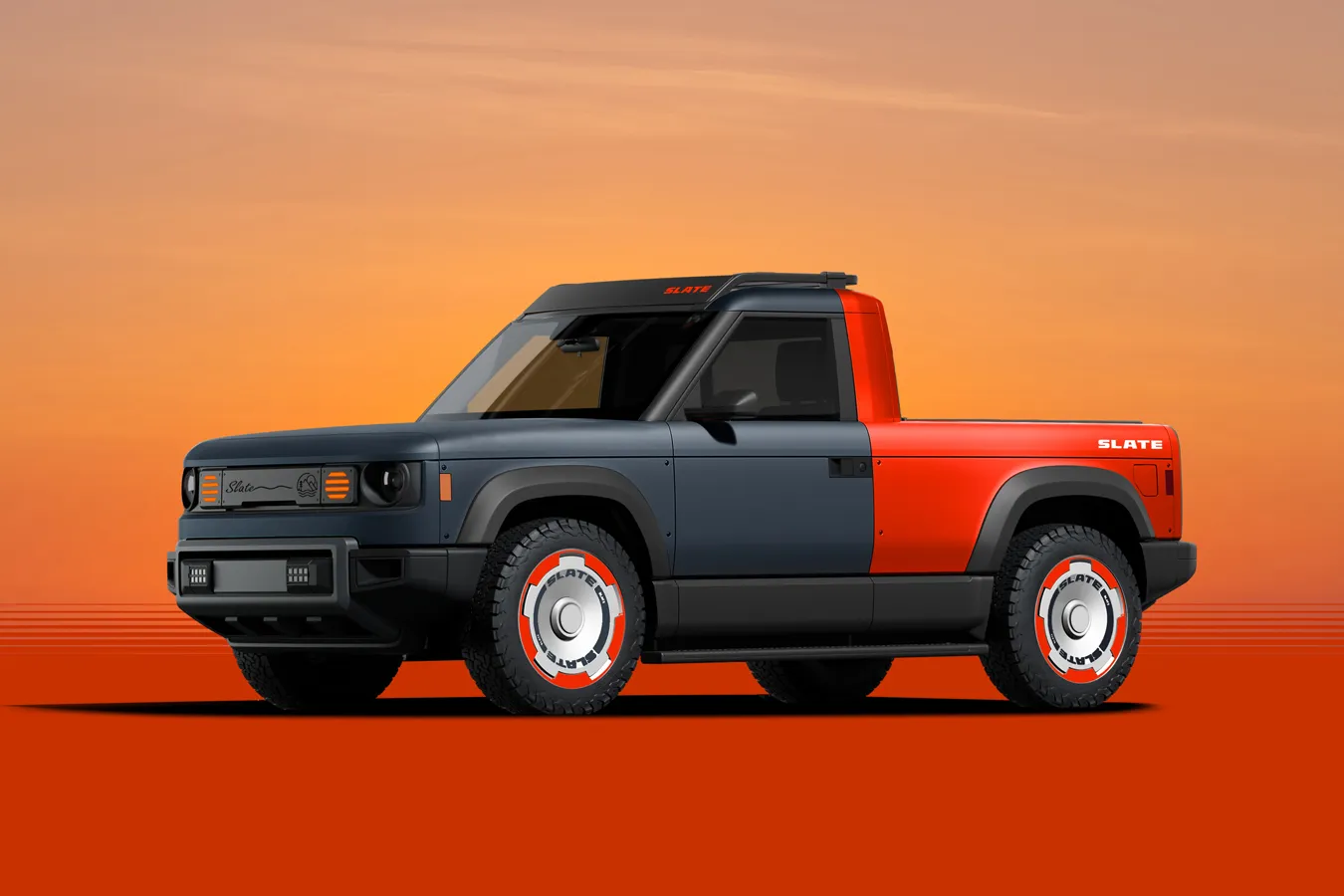
Slate, a manufacturer of an affordable electric pickup truck, has revised its battery strategy by switching from nickel-manganese-cobalt (NMC) cells to lithium-iron-phosphate (LFP) cells. The company eliminated an optional 240-mile range pack and increased the standard range from 150 miles to 205 miles. The starting price for the vehicle was revealed as $24,950 before destination, taxes, and other fees.
The shift to LFP chemistry is driven by its lower cost, which is approximately 40% cheaper than NMC due to the use of iron rather than expensive nickel and cobalt. Although LFP has historically offered lower energy density, modern variations have helped close the gap. Slate is employing cell-to-pack technology, which involves loading rigid batteries directly into the pack to reduce manufacturing steps and improve volumetric energy density. This approach avoids the weight and cost penalties associated with traditional module-based assembly.
Slate is sourcing LFP cells from Hefei-based manufacturer Gotion, with assembly taking place at a factory in Illinois. The decision to utilise Chinese-sourced cells was facilitated by the One Big Beautiful Bill Act, which removed tax credit restrictions that previously required domestic or free-trade agreement sourcing. Under the previous Inflation Reduction Act, EVs using LFP batteries did not qualify for the $7,500 tax credit due to foreign sourcing restrictions.
The move aligns with broader industry trends, as major automakers including Ford, GM, Rivian, and Tesla already offer models using LFP cells. The LFP supply chain is currently dominated by Chinese manufacturers, following the bankruptcy of US-based A123 Systems in 2013 and its subsequent acquisition by a Chinese auto parts company. This consolidation has made Chinese suppliers the primary providers of LFP technology globally.
In addition to cost and manufacturing efficiencies, LFP cells allow for charging to 100% with less concern about degradation than NMC cells. This characteristic enables drivers to utilise the full capacity of the pack on a daily basis. Slate’s strategy reflects a broader market shift away from prioritising extreme range in favour of affordability and practical daily usability, supported by an expanding charging network.