Skyroot Aerospace achieves unicorn status ahead of historic orbital launch
A $60 million investment round co-led by Sherpalo Ventures and GIC marks a major milestone for India's private space sector, with the maiden launch of the Vikram-1 rocket targeted for June 2026.
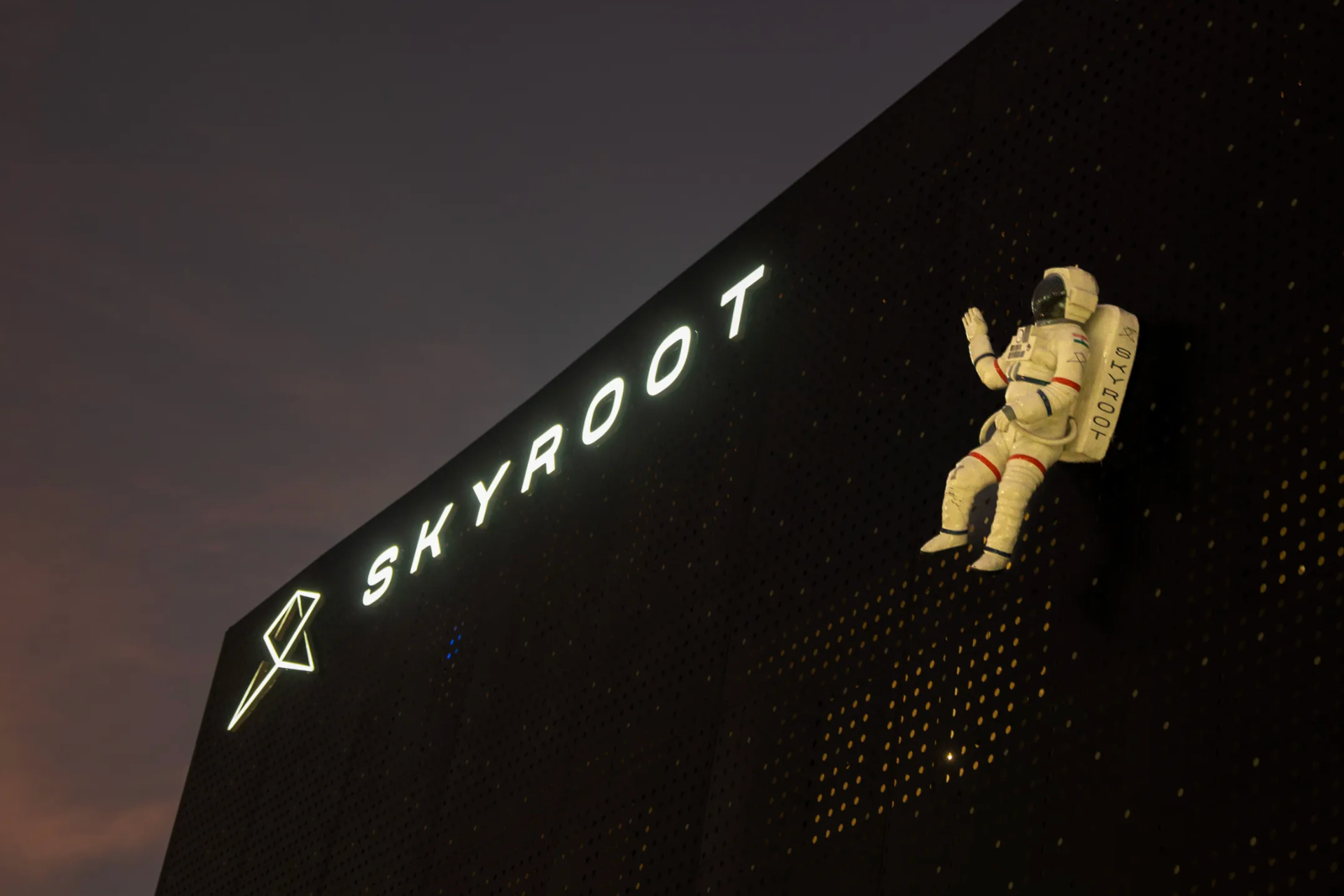
Skyroot Aerospace has officially become India's first space technology unicorn, following a significant $60 million funding round that values the Hyderabad-based startup at $1.1 billion on a pre-money basis. This financial milestone arrives as the company prepares for the maiden orbital launch of its Vikram-1 rocket, a mission targeted for June 2026. The investment represents a doubling of the company's valuation since 2023, reflecting growing investor confidence in India's emerging private space economy.
The capital injection was structured with approximately $50 million in primary equity co-led by Sherpalo Ventures and GIC, alongside around $10 million in structured debt managed by funds affiliated with BlackRock. Ram Shriram, founder of Sherpalo Ventures and a board member at Alphabet, will join Skyroot's board as part of the deal. While the company declined to disclose specific revenue figures or customer backlog details, it confirmed that demand for dedicated launches for small satellite operators remains strong, with roughly one-third of expected demand originating from India and the remainder from international customers.
Founded in 2018 by former Indian Space Research Organization (ISRO) engineers Pawan Kumar Chandana and Naga Bharath Daka, Skyroot has built a reputation for developing small satellite launch rockets comparable to those of US firms such as Rocket Lab and Firefly Aerospace. The Vikram-1 rocket is designed to carry payloads of up to 350 kilograms into low Earth orbit. The company previously gained significant attention in November 2022 with the successful launch of the Vikram-S, which marked India's first privately developed rocket launch, a suborbital mission that paved the way for future orbital ambitions.
The new funding will be utilised to scale manufacturing capabilities, increase the launch cadence of Vikram-1 missions, and support the development of the Vikram-2 vehicle. The heavier-lift Vikram-2 is expected to debut in 2027 and is being designed as a one-ton-class launch vehicle powered by a cryogenic stage. This expansion aims to allow Skyroot to serve more complex satellite missions and compete effectively in the global market for small satellite launches.
Skyroot's ascent coincides with a broader push by India to expand its share of the global space economy. Government reforms introduced since 2020 have allowed private firms to access ISRO facilities and participate in end-to-end space activities, fostering a competitive private sector alongside the state-run agency. This regulatory shift has helped spur the emergence of nearly 400 space-tech startups across the country as of early 2026.
With the Vikram-1 rocket flagged off to the spaceport on the southern island of Sriharikota in April, the company is currently completing flight qualification tests and beginning integration and launch campaign activities. The upcoming mission comes at a time when India seeks to build additional commercial launch capacity, particularly as the state-run ISRO has faced setbacks in recent missions. The private sector's growing role is seen as crucial to achieving the nation's goal of expanding its space economy from an estimated $8.4 billion to $44 billion by 2033.
