Science roundup: prehistoric mining, new octopus species, and feline preferences
Ars Technica’s latest science roundup for May 2026 covers diverse findings, including a prehistoric copper smelting site, a new tiny blue octopus species, and research into feline sensory preferences.
Ars Technica has published its monthly science roundup for May 2026, curating a selection of recent studies that span archaeology, zoology, neuroscience, and political physics. The digest highlights several noteworthy stories, including the identification of a new octopus species in the Galapagos Islands, research into why cats prefer silver vine over catnip, and a physics-based model of political polarization in US elections.
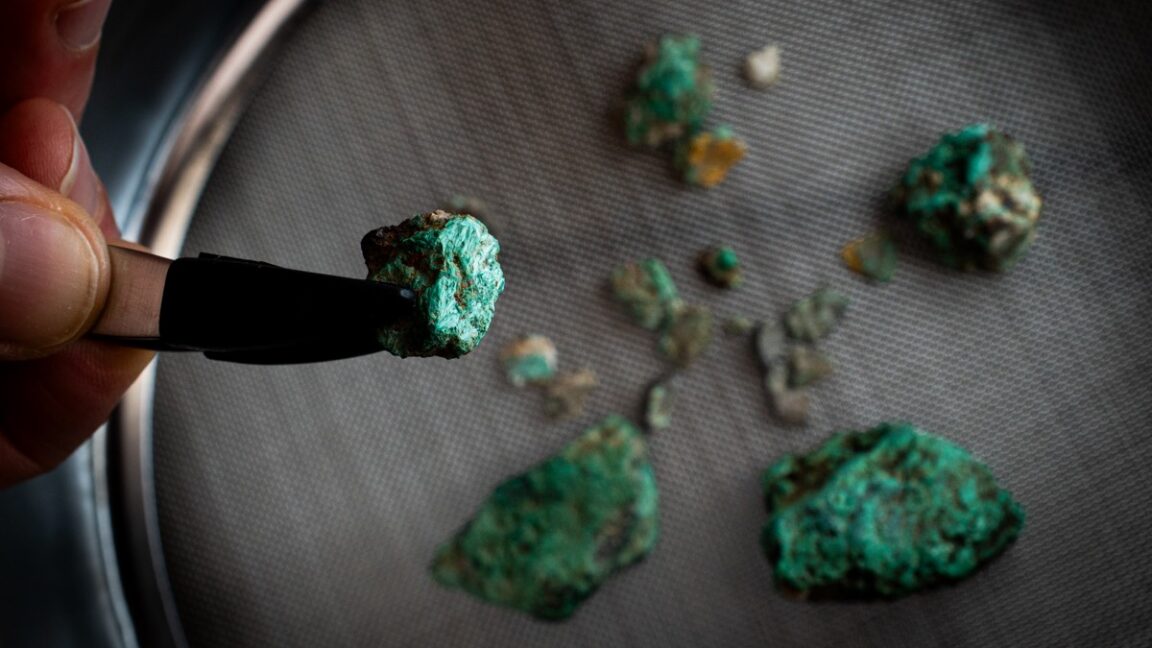
In the Pyrenees, Spanish archaeologists have uncovered a prehistoric cave site that may have served as an ancient copper smelting spot. Excavated between 2021 and 2023, the site yielded 23 hearths filled with crushed green mineral fragments that showed signs of burning. Preliminary analysis suggests the material resembles malachite, which can be heated to produce copper. The hearths are estimated to be between 4,000 and 5,500 years old, indicating more frequent human occupation than previously thought.
Deep-sea researchers have also identified a new species of tiny blue octopus, named Microeledone galapagensis. The creature was originally spotted in 2015 during an expedition in the Galapagos Islands aboard the E/V Nautilus. Due to the specimen being unique, scientists used mini-CT scans for a virtual dissection rather than physical examination. The analysis revealed short arms, few suckers, no ink sac, and very smooth skin, confirming its status as a distinct species.
Other featured studies include an investigation into feline preferences, where Japanese researchers found that cats significantly prefer silver vine over catnip, despite catnip containing 170 times more bioactive compounds. Additionally, the roundup covers a study on the neural basis of singing in mice, the acoustics of slapsticks used in film, a topological analysis of abstract art, and a physics-based model of political polarization in US elections.
The political polarization study, conducted by scientists at the Complexity Science Hub, suggests that political polarization behaves like a phase transition. Using a statistical physics model to examine 6,357 House races from 1980 to 2020, the team found a critical campaign spending threshold of $1.8 million at the district level. Below this threshold, social dynamics shape outcomes; exceeding it deepens polarization without significantly increasing the margin of victory.
The roundup also touches on the neural basis of singing in mice, with researchers at Cold Spring Harbor Laboratory discovering that this ability requires only targeted changes to existing neural wiring rather than major evolutionary leaps. Meanwhile, a study on abstract art published in PLoS Computational Biology identified a hidden topological rule that may explain why certain works resonate with the public more than others.
Finally, the digest includes preliminary experiments on the acoustics of slapsticks used by Foley artists. Daniel Ludwigsen of Kettering University compared five commercial versions, finding that smaller models performed best in high-frequency ranges while longer models excelled in low-frequency ranges. The resulting sound tone is influenced by the force with which the sticks are struck together.
