Salesforce and Microsoft post eight consecutive quarters of revenue growth despite AI spending concerns
Salesforce reports $41.5 billion in annual revenue while Microsoft hits $82.9 billion in quarterly sales, yet both face share price pressure over artificial intelligence infrastructure costs.
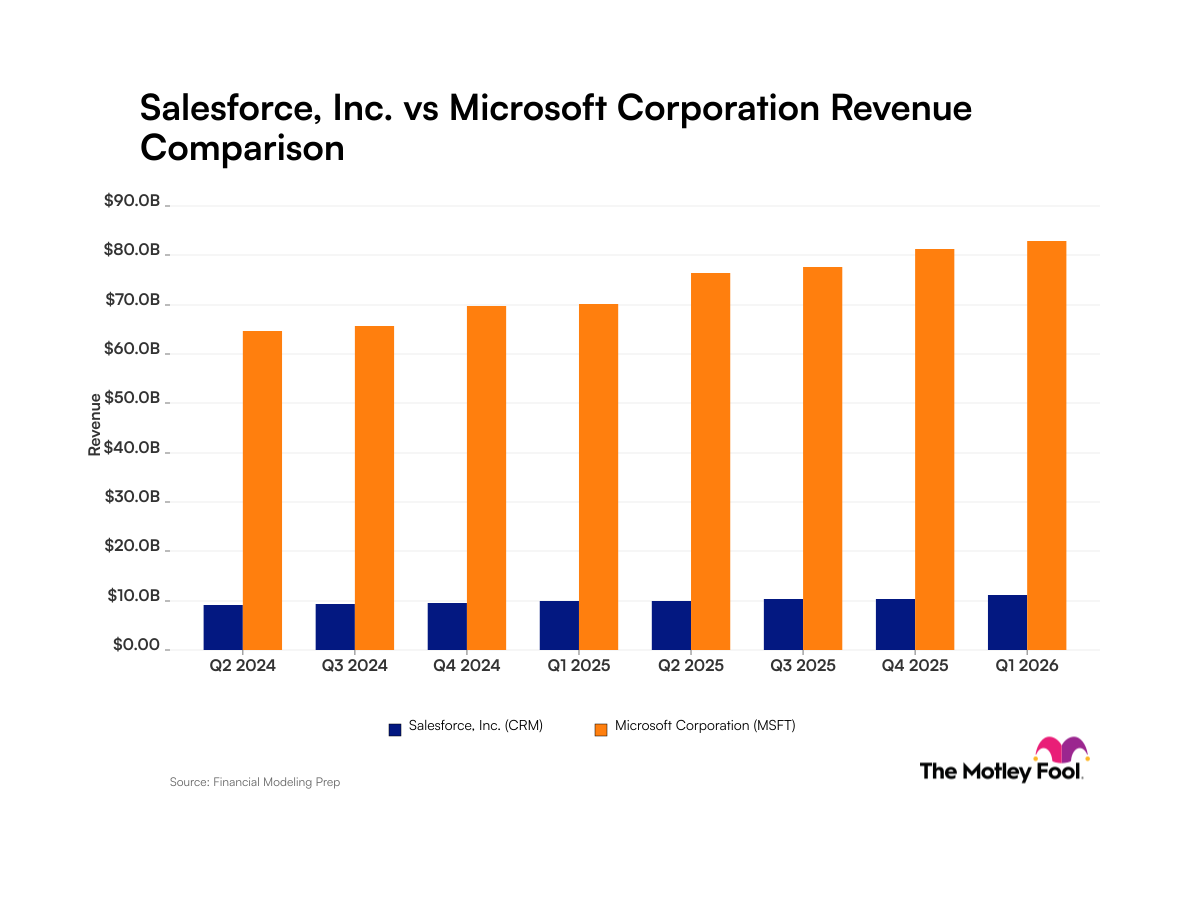
Salesforce and Microsoft have both recorded eight consecutive quarters of revenue growth, underscoring their resilience in the enterprise technology sector. Salesforce reported a 10 per cent year-on-year revenue increase to $41.5 billion for the fiscal year ended 31 January 2026, with a net income margin of approximately 17 per cent. Microsoft reported sales of $82.9 billion for the fiscal third quarter ended 31 March 2026, an 18 per cent increase over the prior year, with a net income margin of approximately 38 per cent.
Despite these strong financial results, both companies experienced share price declines in the first quarter of 2026 as investors weighed heavy capital expenditures required for artificial intelligence infrastructure against potential market disruptions. Salesforce primarily provides customer relationship management software and enterprise cloud applications, while Microsoft develops and licenses operating systems, cloud computing platforms, and productivity software.
Tracking revenue helps investors gauge raw business scale and growth before expenses are deducted. This metric is particularly relevant for Salesforce, where the rise of artificial intelligence has raised concerns that the technology could displace customers from traditional CRM providers. However, its rising revenue indicates that this disruption has not yet materialised, with the company forecasting fiscal 2027 sales to be between $45.8 billion and $46.2 billion.
Microsoft’s capital expenditures are necessary to expand infrastructure to support demand for its AI offerings, a factor that contributed to investor fretfulness in the first quarter. While Microsoft’s revenue towers over Salesforce, both are experiencing sales growth, indicating their businesses continue to expand. Microsoft also initiated a voluntary retirement program for domestic employees and unsealed a lawsuit against a malware-signing service during this period.
Analysts suggest valuations remain compelling despite the near-term volatility. Salesforce’s forward price-to-earnings ratio is approximately 14, described as a low point for the past year, while Microsoft’s forward price-to-earnings ratio is approximately 22, which is lower than a year ago but higher than Salesforce’s. The Motley Fool’s Stock Advisor analyst team did not include Salesforce in their current list of 10 best stocks to buy, despite the company’s positive revenue trends.