Russia obscures Plesetsk launch schedules following reported drone incursions
Roscosmos officials claim Ukrainian drones targeted the Arkhangelsk region spaceport during recent missions, prompting authorities to expand NOTAMs from hours to days to protect infrastructure.
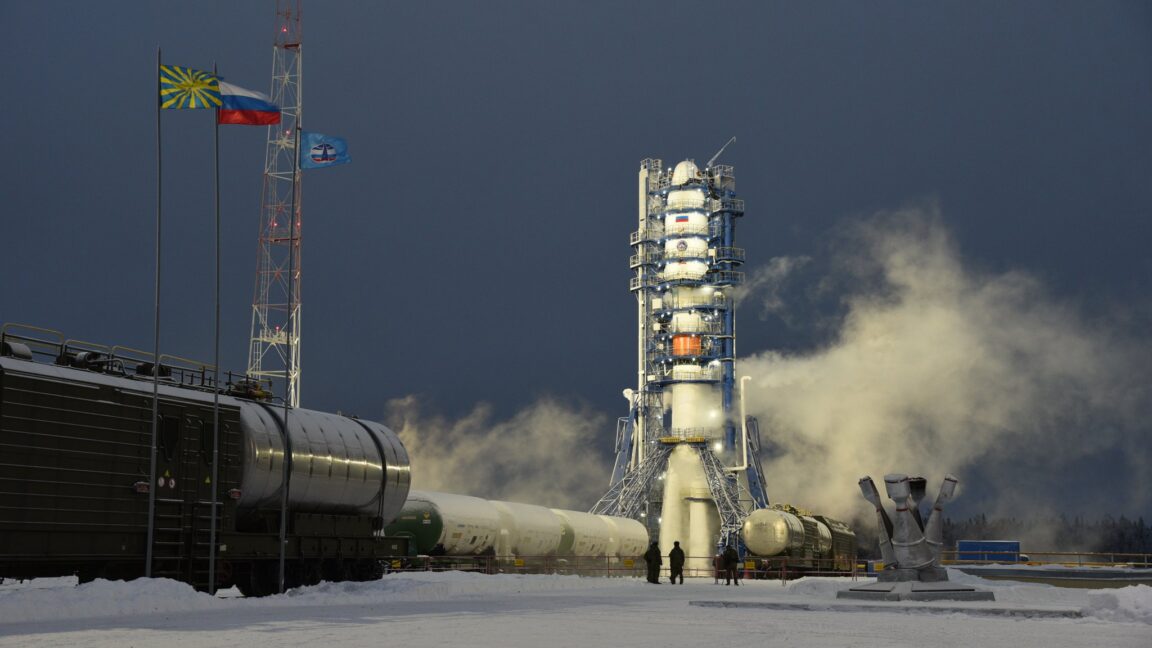
Russian authorities have significantly tightened operational secrecy at the Plesetsk Cosmodrome in the Arkhangelsk region, extending official airspace warning notices from hours to days following reported drone threats. The Russian space agency, Roscosmos, states that Ukrainian drones attempted to strike the site during the March 23 launch of the Rassvet satellite constellation, prompting a shift in how launch windows are communicated to civil aviation.
In response to these security challenges, recent airspace warning notices have been expanded to cover daily windows of up to 19 hours over 14 consecutive days. These extended periods create overlapping windows that deliberately mask the precise timing of multiple classified military and spy satellite launches. The ambiguity in the coordinates appears designed to cover dual launch scenarios, making it difficult for external observers to distinguish between specific missions.
Roscosmos General Director Dmitry Bakanov reported to President Vladimir Putin on April 11 that there were "serious inbound attempts" to the cosmodrome on the day of the March 23 Rassvet launch. Although the joint combat crews of Roscosmos and the Space Forces successfully completed the mission, the incident highlighted the vulnerability of the facility. Local officials in Mirny, the town nearest to Plesetsk, issued warnings of a "drone threat" between March 22 and 25, coinciding with temporary restrictions on mobile internet services in the region.
The pattern of security measures extends back to December, when a local news outlet, News29.ru, published a photo claiming to show a destroyed drone near Plesetsk following an attempted attack around December 25. This predated the official Roscosmos reports of the March incident, suggesting a prolonged period of heightened vigilance at the facility. A statement attributed to the Cosmodrome Press Service expressed appreciation for the vigilance of residents in the Plesetsk and Kargopol districts in detecting unmanned aerial vehicles flying toward the operational zone.
Recent launches have proceeded under these cloaked conditions, with two specific missions occurring in April. On April 16, a Soyuz-2.1b rocket launched eight classified military satellites, followed by an Angara-1.2 on April 23 carrying four suspected spy satellites. These deployments contribute to a broader effort to deploy a new constellation of Internet and data relay satellites akin to SpaceX's Starlink, which underpins much of Ukraine's military communications infrastructure.
While Russian officials have not definitively identified the source of the drones, the defense ministry has ascribed other drone swarms in the Arkhangelsk region to Ukraine. The increased secrecy comes as Russia scales back its annual Victory Day parade due to similar threats, acknowledging that the success of the Special Military Operation is embedded in every launch conducted from this strategic spaceport.