Primate Labs releases Geekbench 7 with new AV1 tests and redesigned multi-core benchmark
The latest iteration of the popular testing software introduces larger workloads for CPUs and GPUs, though scores remain incompatible with previous versions.
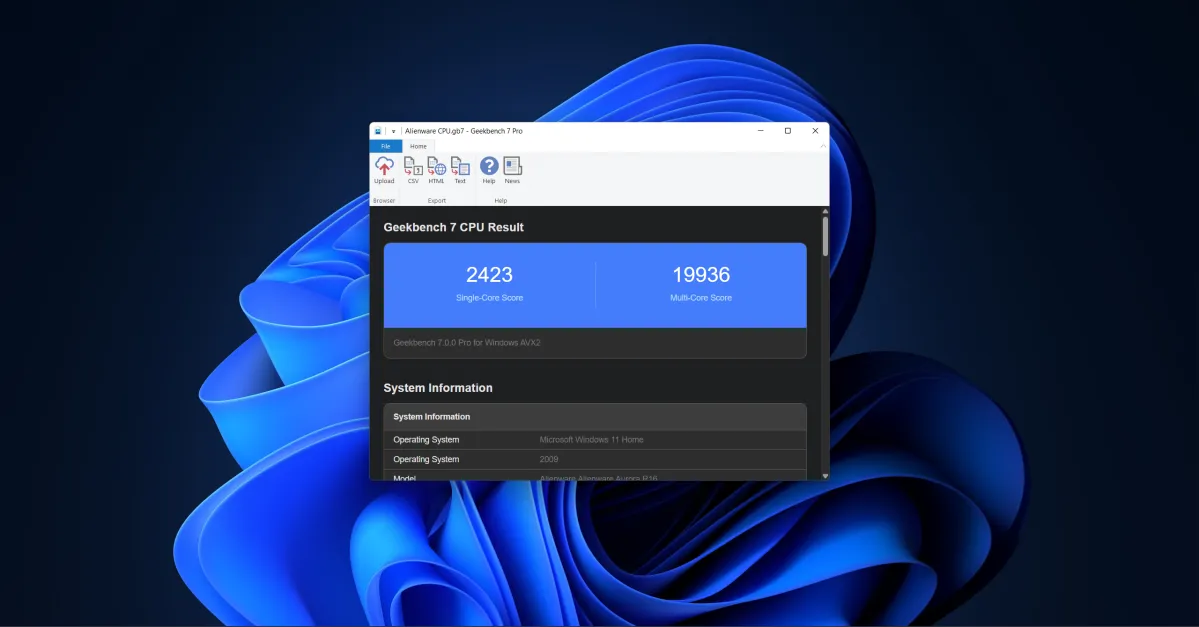
Primate Labs has officially released Geekbench 7, the latest iteration of its widely used synthetic benchmarking software. The update introduces larger, more demanding datasets for CPUs and GPUs to process, alongside new audio and video encoding and decoding tests. These new additions specifically support AV1 and Opus codecs, covering workloads for video conferencing, streaming, and content consumption.
The multi-core test has been redesigned to better reflect real-world software behaviour. According to the developer, the new workloads will only run multi-threaded when the simulated tasks require it, aiming to provide a more accurate capture of hardware demands in modern applications. This marks a shift from previous versions, which were noted for their simplicity and speed but were often better suited for testing quick bursts of computing power rather than sustained loads.
Geekbench 7 retains the same interface and pricing structure as its predecessor. A Pro license costs $99, with a discounted price of $79 available until 6 August. The Pro license permits offline benchmarking without uploading results to the Geekbench Browser and covers Windows, macOS, and Linux desktop platforms. Despite these updates, scores from Geekbench 6 are not compatible with Geekbench 7.
Previous iterations of the software were frequently utilised for reviewing laptops due to their rapid execution. However, the short duration of earlier tests, such as rendering a 1.5MB PDF file, meant they were less effective at identifying thermal throttling during sustained loads. Primate Labs claims the new, more demanding data sets in version 7 address this by better mirroring the requirements of contemporary software.
While the new tests still take only a few minutes to run, the changes represent a significant update to the tool’s capabilities. The release allows reviewers and enthusiasts to retest hardware against updated standards, although the lack of backward compatibility means historical data cannot be directly compared to the new results.