Precious metals retreat to monthly lows as Strait of Hormuz tensions persist
The downturn follows immediate Iranian counter-attacks on the US 'Project Freedom' initiative, while Brent Crude remains elevated above $114 a barrel.
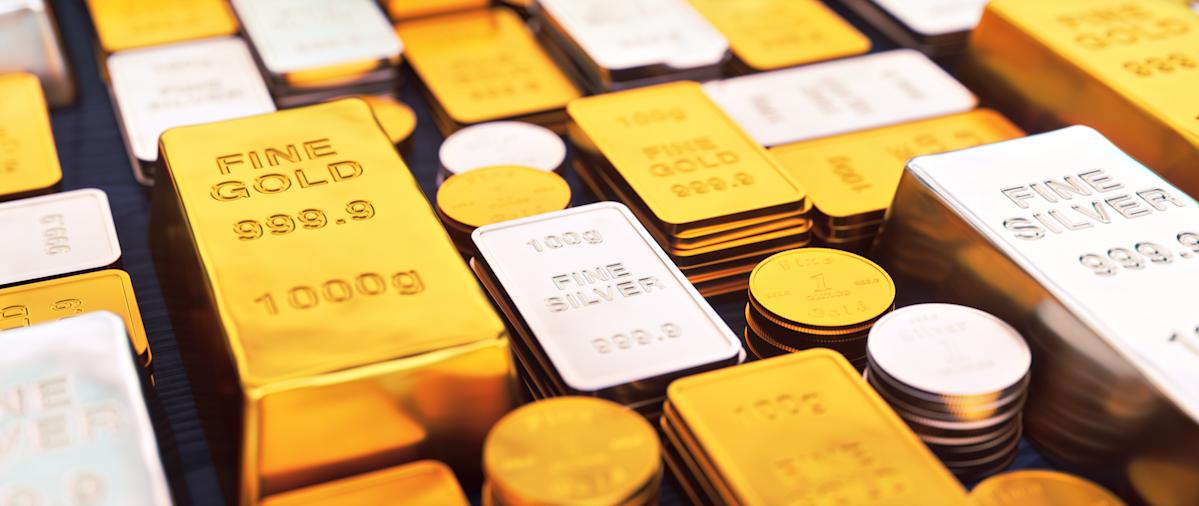
Gold and silver futures opened at their lowest levels in over a month on Tuesday, 5 May 2026, as regional instability near the Strait of Hormuz weighed heavily on commodity markets. Gold futures commenced trading at $4,534 per troy ounce, representing a 2.4% decline from Monday's opening price of $4,644. This figure marks the lowest opening price for the metal since 30 March, halting a significant upward trajectory that had seen a 95.6% gain over the preceding year.
Silver futures experienced an even steeper correction, opening at $73.17 per ounce. This represents a 4.3% drop from Monday's session, where the metal had opened at $76.45. The sharp decline in both precious metals coincided with immediate Iranian backlash against the US 'Project Freedom' initiative. The American plan, designed to guide neutral ships through the strategic waterway, was met with exchanged attacks between the two nations, shifting investor focus from safe-haven accumulation to immediate geopolitical risk.
Although a truce between the United States and Iran remains officially in place, the exchange of fire has sustained high levels of regional tension. These ongoing hostilities have prevented a de-escalation of oil prices, with Brent Crude trading above $114 per barrel. High energy costs continue to influence global inflation outlooks, creating an environment where the prospect of further interest rate hikes remains a concern for investors if the Middle East conflict drags on.
President Donald Trump has suggested that the current conflict could persist for at least another couple of weeks. This extended timeline reinforces the uncertainty surrounding the region, contributing to the sell-off in precious metals. While gold and silver have historically served as stabilisers and diversification assets for central banks and individual investors, the current volatility highlights the risks associated with speculation and unpredictable macroeconomic factors.
The market reaction underscores a shift in sentiment, as the metals that have more than tripled in value over the past year face a temporary correction. Experts note that while gold is increasingly viewed as a portfolio stabiliser rather than a driver of supercharged returns, the current price action reflects a cautious approach by institutions and traders. The interplay between the conflict in the Strait of Hormuz and the broader commodity complex continues to dictate short-term price movements.
Investors are advised to remain vigilant as they navigate this period of heightened uncertainty. The risks associated with commodity trading, including price volatility and speculation, are amplified by the unpredictable nature of geopolitical events. As the situation near the Strait of Hormuz evolves, the outlook for gold, silver, and global energy markets will likely remain contingent on the duration and intensity of the ongoing tensions.