Pentagon’s Space Development Agency set for closure amid satellite delays
The US Space Development Agency has resumed Tranche 1 satellite launches after a nine-month pause, but structural dissolution is imminent as initial warfighting capabilities are pushed to 2027.
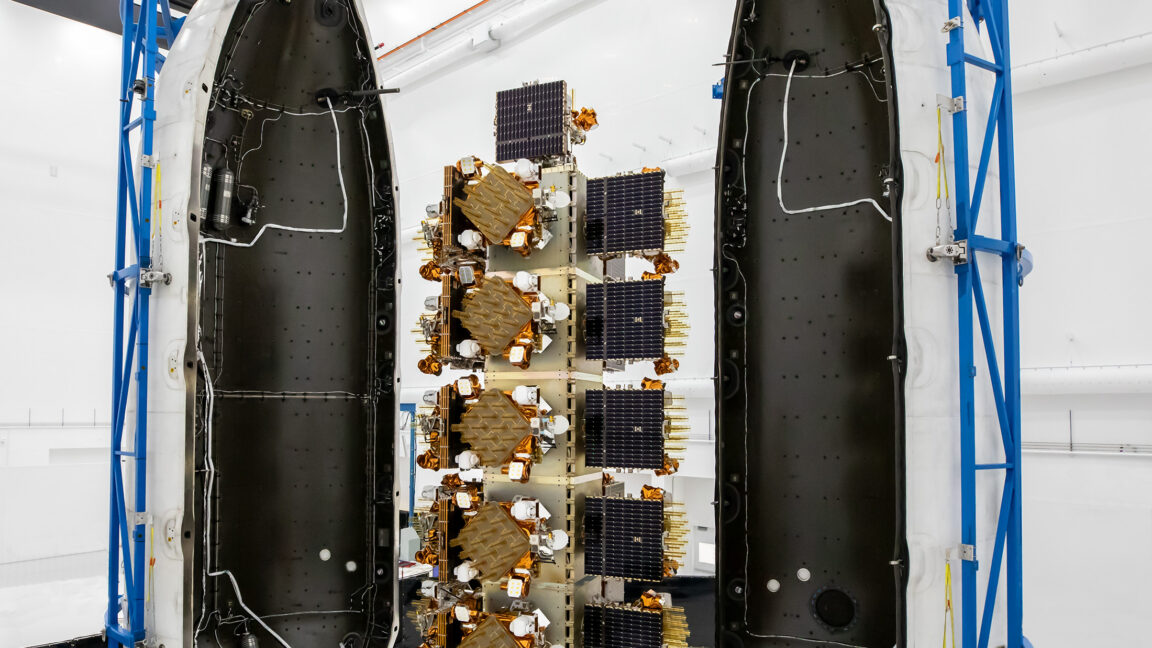
The Pentagon’s Space Development Agency (SDA) has launched its third batch of Tranche 1 data relay satellites, bringing the total count to 63, following a nine-month deployment pause due to technical issues. The agency is scheduled for closure and integration into the US Space Force’s procurement pipeline, a move supported by Congress in draft legislation. SDA Director Gurpartap Sandhoo stated that the delayed satellite constellation would have provided critical missile warning capabilities during ongoing conflicts, specifically citing daily missile launches against joint forces in Operation Epic Fury.
The third group of data transport satellites launched on a SpaceX Falcon 9 rocket from Vandenberg Space Force Base, California. Seven additional launches are required to complete Tranche 1, which will include 63 more data transport satellites and 28 missile tracking satellites manufactured by Lockheed Martin, Northrop Grumman, and L3Harris. None of the Tranche 1 tracking satellites have launched as of this report.
The next series of launches is constrained by the availability of optical communication terminals, the laser transmitters and receivers needed to connect the transport and tracking satellites into one integrated mesh network. Initial warfighting capability is now expected to begin in 2027, rather than the originally targeted monthly launch cadence. Sandhoo noted that the agency is prioritising operational readiness over speed, acknowledging that ground teams faced ground station coverage gaps, thermal control problems, and propulsion issues during the initial launches last year.
Tranche 2, launching next year, will include more than 250 transport and tracking satellites from six manufacturers. The transport layer is designed to eventually be superseded by the Space Force’s Space Data Network (SDN), built by SpaceX, with Tranche 3 tracking satellites (108 units) ordered to start launching in 2028. The SDA was established in 2019 to accelerate the deployment of US military space systems, but its fate has been sealed as the Pentagon moves to streamline weapons buying under the Space Force.
Sandhoo, who also serves as the Space Force’s portfolio acquisition executive for missile warning and tracking, emphasised that the constellation is intended to neutralise first-mover advantages by delivering data to warfighters nearly instantaneously. He acknowledged that the delays have hindered capabilities needed during Operation Epic Fury, where missiles are launched daily against joint forces. Despite the setbacks, the agency aims to provide initial warfighting capability by 2027, with future tranches and integration into the Space Force’s Space Data Network planned for subsequent years.