Osaurus Mac app bridges local and cloud AI with 112,000 downloads
Co-founded by Terence Pae, the new application allows Mac users to toggle between local and cloud models while keeping data on-device, though it demands significant hardware resources.
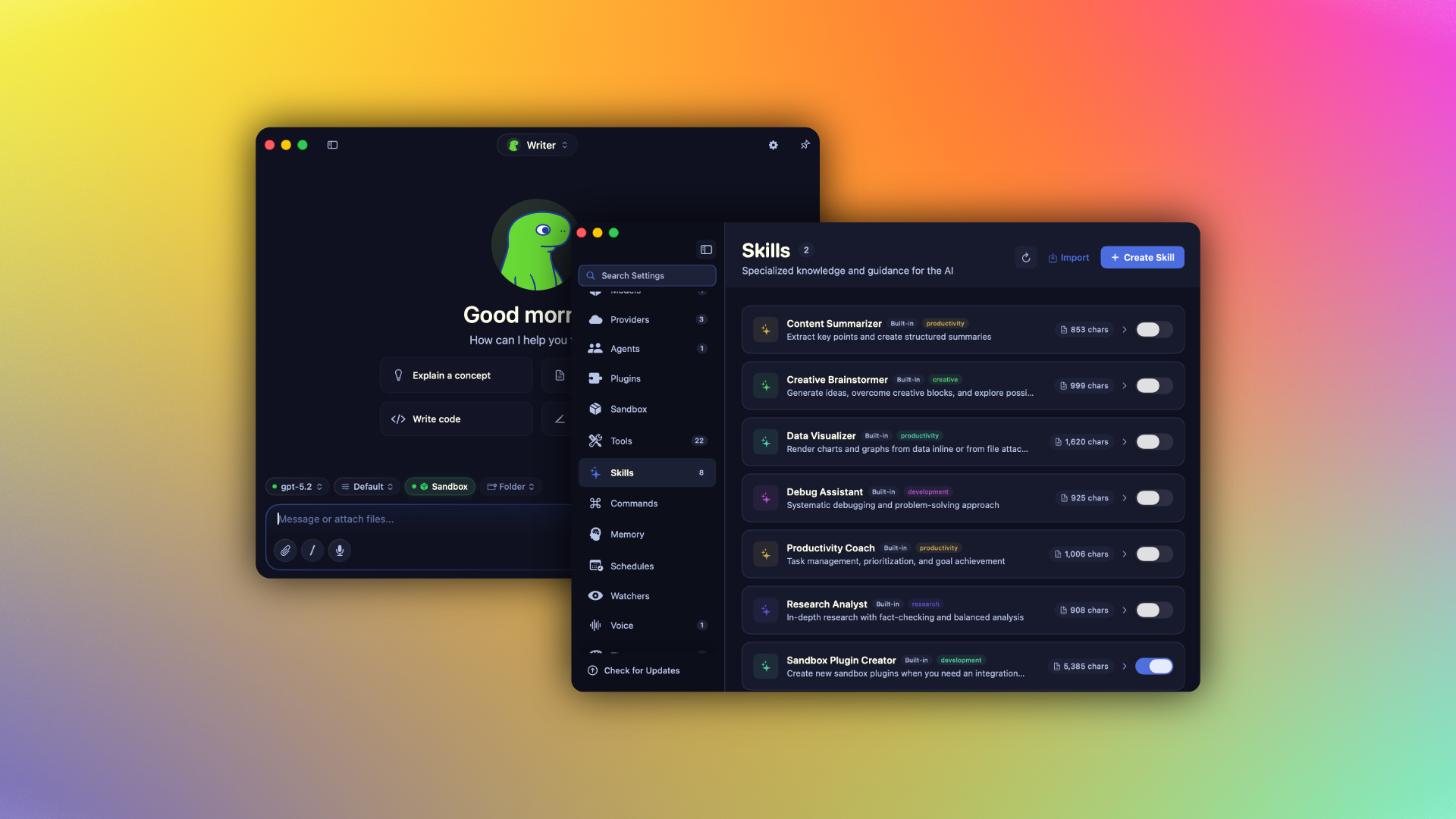
Osaurus, an open-source Large Language Model server designed exclusively for Apple hardware, has launched a Mac application that enables users to switch between local and cloud AI models. The software, which has recorded over 112,000 downloads since its inception, functions as a consumer-friendly interface that keeps user data, memory, and tools isolated on local hardware. Co-founded by Terence Pae, the platform aims to provide a secure alternative to cloud-dependent AI services by utilising a hardware-isolated sandbox.
The application evolved from Pae’s earlier project, Dinoki, an AI companion that faced user criticism regarding the costs associated with token-based cloud processing. Pae, a former software engineer at Tesla and Netflix, shifted focus to local processing after users questioned the value proposition of paying for tokens when the software could operate on their own devices. This pivot led to the creation of Osaurus, which Pae built in public as an open-source project, allowing for community-driven feature additions and bug fixes.
Osaurus operates as a "harness," a control layer that connects various AI models, tools, and workflows through a single interface. Unlike similar developer-focused tools that often require terminal navigation and may present security vulnerabilities, Osaurus offers an accessible interface for consumers. It supports a wide range of models, including Llama, DeepSeek V4, OpenAI, Anthropic, Gemini, and Apple’s on-device foundation models. Users can freely choose which model best suits their needs while maintaining control over their personal files and system configurations.
Security is a central component of the Osaurus architecture. The software runs in a virtual sandbox that limits the AI’s scope, ensuring that the user’s computer and data remain protected from potential external threats. This approach addresses common security concerns associated with AI integrations, offering a more contained environment for interacting with complex models. The application also includes over 20 native plugins for macOS functions such as Mail, Calendar, Vision, and Filesystem, along with recent updates for voice capabilities.
Running AI models locally remains resource-intensive, requiring specific hardware specifications to function effectively. Osaurus mandates a minimum of 64 GB of RAM for local operation, with Pae recommending 128 GB for larger models like DeepSeek V4. Despite these high hardware requirements, Pae argues that the efficiency of local AI is improving rapidly, with intelligence per wattage increasing significantly. He suggests that as local capabilities advance, the demand for energy-intensive cloud data centres may decrease, as users can deploy Mac Studios on-premises to handle AI workloads with substantially lower power consumption.
The Osaurus team, which includes co-founder Sam Yoo, is currently participating in the New York-based startup accelerator Alliance. They are exploring opportunities to offer the platform to businesses in sectors such as legal and healthcare, where data privacy is paramount. By enabling on-premises deployment, Osaurus aims to provide the capabilities of cloud AI without the dependency on external data centres, potentially reshaping how individuals and organisations approach AI infrastructure.
