OpenAI President Testifies on Personal Journals in Elon Musk Lawsuit
In testimony regarding the unsealed journals submitted as evidence, the OpenAI president argues the entries reflect a stream of consciousness rather than a log of actions, countering allegations that leaders abandoned their charitable mission to enrich themselves.
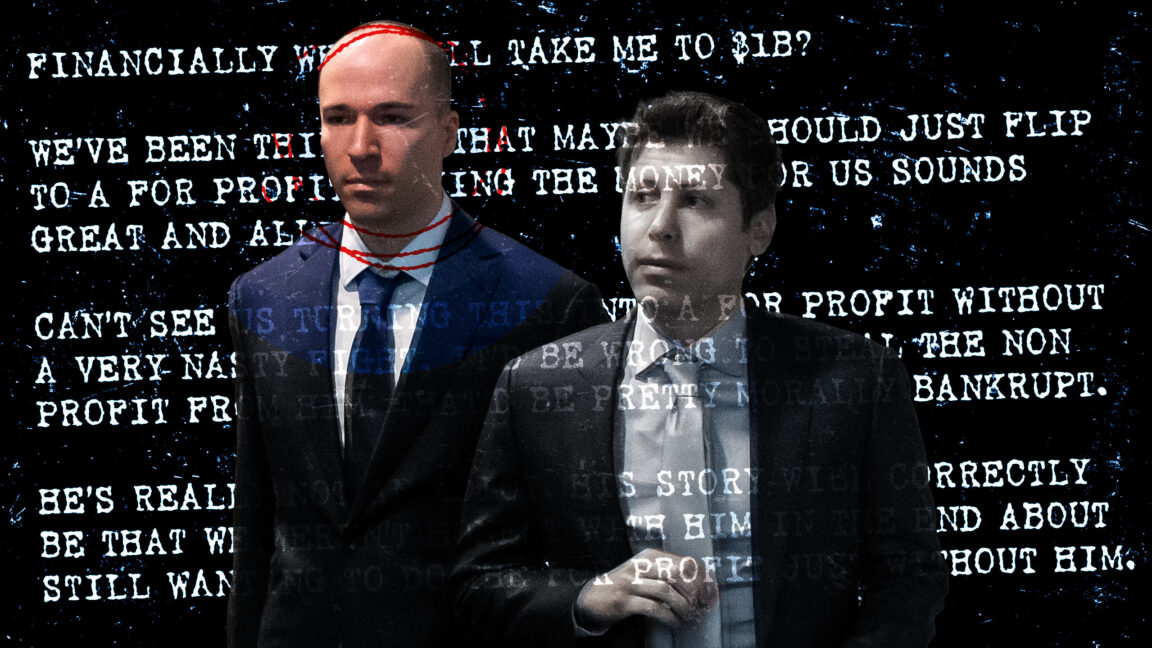
Greg Brockman, the president of OpenAI, has taken the stand to testify in a high-profile lawsuit filed by Elon Musk. The legal action alleges that OpenAI abandoned its original nonprofit mission to instead focus on personally enriching its leadership team. During the proceedings, Brockman was compelled to read aloud from his personal journals, which were submitted as evidence after being unsealed in January.
Musk's legal team argued that the entries demonstrated greed and a specific decision to steal the nonprofit from the company's founder. The lawyer for Musk, Steven Molo, cited specific passages, including a 2017 journal entry where Brockman wrote that making money for the team sounded great. Molo also highlighted a note where Brockman questioned how much money would take him to a billion dollars, using these excerpts to paint a picture of a money-hungry executive.
Brockman countered the interpretation of the documents, explaining that the journals are not a straightforward log of actions or feelings. He described them as a stream of consciousness that meanders while exploring alternate viewpoints. He noted that he sometimes recorded text messages or Signal messages from others to capture their ideas, which he would then mull over. This method, he testified, makes the entries difficult to parse out of context and can make him appear self-contradictory at times.
Addressing the comments about profit, Brockman clarified that they were hypothetical considerations regarding an ultimatum Musk delivered in 2018. The scenario involved a choice between Musk having full control over a for-profit arm or OpenAI remaining a nonprofit. He testified that the comment about stealing the nonprofit only applied to a hypothetical circumstance where the board voted to remove Musk, a situation that never occurred because Musk voluntarily left the board that year.
Brockman further testified that Musk's departure in 2018 was voluntary and that his resignation speech at an all-hands meeting was intended to lower employee morale. He argued that Musk suggested a merger with Tesla and cutting corners on AI safety, which contradicted OpenAI's mission. According to Brockman, the journals show his ongoing concern for AI safety and his opposition to unilateral control over the technology.
He stated that nearly all of OpenAI's current value has come from efforts post-dating Musk's involvement. The trial is being livestreamed on YouTube, which reportedly peaked at around 1,200 viewers during Brockman's testimony. He concluded by emphasising that the technology being built is too important to be controlled by any single individual, regardless of potential financial gains.
