Nvidia’s Vera CPU targets $200 billion market in agentic AI shift
Following a record $81.6 billion revenue quarter, Nvidia outlines a strategic pivot toward CPU-centric computing for AI agents, challenging traditional market leaders.
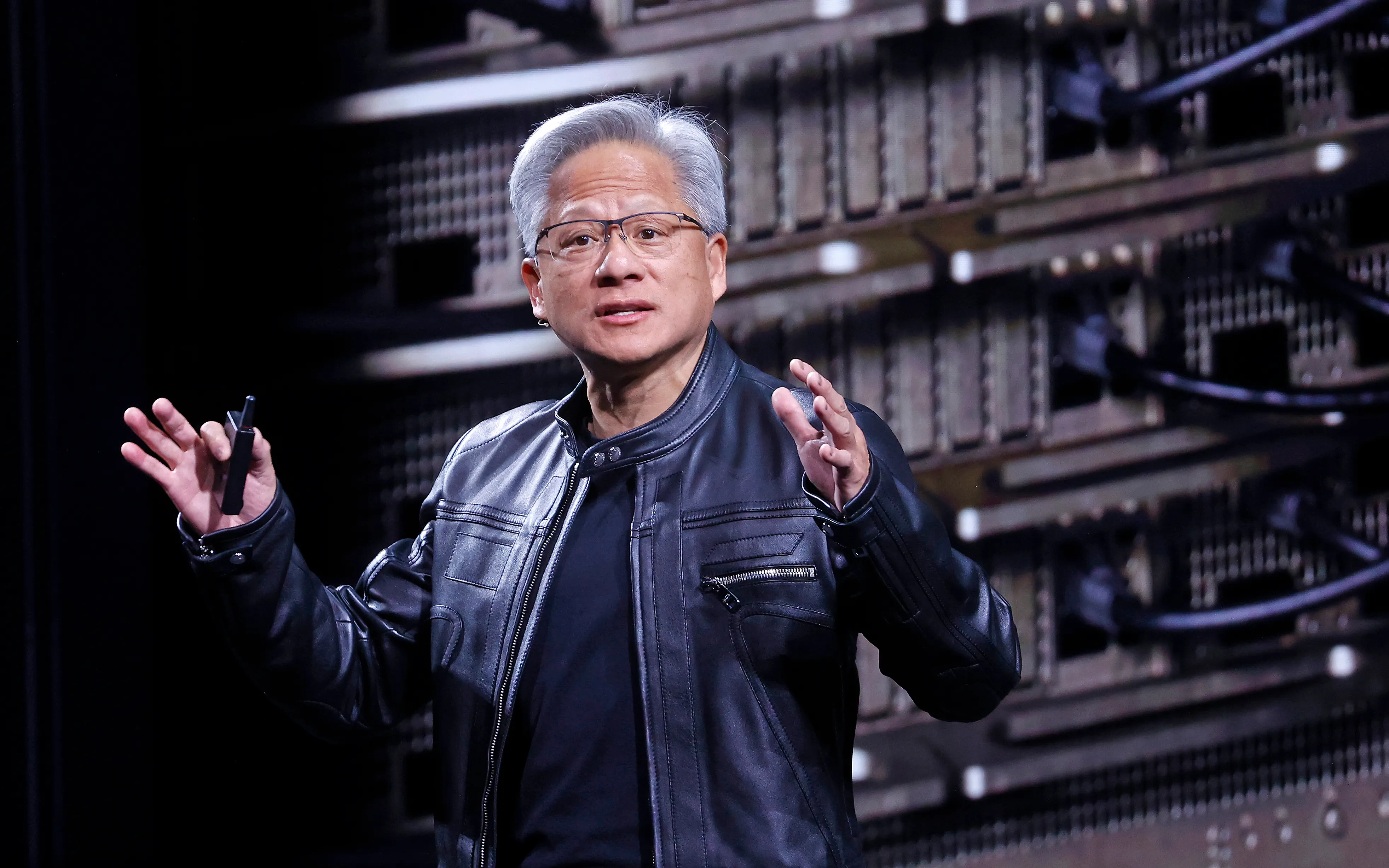
Nvidia CEO Jensen Huang has identified a $200 billion total addressable market for artificial intelligence agents, driven by the company’s newly introduced Vera CPU. Speaking on an earnings call following a record $81.6 billion revenue quarter, Huang stated that Vera, designed specifically for agentic AI, has already generated $20 billion in standalone sales this year. He argued that while GPUs handle model inference, AI agents primarily rely on CPUs for task execution, positioning Nvidia at the centre of the transition to agent-driven computing.
Huang described the Vera CPU as the world’s first processor purpose-built for agentic AI, distinguishing it from classic cloud architecture CPUs that focus on running multiple application instances. He predicted that the world will move from a billion human users to billions of agents, each requiring tools akin to personal computers, thereby necessitating a significant increase in CPU demand. This shift represents a strategic expansion for Nvidia, which has historically dominated the GPU market, into the CPU space traditionally held by competitors such as Intel and AMD.
The Vera CPU is sold both as a standalone product and bundled with the Rubin GPU. Huang claimed that every major hyperscaler and system maker is partnering to deploy the technology, asserting that Nvidia sits at the centre of the broader industry effort to rebuild computing infrastructure for agentic AI and robotic physical AI. This marks a significant departure from Nvidia’s previous CPU efforts, which were not a core business focus, to a dedicated product line aimed at processing tokens as fast as possible for autonomous tasks.
Despite Nvidia’s aggressive positioning, the company faces established competition in the processor space. Amazon Web Services recently secured a major contract with Meta for millions of its homegrown AI CPUs, with AWS CEO Andy Jassy asserting that the cloud provider can produce AI chips, both GPUs and CPUs, competitively against Nvidia. This competitive landscape highlights the uncertainty surrounding whether Nvidia can maintain its dominance in the CPU sector against rivals like Intel, AMD, and cloud providers developing their own silicon.
The $200 billion market size represents a projection of total addressable market potential rather than confirmed current revenue. Huang noted that the transition to billions of agents is a long-term trajectory, stating, "not today," indicating that the growth will unfold over time. As the industry navigates this transition, Nvidia’s ability to deliver on its hardware roadmap will be critical in determining whether it can successfully capture this new segment of the artificial intelligence market.
