NASA’s Perseverance rover poised to shatter Mars distance record with autonomous navigation
The rover’s advanced Vision Compute Element handles 90 percent of driving operations, significantly outpacing the Curiosity mission and enabling faster access to ancient geological sites in Jezero Crater.
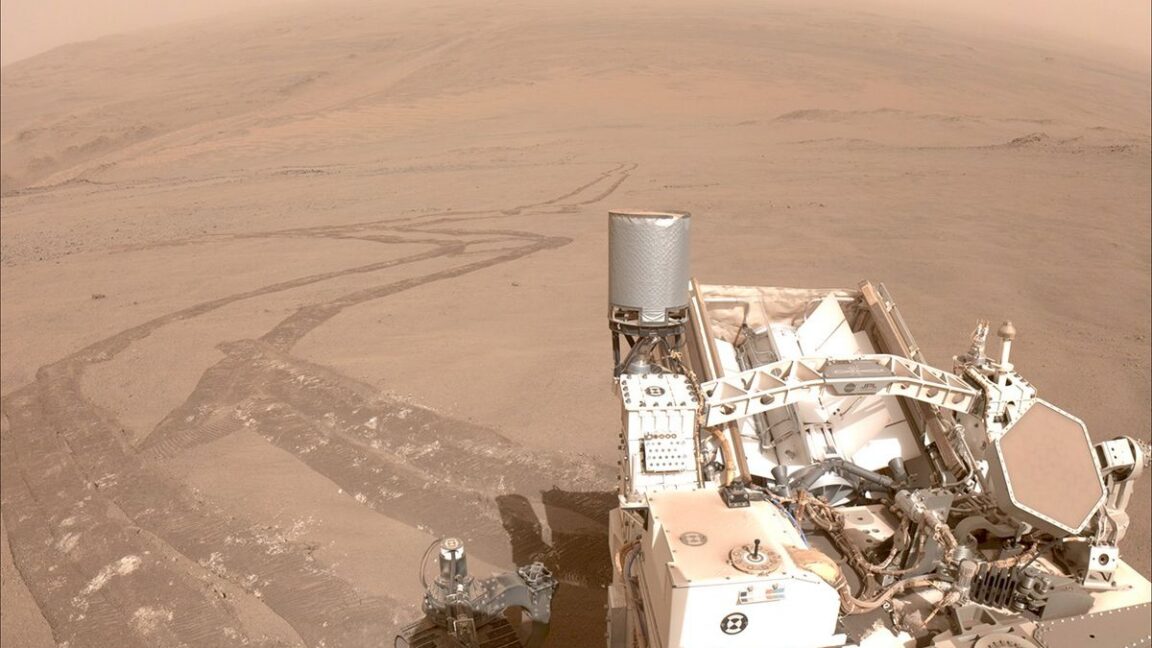
NASA’s Perseverance rover is set to surpass 45.16km driven on the Martian surface, breaking the previous record for distance travelled on another celestial body. The milestone, which will be achieved sometime next week, eclipses the 38.6km driven by the Curiosity rover over its decade and a half on the planet. The achievement specifically targets the record previously held by the Opportunity rover, which ceased communications with NASA in 2018.
The primary driver behind this accelerated progress is Perseverance’s autonomous navigation system, which manages approximately 90 percent of its driving operations. This stands in stark contrast to the Curiosity rover, where autonomous driving accounts for only about 10 percent of its movement. Steven Lee, project manager for the Perseverance rover at NASA’s Jet Propulsion Laboratory, identified the auto navigation system as the "real enabling technology" for the record-breaking distance.
Unlike terrestrial vehicles that benefit from defined maps and street signs, Perseverance must navigate complex Martian terrain characterised by large boulders and sandy slopes. The rover utilises sophisticated onboard cameras to image the surrounding environment, with an onboard computer processing these images algorithmically to calculate the safest route. This process occurs in real-time, allowing the vehicle to perform sensing and computation while its wheels are turning.
The technological advantage lies in Perseverance’s Vision Compute Element, which is more modern than the chipset used in Curiosity. Lee noted that Curiosity’s onboard computer is a generation older, with some components dating back to the 1990s, rendering its processing capabilities too slow for extensive autonomous driving. While Perseverance’s maximum wheel speed is modest at approximately 150 metres per hour, the reduction in time spent waiting for navigation commands from Earth has maximised its scientific return.
Vivian Sun, the mission’s deputy project scientist, stated that the autonomous driving has allowed the mission to have a larger scope than previous endeavours. Perseverance landed in Jezero Crater in February 2021 to study ancient rocks dating back approximately 4 billion years, investigating potential past habitability and geological conditions. The rover has frequently arrived at new sites ahead of schedule, surprising scientists and accelerating the investigation into the planet’s heavy bombardment era.
Engineering improvements have also contributed to the rover’s longevity. Following observations of significant wear and tear on Curiosity’s wheels, Perseverance’s wheels were redesigned. Lee confirmed there are no signs of appreciable wear on the newer model. The only remaining concern involves the wheel actuators, which were initially life-tested for 20km. NASA is currently certifying these components to withstand at least 100km of driving, with the rover’s RTG power system suggesting it could continue operating for many years to come.

