NASA formally terminates MAVEN Mars mission after six-month communication blackout
The Mars Atmosphere and Volatile Evolution probe, which orbited the Red Planet for over a decade, has been officially retired after an anomaly review board determined recovery was not viable.
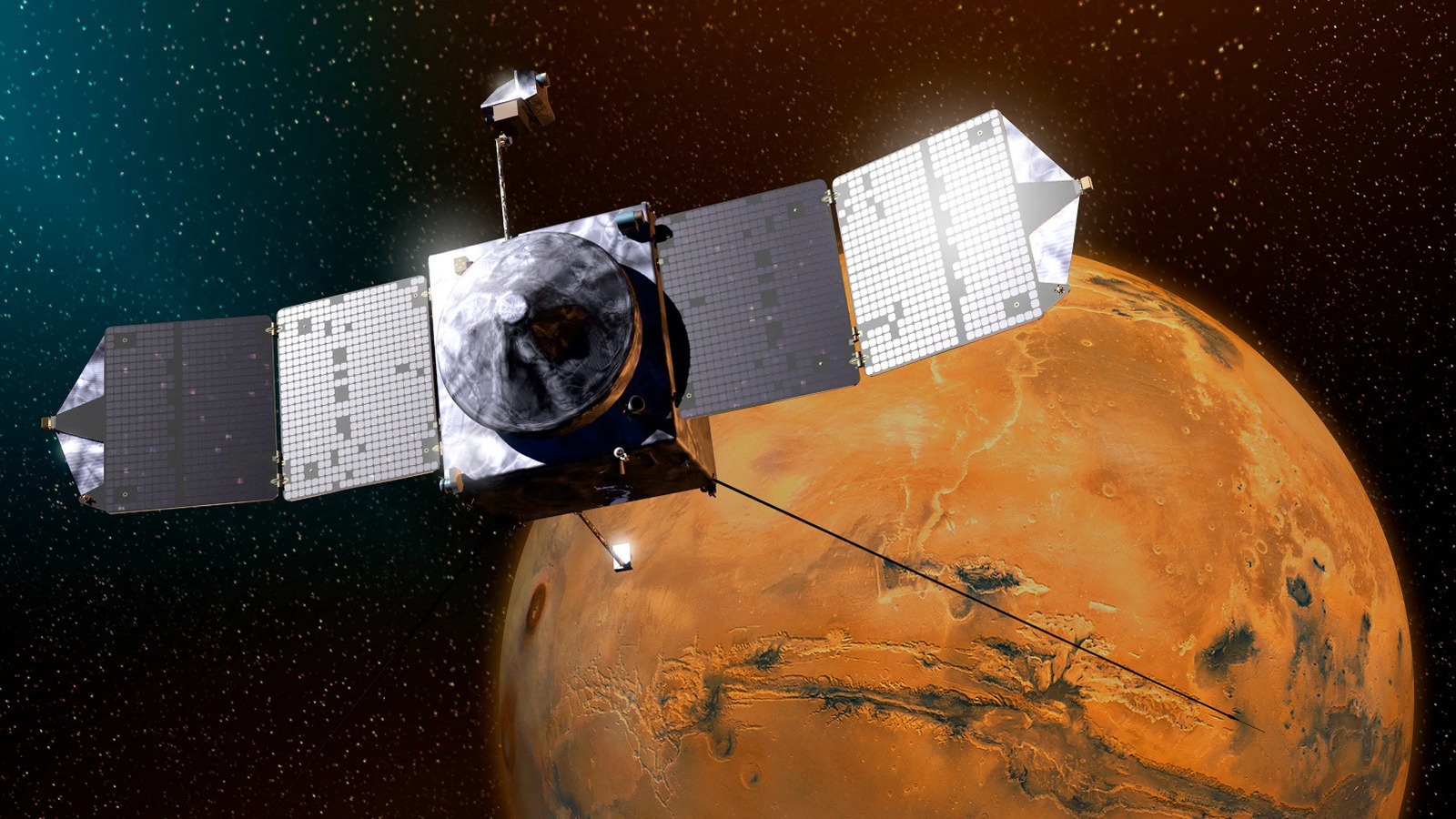
NASA has officially declared the end of the Mars Atmosphere and Volatile Evolution (MAVEN) mission, six months after the agency lost contact with the spacecraft. The decision follows a comprehensive review by an anomaly board convened in February, which concluded that the probe is no longer capable of performing science operations or relaying data to Earth.
The last confirmed signal from MAVEN was received on 6 December 2025, shortly before the spacecraft passed behind Mars. Upon re-emerging from behind the planet, telemetry from the Deep Space Network indicated that the probe had entered safe mode and was rotating at an unusually high rate. This rapid rotation drained the spacecraft's batteries, leading to a loss of power in its communications system.
MAVEN was NASA’s first mission dedicated to studying the Martian atmosphere and its evolution. Launched from Cape Canaveral in 2013, the probe entered Martian orbit in 2014. Although its primary science mission was scheduled for one year, MAVEN operated for more than 11 years, providing critical insights into how solar winds and storms stripped the atmosphere, contributing to the planet's transition from a potentially habitable climate to its current cold and arid state.
During its operational life, the agency utilised MAVEN as a communications relay antenna for the Mars 2020 mission, which delivered the Perseverance rover to the planet. Key scientific findings from the mission included evidence that protons can create auroras anywhere on Mars, unlike on Earth where they are typically confined to the poles, as well as data explaining how global dust storms led to the loss of water molecules to space.
NASA is currently reviewing data to determine the root cause of the anomaly that led to the high rotation rate and subsequent power loss. The agency plans to publish a report on the findings later this year.
