NASA confirms meteor explosion caused widespread sonic boom off Boston coast
The United States Geological Survey ruled out seismic activity as residents reported shaking and loud noises across multiple states on Saturday afternoon.
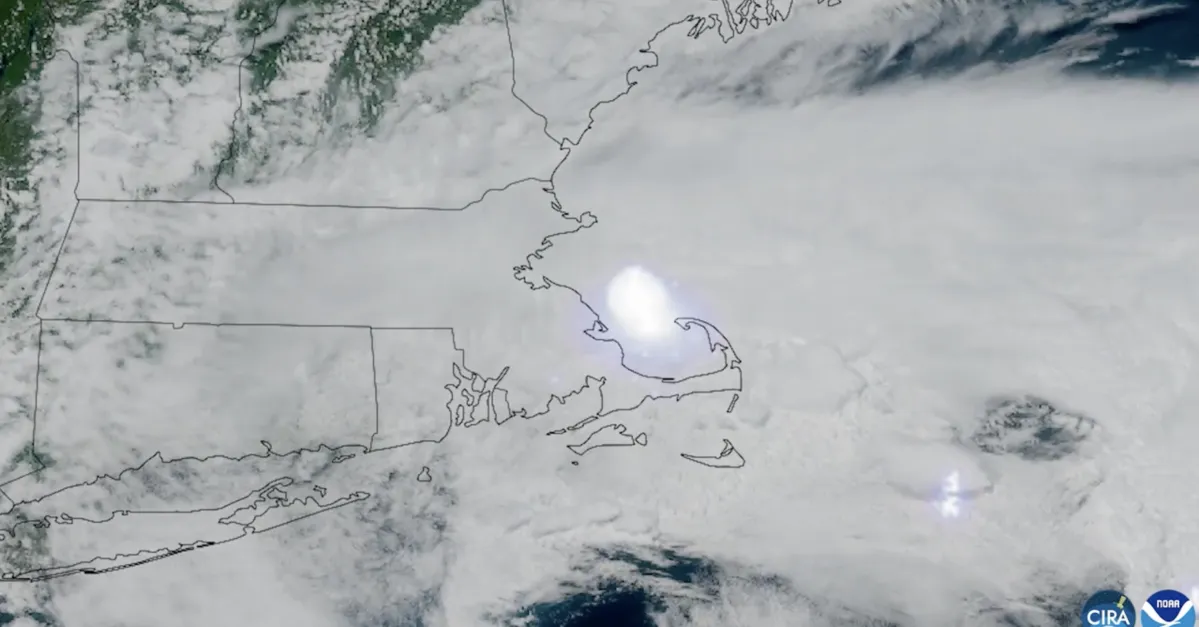
NASA has confirmed that a meteor exploded over the northeastern United States on Saturday afternoon, generating a sonic boom that was audible across several states and caused houses to shake. The event occurred at approximately 2:06 pm ET, north of Cape Cod Bay, where the fireball was captured on camera by residents and visible in satellite imagery.
The object was travelling at roughly 75,000 miles per hour when it fragmented at an altitude of 40 miles over Massachusetts and New Hampshire. According to NASA, the energy released during the breakup was estimated to be equivalent to about 300 tons of TNT, which accounts for the intensity of the noise and the ground shaking reported by locals.
Some residents initially suspected the disturbance was an earthquake. However, the United States Geological Survey (USGS) ruled out seismic activity, describing the event as a “widely felt sonic boom from a suspected bolide.” A bolide is defined as a very bright meteor that often explodes in the atmosphere.
In a statement posted on X, NASA described the incident as a “bright fireball… accompanied by a loud noise.” The agency clarified that the object was natural and not space debris or a satellite re-entry. Jennifer Dooren, NASA’s deputy news chief, confirmed to AFP that the fireball was not associated with any currently active meteor shower.
The event highlights the distinction between atmospheric phenomena and seismic activity, with the USGS monitoring such occurrences to provide accurate public information. While the exact composition of the meteor remains unspecified, the confirmation from both NASA and the USGS has clarified the nature of the disturbance for residents in the affected regions.
