Microsoft, Atom Computing, and EeroQ report incremental quantum computing progress
New reports detail improvements in qubit stability, error correction methods, and novel physical systems, underscoring the complex engineering challenges facing the sector.
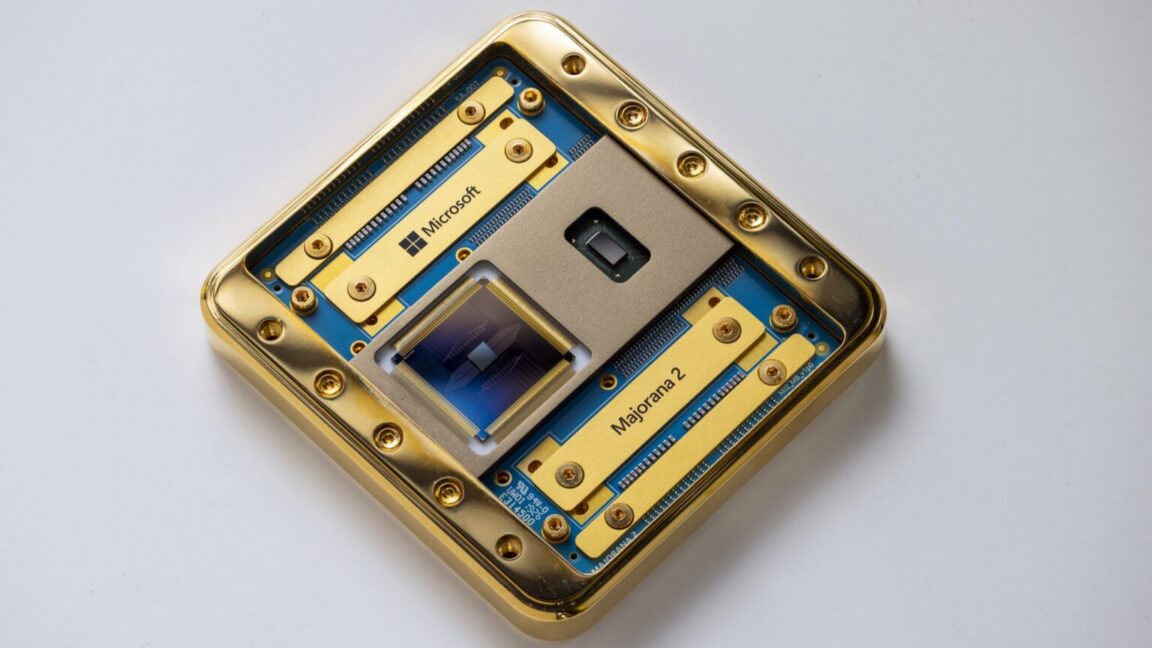
Microsoft, Atom Computing, and EeroQ have released recent updates on their quantum computing hardware development. These reports represent incremental advancements rather than major breakthroughs, focusing on the technical steps required to move quantum technologies closer to general utility. The quantum computing sector is currently characterised by incremental hardware advancements rather than immediate commercial utility, with numerous companies, from startups to tech giants, working towards this goal.
Microsoft has improved the stability of its topological qubits by replacing aluminium superconductors with lead and reformulating its semiconductor with tin. This change extended the parity state duration from under 10 milliseconds to over 20 seconds. Microsoft is one of the few companies pursuing topological qubits, which rely on the physics of particles confined in thin superconducting wires. The company’s manuscript regarding the improved qubit performance is still undergoing peer review, and its validity is not yet fully confirmed.
Atom Computing demonstrated a method for error correction by swapping in pre-cooled spare atoms into logical qubits. This technique maintained stability for up to 90 rounds of measurement, preventing error probability from rising with successive measurements. Atom Computing’s hardware uses lasers and optical guides to suspend atoms, with computation performed using nuclear spins. It is accessible via Microsoft’s Azure Quantum Cloud service, and the two companies have collaborated on error correction protocols.
EeroQ reported success in coupling a resonator with electrons floating on liquid helium, establishing a potential building block for qubits by interacting with the electron's quantised motional states. EeroQ’s approach involves holding electrons on the surface of liquid helium droplets, leveraging established physics regarding helium’s resistance to carrying extra electrons. The startup’s current technology is not yet functional computing hardware, and the resonator coupling is described as a potential building block rather than a complete solution.
While these developments are necessary for the technology to advance, significant hurdles remain. Microsoft still needs to demonstrate the ability to manipulate parity in a way that allows for computational operations. Atom Computing’s error-corrected qubits are not yet fully stable, as eventual errors can still occur if too many individual atoms change state simultaneously. EeroQ’s technology remains experimental, and the company has yet to figure out a method to interact with the electron in useful ways beyond the initial coupling.
The past few weeks have seen a number of companies release progress reports on how they’re trying to get the technologies closer to general use. None of these represents a major breakthrough, but all are absolutely necessary for the technology to advance. The idea here is to convey the hard work required to move us closer to something useful, as any big success will inevitably have been built on a lot of incremental progress.