JWST Reveals Self-Sustaining Fuel Cycle for Supermassive Black Holes
New observations confirm a mechanism where ejected gas cools, condenses, and falls back into the accretion disk, preventing the black hole from running out of fuel.
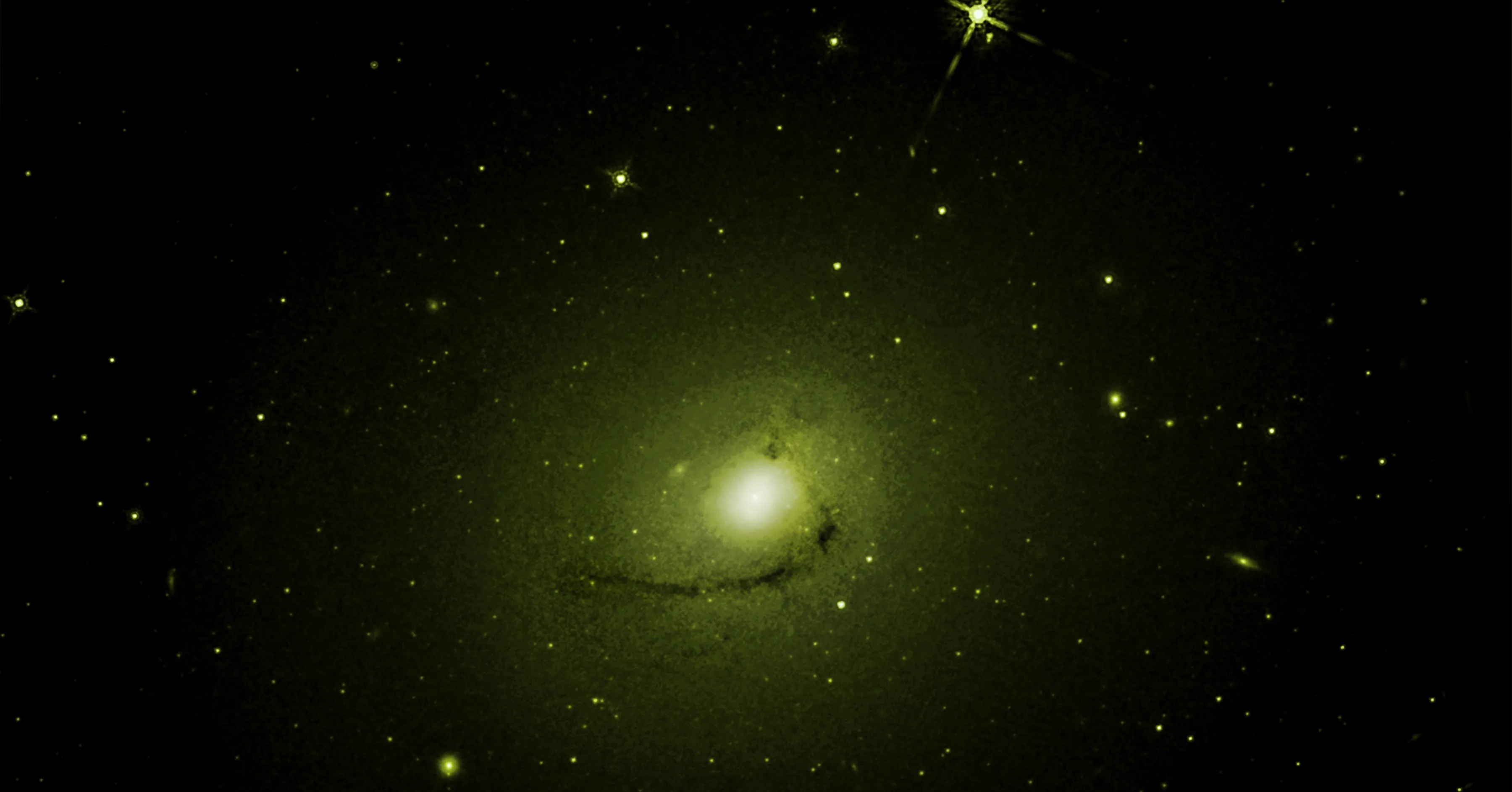
An international research team led by Professor Julie Hlavacek-Larrondo from the University of Montreal has utilised the James Webb Space Telescope to observe NGC 4696, the central galaxy of the Centaurus Cluster. The study, published as the first of a three-part series, provides the first direct visualisation of a self-sustaining cycle in which black holes recycle their own fuel. Researchers identified an S-shaped rotating gas disk, approximately 800 light-years in diameter, orbiting the central black hole. The observations confirm that gas ejected by the black hole’s energy jets cools in interstellar space, condenses into thin filaments, and falls back into the disk, supplying the black hole with new fuel. Computer simulations suggest that stretched magnetic fields act like ropes, removing angular momentum from the falling gas and allowing it to enter the disk. The influx of gas from multiple directions causes the disk’s axis to wobble, shifting the direction of energy jets to heat the galaxy cluster more uniformly and prevent excessive gas cooling.
The team observed the central region of NGC 4696 for approximately eight hours using the Near-Infrared Spectrograph, achieving a resolution capable of distinguishing structures as small as 30 light-years across. The observations revealed that the S-shaped spiral is actually a rotating disk of gas orbiting the black hole, with gas rotating at several hundred kilometres per second. A velocity difference of roughly 600 kilometres per second was measured between opposite edges of the disk. The research team conducted computer simulations to support the observational data, proposing a mechanism where magnetic torque facilitates the transfer of gas into the accretion disk.
The findings indicate that the strength of a black hole’s activity can fundamentally alter surrounding gas behaviour; in some clusters, jets may be so energetic that no stable gas disk forms. This publication focuses on relatively warm gas at approximately 10,000 Kelvin, with additional papers analysing gas at other temperatures currently in preparation. The discovery has led to the approval of additional JWST observing programs and coordinated global observations to search for similar recycling systems in other galaxies.
Professor Hlavacek-Larrondo stated that the observations show black holes may be the ultimate cosmic recyclers, releasing energy that heats surroundings, only for that same gas to cool into filaments that fall back inward. The study visualises the pathway of gas recycling for the first time, confirming a self-sustaining cycle where black holes do not run out of fuel. The team identified an S-shaped rotating gas disk, fed by filaments of condensed gas, which shifts energy jets to heat the galaxy cluster uniformly.
This research resolves a long-standing puzzle regarding how black holes continue to grow despite ejecting powerful energy jets that disperse surrounding matter. The study confirms that gas blown away by the heat eventually cools in interstellar space and condenses into thin, thread-like structures. These filaments then fall back toward the black hole, supplying it with new fuel. The findings, published as the first of three papers, visualise the pathway of gas recycling for the first time.
The discovery has led to the approval of additional JWST observing programs and coordinated global observations to search for similar recycling systems in other galaxies. The research team conducted computer simulations to support the observational data, proposing a mechanism where magnetic torque facilitates the transfer of gas into the accretion disk. The findings indicate that the strength of a black hole’s activity can fundamentally alter surrounding gas behaviour.
This publication focuses on relatively warm gas at approximately 10,000 Kelvin, with additional papers analysing gas at other temperatures currently in preparation. The study provides the first direct visualisation of a self-sustaining cycle where black holes recycle their own fuel. Researchers identified an S-shaped rotating gas disk, approximately 800 light-years in diameter, orbiting the central black hole. The observations confirm that gas ejected by the black hole’s energy jets cools in interstellar space, condenses into thin filaments, and falls back into the disk.