Imperagen secures £5 million seed funding to merge quantum physics with AI in enzyme engineering
Founded by scientists from the Manchester Institute of Biotechnology, Imperagen aims to replace traditional trial-and-error laboratory methods with a closed-loop system combining quantum simulations and artificial intelligence.
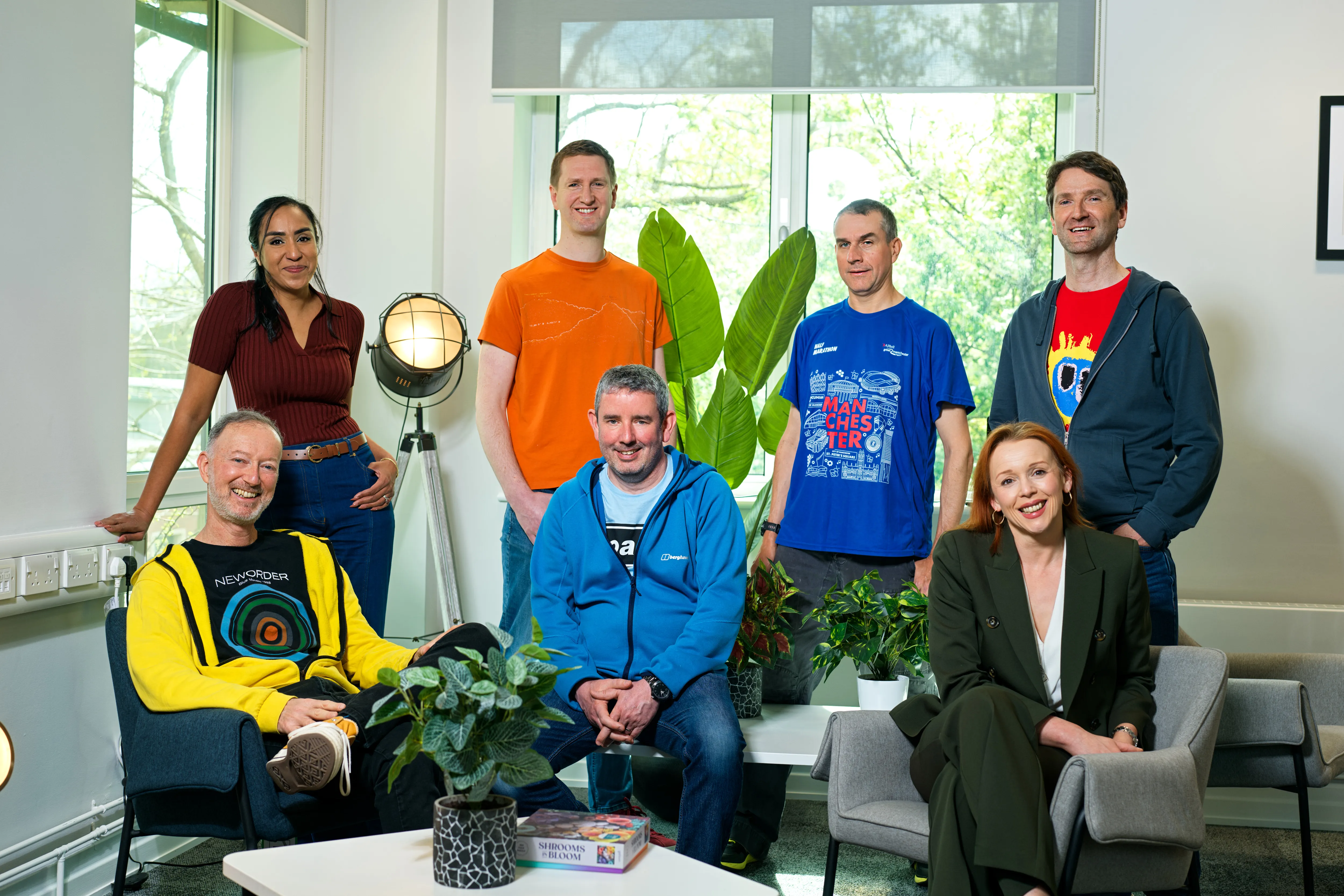
Biotech startup Imperagen has secured a £5 million ($6.7 million) seed funding round led by PXN Ventures, with participation from IQ Capital and Northern Gritstone. The investment brings the company’s total funding to £8.5 million ($11.42 million) since its inception. The fresh capital is earmarked for hiring artificial intelligence specialists, expanding research and development efforts, and growing experimental laboratory capabilities over the next two years.
Established in 2021 by Dr Andrew Currin, Dr Tim Eyes, and Dr Andy Almond, Imperagen spun out of the Manchester Institute of Biotechnology. The company utilises a three-step technology stack designed to accelerate enzyme engineering. This process begins with quantum physics-based simulations to predict enzyme variant behaviour, followed by custom AI models trained on specific enzyme challenges. The system is completed by robotic automation that generates experimental data, feeding it back into the AI models in a closed-loop simulation.
Guy Levy-Yurista has been appointed as chief executive officer to lead the company’s commercial and industrial scaling efforts. Levy-Yurista, who brings a background in artificial intelligence, life sciences, and enterprise technology, will focus on building a vertical AI infrastructure for biocatalysis. His role also involves scaling the startup’s commercial models and establishing industrial partnerships, while the founding team remains with the company.
Enzymes are critical components across multiple sectors, including pharmaceuticals, food, biofuels, and agriculture. Traditional enzyme engineering relies on slower, physical trial-and-error processes in laboratories. Imperagen’s approach seeks to make enzyme development faster, more reliable, and commercially accessible, addressing the gap where many AI-powered technologies struggle to transition from laboratory success to industrial scale.
The broader industry context sees growing interest in using enzymes and associated AI technologies to enhance sustainability in industrial production. Experts believe engineered enzymes can help industries produce cleaner, safer, and more commercially viable bio-based products. Competitors in this space include Biomatter, Cradle Bio, and Absci, as the sector moves toward more efficient manufacturing methods.
The new funding will support the construction of a go-to-market function alongside the technical expansion. Levy-Yurista stated that the goal is to help companies bring better bio-based products to market without the long timelines and uncertainty that have traditionally hindered the field. The company aims to enable industries to produce products that are better for people and the planet while maintaining commercial viability.
